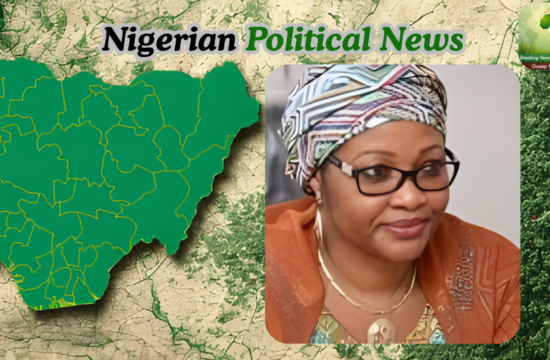

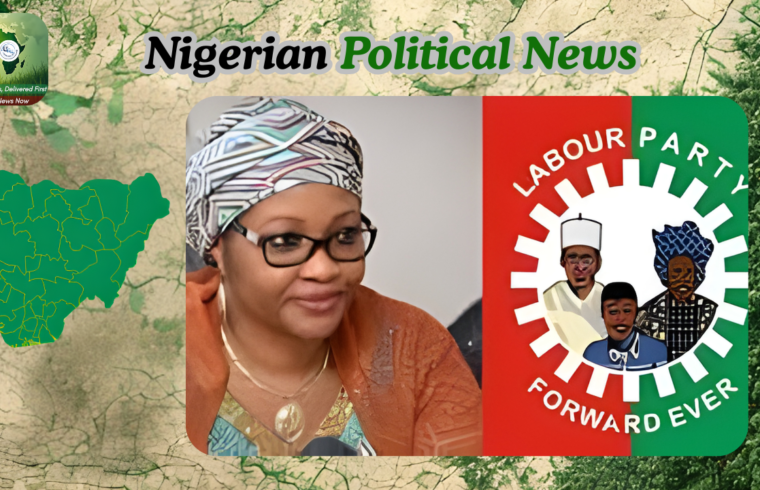
The ongoing leadership dispute within the Labour Party may soon face a decisive test as National Chairman Nenadi Usman reaffirmed that the party’s upcoming congress would determine its future leadership through open democratic participation rather than prolonged internal confrontation.
Addressing party stakeholders during a strategic summit held at the Labour Party’s national secretariat in Abuja, Usman urged members dissatisfied with the current leadership arrangement to channel their ambitions toward electoral competition within the party structure.
Call for Ballot-Based Resolution
Usman emphasized that leadership positions would not be allocated through negotiation or factional pressure but through victory at the polls during party congresses. According to her, any aspirant seeking authority within the party must demonstrate acceptance among members through a transparent voting process.
She encouraged aggrieved factions to abandon disputes driven by personal interests and instead engage in democratic competition, assuring that winners of the congress would legitimately assume leadership roles.
Her remarks were widely interpreted as a direct response to the camp loyal to former National Chairman Julius Abure.
Appeal for Unity Amid Internal Tensions
Rather than escalating the rivalry, Usman appealed to members across different factions to prioritise collective progress. She stressed that internal disagreements risk weakening the party’s long-term political relevance if not resolved through cooperation and institutional processes.
The chairman urged stakeholders to return to dialogue and collaboration, describing unity as essential for consolidating the party’s political gains.
Background to Leadership Crisis
The Labour Party has remained divided following judicial intervention earlier in the year. A Federal High Court ruling in Abuja removed Julius Abure from office and affirmed Usman’s leadership, referencing a prior Supreme Court decision as legal justification.
The judgment also directed the Independent National Electoral Commission to recognise the caretaker leadership pending the conduct of a national convention intended to produce substantive executives.
Despite the ruling, Abure’s supporters have continued to assert control over certain party structures, maintaining that their leadership remains valid — a stance that has prolonged the crisis.
Congress Seen as Turning Point
Usman described the forthcoming congress as an opportunity to reset the party and provide a neutral platform for all aspirants. She insisted that the process would offer equal chances to every contender, regardless of factional alignment.
In her view, democratic legitimacy derived from internal elections represents the only sustainable solution to competing leadership claims.
Rather than excluding rivals, she challenged them to test their popularity directly among party members.
Democracy Over Personal Ambition
Throughout her address, Usman repeatedly emphasised the need to subordinate individual ambitions to the broader survival of the Labour Party. She warned that prolonged factional battles could undermine organisational stability and distract from preparations for future electoral contests.
By framing the congress as a level playing field, the leadership aims to shift the focus from courtroom battles to party-based democratic engagement.
Commentary and Political Analysis
The Labour Party’s situation reflects a familiar dynamic within Nigerian political organisations, where leadership disputes often evolve into competing legitimacy claims. Usman’s insistence on resolving the crisis through internal elections signals an attempt to restore institutional authority and move beyond judicial intervention.
If successfully conducted, the congress could redefine power balance within the party and determine whether the Labour Party emerges unified or further fragmented. Internal democracy, when effectively managed, has the potential to transform factional rivalry into political renewal.
Ultimately, the coming congress represents more than a leadership contest — it may determine whether the Labour Party consolidates its momentum as a national political force or struggles with prolonged internal division ahead of future elections.
© 2025 Gossip News Now, a division of CHIEJOS HARBIAN DIGITAL MEDIA LTD. Contact us via admin@gossipnewsnow.online