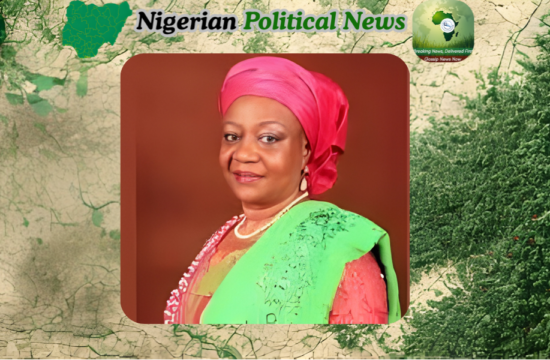

Nigeria’s Labour Party (LP) has once again been thrown into uncertainty following a dramatic development involving its internal leadership structure. The party is now grappling with fresh tensions after the Board of Trustees (BoT) declared the dissolution of the interim National Working Committee (iNWC) led by Senator Nenadi Usman.
This move has intensified existing divisions within the party, particularly among political groups linked to former presidential candidate Peter Obi and Abia State Governor Alex Otti. The unfolding dispute signals a potentially serious challenge for the party as it prepares for the political battles leading up to the 2027 general elections.
The decision to dissolve the committee emerged from a joint action involving the party’s BoT and members of the statutory National Executive Council (NEC) who reportedly met and reached a quorum. According to internal communications circulating within party ranks, the leadership concluded that the interim committee could no longer continue in its current role.
Documents associated with the announcement indicate that the decision was formally communicated in early December 2025. Party officials cited several reasons for the drastic step, including alleged inefficiency and organisational failures.
Among the accusations raised against the dissolved leadership was its inability to organise key party activities required by the party’s constitution. Specifically, the committee had been mandated to conduct nationwide congresses and organise a national convention.
The committee was originally established in September 2024 during a gathering in Umuahia, Abia State, with a clear mandate lasting ninety days. Its primary task was to coordinate the restructuring of party leadership structures across the country.
However, the committee reportedly failed to deliver on that responsibility within the initial timeframe. Even after receiving an extension of another ninety days earlier in 2025, the leadership allegedly did not conduct ward-level congresses anywhere in the country before the deadline expired.
Party insiders claim that this lack of progress contributed to broader organisational problems. According to the BoT, the delay weakened the party’s operational readiness and threatened its ability to compete effectively in future elections.
The trustees also argued that the leadership crisis had serious consequences for the party’s participation in political contests. During the same period, they claimed, the party was reportedly absent from several electoral activities, including local government elections and legislative by-elections conducted in different parts of Nigeria.
This situation, according to the BoT statement, created uncertainty among members and contributed to defections as some politicians lost confidence in the party’s organisational direction.
As part of the restructuring process, temporary appointments were announced to stabilise the party’s communication and administrative structure. Prince Tony Akeni was named acting National Publicity Secretary, while Nwauwa Nnawuihie was appointed acting National Secretary pending the formation of a new interim working committee.
Despite the announcement, the dissolution has been strongly disputed by supporters of the Nenadi Usman-led leadership.
A media aide to Usman, Ken Asogwa, questioned the legitimacy of the BoT’s action, arguing that the board does not possess constitutional authority to remove a National Working Committee.
According to his position, only two bodies have the legal power to dissolve the party’s leadership structure: the National Executive Council or the National Convention.
Asogwa also raised concerns about conflicting communications circulating within party structures, suggesting that some letters regarding the dissolution might not represent an official consensus.
Meanwhile, another party official, Obiora Ifoh, dismissed claims that the Labour Party is currently divided into factions. In his view, the party remains united under a single leadership structure.
He also criticised what he described as external interference in party affairs, specifically referencing the role of individuals connected to the Nigeria Labour Congress (NLC).
According to Ifoh, the actions attributed to the BoT do not reflect the official position of the party and should not be interpreted as evidence of internal collapse.
With both sides presenting opposing interpretations of the situation, the conflict appears far from resolved.
Commentary and Analysis
The latest development within the Labour Party highlights the internal challenges that political organisations often face after experiencing rapid electoral growth.
Following the momentum generated during Nigeria’s 2023 presidential election, the party expanded its influence nationwide. However, that expansion also exposed structural weaknesses in its internal organisation.
Leadership disputes and constitutional disagreements can significantly weaken political parties, especially when they occur years before a major election cycle.
For the Labour Party, resolving these disagreements quickly will be essential if it hopes to maintain credibility among supporters and potential candidates ahead of the 2027 polls.
The crisis also illustrates a broader issue within Nigerian party politics: the tension between institutional procedures and political alliances.
If the conflict escalates into legal battles, it could further delay the party’s organisational rebuilding process. On the other hand, successful reconciliation could strengthen the party’s internal structure and prepare it for future political contests.
For now, the Labour Party faces a crucial test of unity and leadership as it navigates one of the most challenging moments in its recent history.
© 2025 Gossip News Now, a division of CHIEJOS HARBIAN DIGITAL MEDIA LTD. Contact us via admin@gossipnewsnow.online