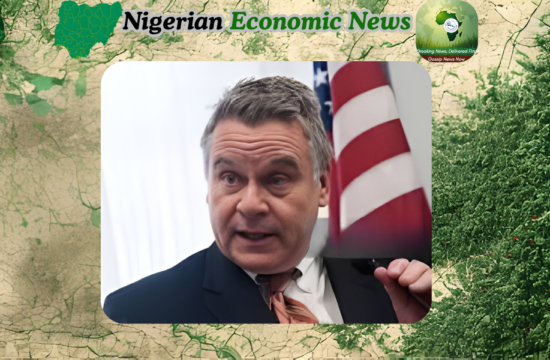


Nigeria’s financial landscape has come under intense pressure after fresh international developments unsettled both investors and the broader market. The latest shock followed U.S. President Donald Trump’s decision to classify Nigeria as a Country of Particular Concern, alongside remarks that raised fears of possible tougher action, creating fresh anxiety across the economy.
The reaction was swift. Investor confidence appeared badly shaken as the Nigerian Exchange Limited recorded a huge loss in value, while the naira also came under renewed strain. By the start of the week, the local currency had weakened further on the official market, with similar pressure visible in parallel trading channels.
According to Gossip News Now, the selloff that erased about ₦2.8 trillion from the stock market last week did not end there, as bearish sentiment continued into Monday. Analysts say the trend reflects growing concern about Nigeria’s external image and the possible consequences of worsening diplomatic tension.
Financial experts believe the message sent from Washington triggered more than a routine market reaction. In their view, the development introduced a fresh layer of political uncertainty, and that uncertainty quickly filtered into investor behavior, foreign exchange demand, and equity trading.
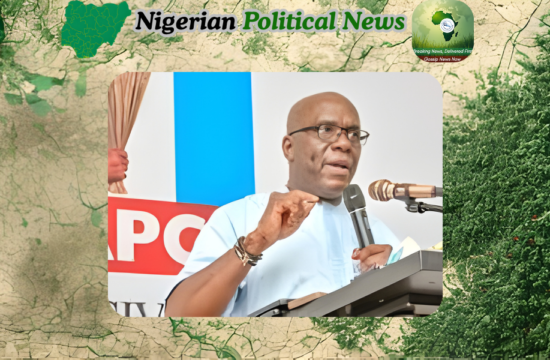
One of the voices weighing in on the situation, former Chartered Institute of Bankers of Nigeria president Mazi Okechukwu Unegbu, argued that markets often respond sharply when signals come from powerful global actors. He explained that many investors likely chose to pause decisions or pull back entirely once the announcement heightened fears about Nigeria’s stability and global standing.
He also suggested that the turbulence exposed structural weaknesses already present in the economy. In his assessment, recent exchange-rate calm had been fragile because Nigeria still relies heavily on imports and lacks sufficient productive depth to shield itself from external shocks.
For Unegbu, the current disruption should serve as a warning that real recovery cannot rest on surface-level stability. He stressed that stronger manufacturing output, better export performance, and more serious investment in production would be essential if the country hopes to rebuild the naira and achieve lasting economic balance.
He further linked the issue to insecurity, noting that instability across parts of the country continues to hurt agriculture and industrial performance. Without improving those sectors, he implied, efforts to strengthen the currency and build resilience may remain limited.
Economist and academic Prof. Godwin Oyedokun offered a similar interpretation, saying the market downturn goes far beyond ordinary fluctuations. In his view, both foreign and local investors read Nigeria’s CPC designation as a troubling signal about diplomatic relations, governance risks, and the overall investment environment.
He noted that such classifications can create fears even before any formal sanctions are introduced. Investors, he said, tend to react not only to actual penalties but also to the possibility of travel restrictions, reduced cooperation, or barriers to international financing. That expectation alone can be enough to encourage capital flight and portfolio exits.
Oyedokun also tied the naira’s decline to panic demand for dollars. As uncertainty rose, many Nigerians reportedly moved to protect their savings by converting funds into foreign currency, a response that added further pressure on the local unit and worsened volatility in the market.
Even so, he advised against panic. He warned that emotional decisions such as rushing out of equities, hoarding dollars, or following social media-driven speculation could deepen the crisis rather than solve it. For him, public confidence and disciplined responses remain critical in moments like this.
The economist argued that the federal government must act quickly and strategically. He called for urgent diplomatic engagement with the United States to provide clarity around the CPC designation, while also urging monetary and fiscal authorities to coordinate actions capable of calming the markets and reassuring investors.
Beyond short-term interventions, Oyedokun said Nigeria must also confront the deeper problems that helped create the current vulnerability. These include governance concerns, insecurity, weak institutional trust, and the country’s longstanding dependence on foreign capital and global perception.
He believes the turmoil, though painful, may still offer an opening for reform. In that sense, the crisis could become a turning point if it pushes the country toward stronger institutions, expanded local production, regional trade growth, and reduced dependence on external borrowing.
For now, however, uncertainty remains high. With the naira under pressure, equities losing value, and investors becoming increasingly cautious, the coming days may prove decisive for how long the turbulence lasts and how effectively Nigeria can contain the damage.
Commentary and Analysis
The current market reaction shows how exposed Nigeria remains to political signals from abroad. Even before any concrete action is taken, investor sentiment can shift dramatically when the country is perceived to face rising geopolitical or diplomatic risk.
Another major lesson from this episode is that confidence matters as much as policy. Once investors begin to fear sanctions, instability, or prolonged uncertainty, their decisions can quickly create a self-reinforcing cycle of currency weakness and capital withdrawal.
At the same time, this moment has exposed the limits of an economy that still depends heavily on imports and external perception. Without stronger domestic production, broader exports, and more resilient institutions, similar shocks may continue to trigger outsized consequences.
In that regard, the crisis is not only about Trump’s remarks or the CPC designation. It is also about Nigeria’s internal fragility and the urgent need for reforms that make the economy less reactive to external pressure and more capable of withstanding global uncertainty.
© 2025 Gossip News Now, a division of CHIEJOS HARBIAN DIGITAL MEDIA LTD. Contact us via admin@gossipnewsnow.online