
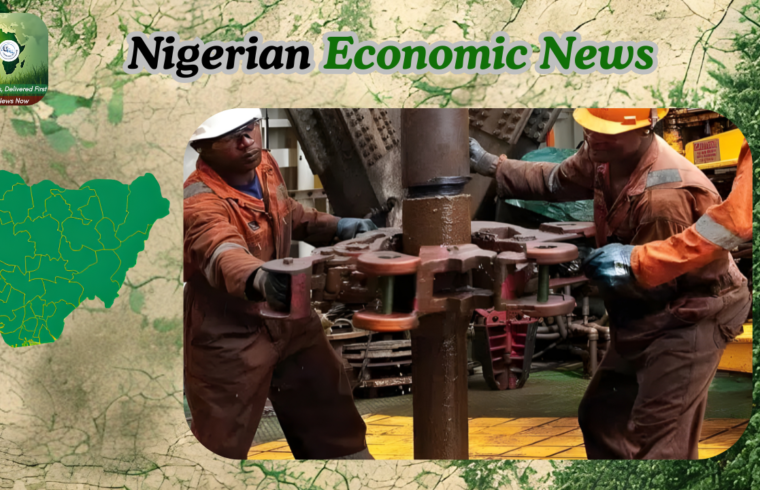
Nigeria’s oil sector closed 2025 on a weaker note after new regulatory figures revealed a noticeable contraction in national output levels. Latest data from the Nigerian Upstream Petroleum Regulatory Commission (NUPRC) showed that combined crude oil and condensate production averaged about 1.544 million barrels per day in December 2025, representing a clear decline compared with production volumes recorded a year earlier.
The drop highlights the persistent operational and investment challenges facing Africa’s largest oil producer, as the country continues to struggle to stabilise output despite global demand for energy resources.
Decline Reflects Ongoing Structural Problems
When compared with December 2024 production, which stood at roughly 1.684 million barrels daily, the recent figures confirm an annual reduction exceeding eight percent. Industry watchers interpret this trend as evidence that long-standing weaknesses in Nigeria’s petroleum sector remain unresolved.
Although the regulator did not directly assign responsibility for the decline, analysts point to several underlying pressures shaping production performance. These include aging infrastructure, reduced upstream investment activity, security risks in producing regions, and uncertainty surrounding regulatory consistency.
Monthly Output Also Weakens
Beyond the yearly comparison, production also fell slightly on a month-to-month basis. Output slipped from approximately 1.599 million barrels per day in November 2025 to 1.544 million barrels in December, signalling that recovery momentum toward year-end remained fragile.
The figures further show Nigeria once again missed its production target under the Organisation of Petroleum Exporting Countries (OPEC) agreement — a recurring development that has raised concern among policymakers and investors alike.
Understanding the Production Breakdown
A closer look at the statistics reveals an important distinction between crude oil and condensate production. Condensate volumes contributed about 122,385 barrels per day to the total output. Because OPEC quota calculations exclude condensates, Nigeria’s recognised crude production averaged roughly 1.422 million barrels daily, below the 1.5 million barrels per day allocation.
Production performance across the year fluctuated within a wide range, with combined output reaching both lower and higher operational extremes at different points. Despite occasional improvements, overall performance remained insufficient to meet international commitments.
Budget Expectations Missed
The production shortfall also carried fiscal consequences. Nigeria’s 2025 national budget had been built on ambitious assumptions, including an oil output benchmark of 2.06 million barrels per day alongside projected pricing and exchange rate expectations.
Falling significantly below this benchmark meant anticipated revenue inflows were unlikely to fully materialise, placing additional pressure on government finances and economic planning.
OPEC Confirms Continued Underperformance
Independent confirmation from OPEC’s Monthly Oil Market Report reinforced the regulator’s findings. According to the cartel, Nigeria’s crude production — excluding condensate — declined slightly between November and December 2025 and remained below the agreed quota level.
Year-on-year comparisons also revealed a sustained downward trajectory, suggesting the issue is not temporary but part of a broader pattern affecting Nigeria’s upstream petroleum industry.
Expert Viewpoints on the Decline
Energy economist Professor Wumi Iledare attributed the drop to deep-rooted governance and structural concerns rather than short-term operational setbacks. He identified security challenges, limited exploration of new hydrocarbon assets, and regulatory uncertainty as major obstacles discouraging investment inflows.
He further argued that inconsistent application of the Petroleum Industry Act has weakened confidence among investors, stressing that stronger institutional leadership is needed to drive meaningful reform within the sector.
In his assessment, fragmented oversight and lack of coordinated policy execution continue to slow progress, making it increasingly difficult for Nigeria to consistently meet production quotas.
Commentary and Analysis
The latest production figures reveal a critical reality: Nigeria’s oil challenges extend beyond technical capacity. While infrastructure upgrades and security improvements remain essential, long-term recovery depends heavily on policy clarity and investor trust.
Persistent underperformance relative to OPEC quotas signals structural inefficiencies that could gradually erode Nigeria’s influence within global oil markets. As energy transitions accelerate worldwide, delayed reforms risk reducing the country’s competitive advantage in hydrocarbon production.
At the same time, declining output directly affects government revenue, foreign exchange earnings, and economic stability. Without decisive reforms addressing investment barriers and governance coordination, production volatility may continue to shape Nigeria’s fiscal outlook in the years ahead.
© 2025 Gossip News Now, a division of CHIEJOS HARBIAN DIGITAL MEDIA LTD. Contact us via admin@gossipnewsnow.online