

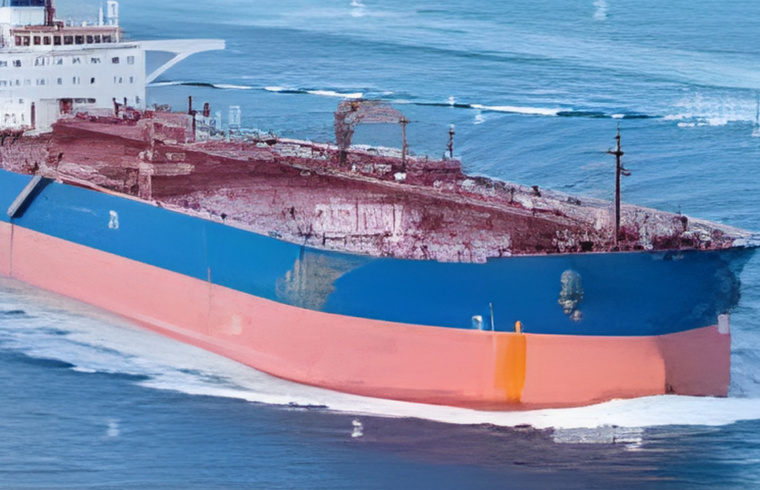
Nigeria’s reliance on imported petrol remains substantial despite efforts to strengthen local refining capacity, with new data revealing that the country spent about ₦12.8 trillion on Premium Motor Spirit (PMS) imports between August 2024 and October 2025.
The figures were derived from a factsheet released by the Nigerian Midstream and Downstream Petroleum Regulatory Authority (NMDPRA), which detailed the volume of petrol brought into the country during that period.
According to Gossip News Now, the calculations were based on an estimated average landing cost of ₦829.77 per litre, with Nigeria importing 15.435 billion litres of petrol over the 15-month timeframe.
Petrol Import Volumes Over the Period
The data reveals that several months recorded particularly high volumes of imported fuel, reflecting the nation’s continued dependence on external supply.
Among the months with the most significant import activity were:
- September 2024 – about 1.52 billion litres, the highest monthly figure
- August 2024 – approximately 1.38 billion litres
- December 2024 – roughly 1.31 billion litres
These volumes were recorded during periods when domestic refining output remained limited.
In 2025, monthly petrol imports varied considerably as the market adjusted to changing supply conditions. The recorded figures included:
- January – about 765.7 million litres
- February – around 770 million litres
- March – nearly 889.7 million litres
- April – approximately 861 million litres
- May – about 1.19 billion litres
- June – around 978 million litres
- July – roughly 1.11 billion litres
- August – about 818.4 million litres
- September – around 663 million litres
- October – approximately 855.6 million litres
These numbers demonstrate that Nigeria has continued to depend heavily on imported fuel despite attempts to expand domestic production.
Local Production Led by Dangote Refinery
While imports remained dominant, local production also contributed to national supply during the same period.
Industry records show that 7.208 billion litres of petrol were produced domestically, with the Dangote Refinery accounting for the entire volume.
Output from the refinery increased steadily across different months. For example, production rose from just over 100 million litres in September 2024 to levels exceeding 500 million litres per month through most of 2025.
This gradual growth in local supply has begun to reshape Nigeria’s downstream petroleum landscape.
Policy Decisions and Industry Debate
Efforts by the Federal Government to regulate imports have also generated debate among industry stakeholders.
At one point, authorities introduced a 15 percent ad valorem tariff on imported petrol and diesel, a policy implemented through directives issued to both the Federal Inland Revenue Service (FIRS) and the petroleum regulator.
However, the policy faced strong opposition from various groups within the oil and gas sector.
Critics argued that Nigeria had not yet developed enough refining capacity to completely replace imported fuel. As a result of these concerns, the government eventually withdrew the directive.
Industry participants also warned that restricting imports too early could create a market structure dominated by a single refinery, potentially affecting competition and energy security.
Dangote Refinery Raises Operational Concerns
Meanwhile, officials at the Dangote Refinery have expressed frustration over operational delays linked to vessel clearance procedures.
In a communication addressed to the chief executive of the NMDPRA, the refinery’s CEO David Bird stated that prolonged clearance processes are disrupting the facility’s operations and increasing operational costs.
He explained that delays involving crude supply vessels and product shipments have created inefficiencies affecting both the refinery and its customers.
Bird also indicated that the refinery has the capacity to significantly increase petrol supply in the near future.
Projected output includes:
- About 1.5 billion litres per month between December 2025 and January 2026
- Approximately 1.7 billion litres per month starting February 2026
To improve transparency, he suggested that regulatory officials could be stationed at the refinery to verify daily production figures and publicly report supply volumes.
Experts Explain Why Imports Continue
Energy analysts believe Nigeria cannot immediately eliminate petrol imports because the country’s refining ecosystem is still evolving.
Henry Adigun, an expert in energy law and extractive industries, explained that provisions within the Petroleum Industry Act (PIA) allow regulators to issue import licences to companies capable of filling supply gaps when domestic output falls short.
He noted that importers sometimes source fuel directly from the Dangote Refinery when its pricing is competitive with international markets.
However, Adigun cautioned that sustaining lower petrol prices locally would depend on favourable global crude oil market conditions.
Broader Impact on the Petroleum Sector
Petroleum economist Professor Wumi Iledare believes the emergence of the Dangote Refinery has already begun reshaping Nigeria’s downstream sector.
He pointed out that increased domestic refining could offer several advantages, including reduced dependence on foreign fuel supplies and improved market stability.
At the same time, he warned that several structural challenges still need to be addressed.
These challenges include issues such as crude supply reliability, logistics bottlenecks, regulatory oversight, and market concentration risks.
Commentary and Analysis
Nigeria’s petrol import bill highlights the complexity of achieving full energy independence in a country with enormous fuel demand.
While the Dangote Refinery represents a significant step toward local refining capacity, the transition away from imports is unlikely to happen overnight.
Balancing domestic production with competitive imports may remain necessary until multiple refineries operate at full capacity and supply chains become more efficient.
In the long term, industry observers say Nigeria’s success will depend on improving infrastructure, ensuring transparent market regulation, and encouraging a competitive refining environment capable of meeting the nation’s growing energy needs.
© 2025 Gossip News Now, a division of CHIEJOS HARBIAN DIGITAL MEDIA LTD. Contact us via admin@gossipnewsnow.online