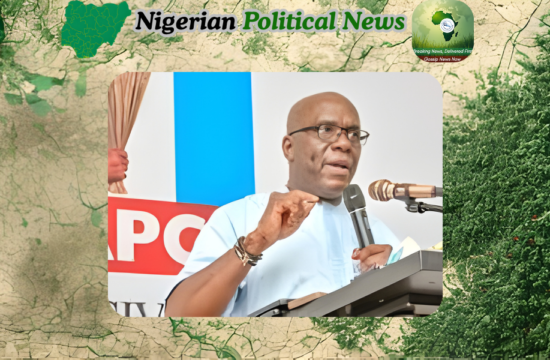

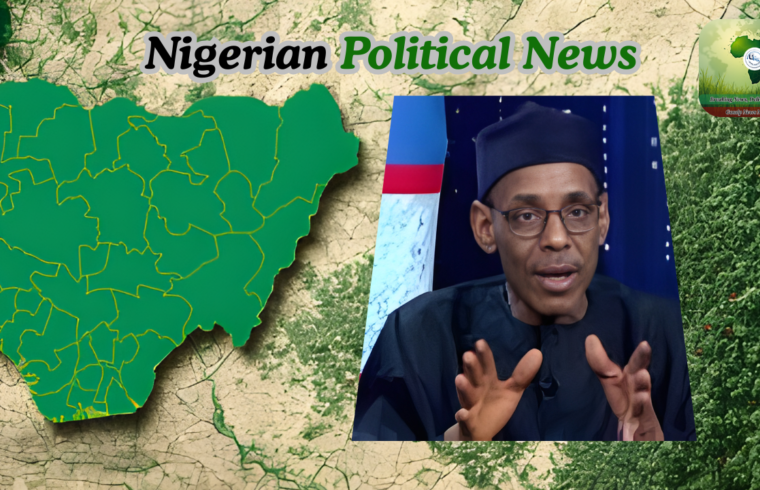
Concerns about the future of Nigeria’s main opposition party have resurfaced after political commentator Hakeem Baba-Ahmed suggested that the Peoples Democratic Party may struggle to recover its political relevance before the 2027 general elections.
Speaking during an appearance on Arise Television, Baba-Ahmed argued that the party’s internal problems have deepened over the years and could limit its ability to mount a strong electoral challenge.
Years of Political Dominance Followed by Decline
The PDP once held power at the federal level for more than a decade, but its political fortunes changed dramatically after the 2015 election defeat.
Since losing control of the presidency to the All Progressives Congress, the opposition party has struggled to rebuild its national structure and regain the level of influence it once enjoyed.
According to Baba-Ahmed, this long period outside federal power has exposed weaknesses that the party has been unable to fully address.
Persistent Internal Divisions
One of the most significant challenges facing the party, he said, is the persistent internal conflict among its leaders and factions.
These disagreements have repeatedly surfaced during key political moments, preventing the party from presenting a united front against its rivals.
He suggested that the repeated crises have gradually eroded public confidence in the PDP’s ability to function as a stable political alternative.
Alternative Opposition Platforms Emerging
While the PDP is often regarded as the primary opposition to the current administration, Baba-Ahmed noted that other political platforms could also emerge as challengers in the next election cycle.
Among the parties he mentioned as potential alternatives was the African Democratic Congress.
In his view, the future of Nigeria’s opposition politics may not necessarily depend solely on the PDP.
Self-Inflicted Political Damage
Baba-Ahmed further argued that many of the party’s current problems stem from internal mismanagement rather than external pressure from political rivals.
He said that discussions about the performance of the ruling government often overshadow the extent to which the PDP has weakened itself through unresolved disputes.
This internal instability, he believes, has accelerated the party’s gradual decline over recent years.
Struggles With Opposition Politics
Reflecting on the aftermath of the 2015 electoral defeat, Baba-Ahmed said several party leaders appeared unprepared for the transition from ruling party to opposition.
Despite decades of governance experience, many within the PDP found it difficult to reorganise their strategy and adapt to the realities of opposition politics.
This adjustment challenge, he noted, has lingered far longer than many observers expected.
Tinubu’s Influence on the Political Landscape
Baba-Ahmed also acknowledged the growing influence of Bola Ahmed Tinubu in shaping Nigeria’s political environment.
He observed that the president’s ability to attract political figures into his camp has contributed to the shifting dynamics of the country’s political alliances.
However, he emphasised that this factor alone does not explain the difficulties currently facing the PDP.
Defections and Party Fragmentation
Another issue he highlighted is the steady flow of defections from the opposition party to other political camps.
These departures, he said, often occur when internal disagreements remain unresolved, creating opportunities for rival parties to recruit dissatisfied members.
According to Baba-Ahmed, the resulting fragmentation weakens the party’s organisational strength ahead of major elections.
Historical Pattern of Party Splits
The PDP’s current situation, he suggested, is not entirely new.
He pointed out that similar internal divisions weakened the party before the 2015 elections, contributing to its loss of power at the national level.
From his perspective, the reappearance of these same structural problems indicates that the party may not have fully learned from its earlier experiences.
Commentary and Analysis
Baba-Ahmed’s remarks reflect broader debates about the state of Nigeria’s opposition politics ahead of the 2027 election cycle.
A strong opposition is widely considered essential for democratic accountability, yet persistent internal conflicts can undermine a party’s credibility and electoral prospects.
If the PDP hopes to regain national influence, analysts believe it may need to address its internal divisions, rebuild trust among party members, and develop a clear strategic vision.
At the same time, the possibility of emerging political platforms suggests that Nigeria’s political landscape could become increasingly competitive as new alliances and coalitions begin to form before the next general election.
© 2025 Gossip News Now, a division of CHIEJOS HARBIAN DIGITAL MEDIA LTD. Contact us via admin@gossipnewsnow.online