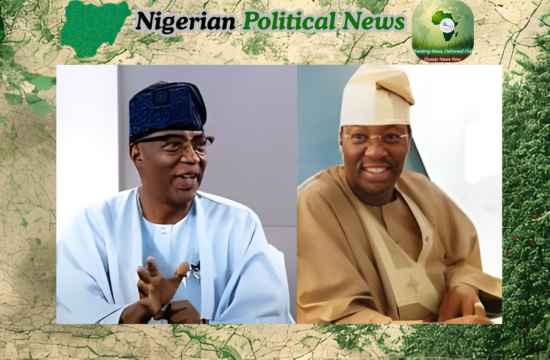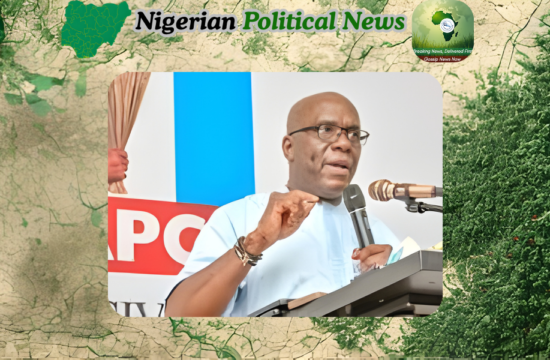

Internal tensions within the Peoples Democratic Party (PDP) may not be as difficult to resolve as many observers believe. Former presidential aspirant Gbenga Olawepo-Hashim has argued that the party’s ongoing crisis could be settled in a matter of days if its leaders prioritize political dialogue instead of legal confrontations.
Speaking during a consultative engagement with Tanimu Turaki, the party’s National Chairman, Olawepo-Hashim expressed confidence that the dispute is fundamentally political and therefore requires a political remedy rather than prolonged courtroom battles. The meeting formed part of wider efforts to find an amicable settlement outside the courts.
A Political Problem Demands a Political Solution
According to Olawepo-Hashim, many internal party disputes escalate unnecessarily because stakeholders rush to litigation before exhausting internal reconciliation mechanisms. He emphasized that if party leaders sit together, acknowledge their differences, and negotiate in good faith, the PDP’s present challenges could be resolved within a week.
He maintained that political negotiation remains the most effective way to address conflicts within party structures. Resorting immediately to legal action, he warned, often deepens divisions and prolongs crises that could otherwise be settled quickly through consensus.
Constitutional Pathways Still Exist
The former presidential contender also highlighted that the party still has a legitimate constitutional framework through which it can restore order. He explained that the National Executive Committee (NEC) retains the authority to intervene and provide direction during moments of uncertainty.
In his interpretation of the party’s constitution, a sufficient number of NEC members remain legitimate and capable of convening an emergency meeting that could settle the dispute decisively.
Understanding the Role of the NEC
Olawepo-Hashim pointed out that many NEC members were elected before the controversial Ibadan convention, meaning their positions remain constitutionally valid. As a result, these members can legally assemble and make decisions that protect the interests and stability of the party.
He added that the PDP constitution allows a significant majority of NEC members to initiate such a meeting when the situation demands urgent action.
Leadership Vacancies and Institutional Responsibility
Another issue fueling the crisis, according to Olawepo-Hashim, relates to the expiration of tenure for some members of the National Working Committee (NWC) on December 8. While that development created uncertainty in certain areas of leadership, he believes it does not prevent the party from restoring order.
Instead, he argued that constitutionally recognized NEC members can temporarily fill the leadership vacuum by exercising their authority to guide the party through the crisis.
Why Internal Resolution Matters
Beyond solving the PDP’s immediate challenges, Olawepo-Hashim stressed that settling the conflict internally would carry broader implications for Nigeria’s democratic environment. A stable opposition party, he suggested, is essential for maintaining a vibrant multiparty system.
If the PDP demonstrates the ability to resolve disputes through dialogue and institutional processes, it could strengthen public confidence not only in the party but also in the country’s democratic institutions.
Commentary and Analysis
Olawepo-Hashim’s remarks highlight a recurring pattern in Nigerian party politics—internal disagreements frequently escalate into legal disputes that drag on for months or even years. His call for political dialogue reflects a broader concern among analysts that excessive reliance on courts can weaken internal party mechanisms.
By emphasizing constitutional provisions and collective leadership within the NEC, he is advocating for institutional solutions rather than factional battles. If such an approach succeeds, it could set a precedent for how political parties in Nigeria manage internal conflicts in the future.
The situation also underscores the importance of clear succession planning and adherence to party constitutions. Without these safeguards, leadership transitions and internal disagreements can quickly evolve into prolonged crises.
Ultimately, the success of any resolution will depend on whether key PDP stakeholders are willing to place party unity above personal or factional interests.
© 2025 Gossip News Now , a division of CHIEJOS HARBIAN DIGITAL MEDIA LTD. Contact us via admin@gossipnewsnow.online