
The internal battle for control of the Peoples Democratic Party took a more dramatic turn on Monday after a rival bloc within the party formally wrote to the Independent National Electoral Commission, announcing a change in leadership and asking the electoral body to recognize a new acting national chairman.
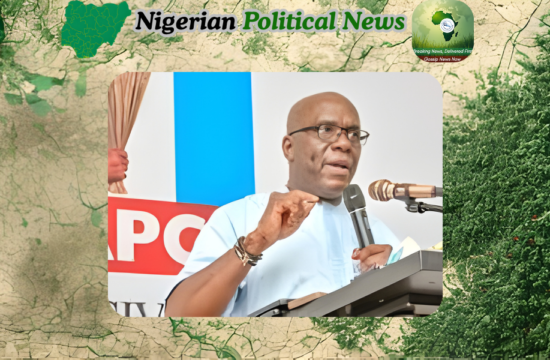
At the center of the latest dispute is Abdulrahman Mohammed, the PDP’s Vice Chairman for the North Central zone, whom the faction says has now taken over as Acting National Chairman. The notification to INEC was reportedly conveyed in a letter dated November 3, 2025, and endorsed by Senator Samuel Anyanwu, further deepening the uncertainty already hanging over the opposition party.
The group behind the move claimed Mohammed’s emergence was not arbitrary but followed deliberations at a National Working Committee meeting held on Saturday, November 1. On that basis, the faction argued that the leadership adjustment was consistent with the PDP’s constitutional provisions and should therefore be accepted as valid.
This latest development comes at a time when the party is already struggling with serious internal instability. The crisis worsened after a Federal High Court in Abuja stopped the PDP from holding its planned national convention in Ibadan, which had been scheduled for November 15 and 16. That ruling dealt a fresh blow to efforts aimed at restoring order within the party.
The court action was triggered by a case filed by three party officials who challenged the convention arrangements, alleging that the process violated the PDP’s own internal rules. Their legal action added another layer of pressure to a party already weighed down by factional suspicion and unresolved leadership disagreements.
What followed only pushed the PDP deeper into turmoil. One side of the divide moved to suspend certain National Working Committee members believed to be sympathetic to Federal Capital Territory Minister Nyesom Wike. In response, the opposing camp announced the suspension of Umar Damagum and five other NWC members, intensifying the battle over who truly controls the party machinery.
As the conflict spilled further into the open, supporters loyal to Abdulrahman Mohammed reportedly marched into the PDP national secretariat at Wadata Plaza in Abuja. Their protest was loud and symbolic, with chants, songs, and direct calls for an end to Damagum’s leadership. The demonstrators accused the existing acting chairman of mishandling party affairs and insisted that a takeover was necessary to rescue the PDP from further decline.
Rather than stop at protest, Mohammed went on to present himself before supporters at the PDP mini office in Wuse, Abuja, where he effectively assumed office and introduced an agenda he described as “A New Dawn.” That unveiling was clearly intended to signal not just a leadership change, but the beginning of a fresh direction for the troubled party.
According to Gossip News Now, the significance of the moment lies not only in the letter sent to INEC but also in the public manner in which the faction sought to legitimize Mohammed’s position. By combining formal notice with visible political action, the group appeared determined to create both legal and symbolic momentum around its claim.
The unfolding drama now leaves the PDP facing a deeper crisis of authority. With rival suspensions, competing claims to legitimacy, court intervention, and supporters openly taking sides, the party’s leadership problem has moved beyond routine disagreement and into a full-scale power struggle.
Commentary and Analysis
The PDP’s latest turmoil highlights a party increasingly trapped in internal warfare at a time when it needs stability the most. Instead of consolidating as a strong opposition force, it is spending energy on factional contests that continue to weaken its public image.
The decision by one bloc to notify INEC and formally back Abdulrahman Mohammed shows that the crisis is no longer being handled quietly behind party doors. It has now entered a stage where each camp is trying to secure institutional legitimacy while also winning the battle of perception.
The court ruling on the suspended convention has made matters even more serious. Without a successful national convention to reset the party structure, the PDP risks remaining stuck in a cycle of conflicting authority and repeated internal retaliation.
In practical political terms, this crisis could have long-term consequences. A party divided at the top often struggles to inspire confidence at the grassroots, and unless the PDP finds a credible path to reconciliation, the leadership battle may continue to damage its readiness for future elections.
© 2025 Gossip News Now, a division of CHIEJOS HARBIAN DIGITAL MEDIA LTD. Contact us via admin@gossipnewsnow.online