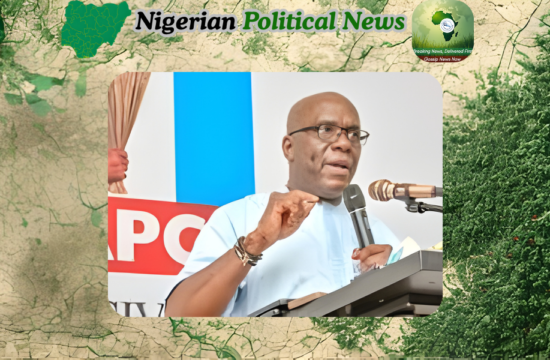

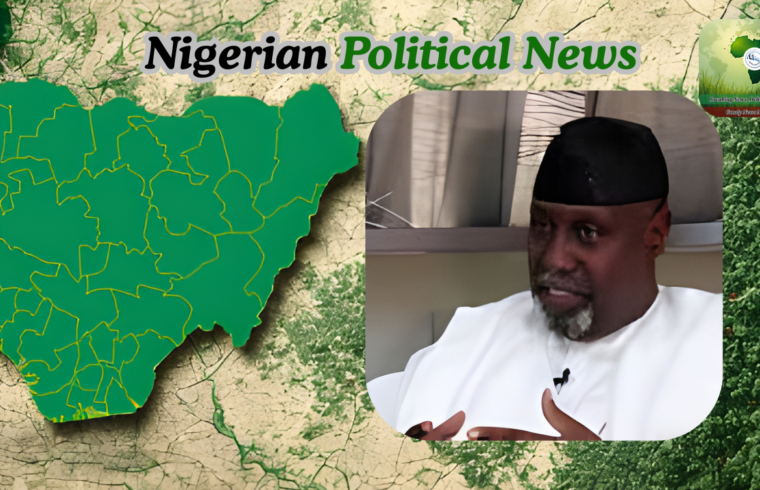
A senior figure within the All Progressives Congress (APC), Farouk Aliyu, has dismissed allegations suggesting that the ruling party is responsible for the ongoing leadership disputes troubling the Peoples Democratic Party (PDP).
Aliyu, who previously served as Minority Leader in the House of Representatives, made the remarks during a televised interview on Sunrise Daily, a programme aired by Channels Television. During the discussion, he argued that the PDP’s challenges stem largely from internal political decisions rather than interference from rival parties.
According to the APC chieftain, attempts to attribute the opposition party’s struggles to the ruling government are unfounded. He stressed that neither the APC nor President Bola Ahmed Tinubu is pursuing a strategy aimed at weakening opposition groups or transforming Nigeria into a one-party political system.
Aliyu maintained that the problems currently facing the PDP can be traced back to unresolved disagreements that emerged during preparations for the 2023 general elections.
He explained that tensions within the party escalated following the selection of Atiku Abubakar as the PDP’s presidential candidate for that election cycle.
After Atiku secured the nomination, the party leadership established a committee to recommend a suitable running mate for the presidential ticket. That decision, according to Aliyu, later became a major source of internal friction.
He recalled that Nyesom Wike, who was then governor of Rivers State, had initially been considered a strong contender for the vice-presidential slot.
However, the party eventually selected a different candidate for the position, a move Aliyu believes triggered resentment and deepened divisions among key members of the PDP.
From his perspective, the fallout from that decision created lasting fractures within the party that continue to shape its internal politics today.
Aliyu insisted that these developments were entirely the result of the PDP’s own political choices and should not be attributed to any actions by the APC.
While acknowledging that the crisis within the opposition could indirectly benefit the ruling party, he emphasized that such advantages do not mean the APC orchestrated the situation.
Commentary and Analysis
Political parties often face internal disagreements, especially during periods of candidate selection and power sharing. In Nigeria’s highly competitive political environment, disputes over zoning, nominations and leadership structures frequently become flashpoints that divide party members.
Aliyu’s comments highlight how internal decisions—particularly those involving presidential and vice-presidential nominations—can have long-term consequences for party cohesion.
The PDP’s ongoing crisis illustrates how unresolved political grievances can continue to influence party dynamics even after elections have concluded. Such divisions can weaken an opposition party’s ability to coordinate strategy and present a unified political message.
At the same time, accusations of interference between rival political parties are not uncommon in Nigeria’s political discourse. Aliyu’s response therefore reflects an attempt by the APC to distance itself from the difficulties currently facing its main opposition.
Ultimately, the stability of any political party depends largely on how effectively it manages internal disagreements and maintains trust among its key stakeholders.
© 2025 Gossip News Now, a division of CHIEJOS HARBIAN DIGITAL MEDIA LTD. Contact us via admin@gossipnewsnow.online