
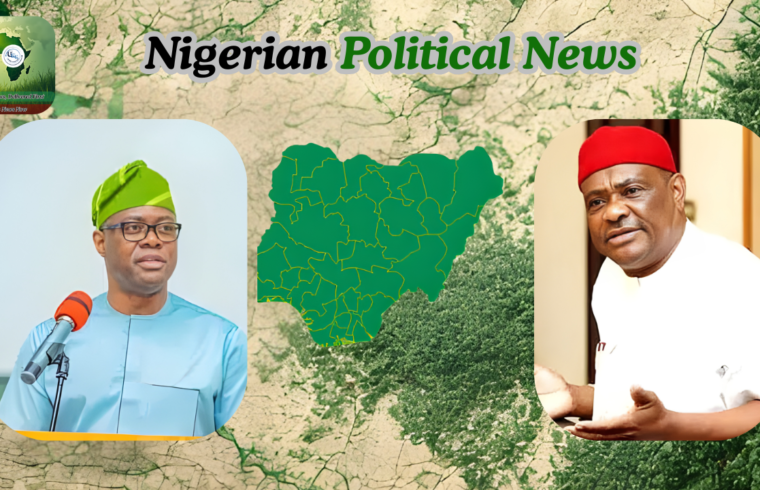
Internal tensions within the Peoples Democratic Party continue to escalate, with factions linked to Seyi Makinde and Nyesom Wike maintaining opposing positions despite recent efforts by the Independent National Electoral Commission (INEC) to calm the situation.
The electoral commission recently convened a meeting at its headquarters in Abuja, bringing together representatives from two rival leadership blocs within the party. One faction is associated with Tanimu Turaki, while the other is linked to Abdulrahman Mohammed.
INEC explained that its decision to step in followed several formal communications received from the party regarding the leadership disagreement. According to the commission, the intervention was also necessary due to upcoming elections that require clear party structures.
Among the electoral activities approaching are the Federal Capital Territory Area Council polls scheduled for February 21, 2026, as well as governorship elections in Ekiti and Osun states later in the year.
During the meeting, INEC officials emphasized that the commission has both constitutional and statutory authority to observe and supervise the activities of political parties in Nigeria.
Despite the engagement with the electoral body, both PDP factions appear unwilling to shift their positions on the leadership dispute.
Speaking on behalf of the Makinde-aligned camp, the faction’s National Publicity Secretary, Ini Ememobong, indicated that the group remains focused on strengthening the party ahead of future elections.
He noted that the discussions with INEC ended with both sides agreeing to wait for the ruling of the Court of Appeal regarding ongoing legal battles tied to the party’s leadership.
Ememobong also referenced a previous warning from the Supreme Court advising the electoral commission not to interfere in determining the internal leadership of political parties.
He explained that several legal decisions regarding the PDP’s convention are currently under appeal, including rulings delivered by Federal High Court judges concerning the organization of the party’s gathering.
According to him, one of the judgments did not stop the convention itself but restricted INEC from attending, while another required the inclusion of Sule Lamido in certain party processes.
Meanwhile, the faction aligned with Wike has expressed a different interpretation of events.
Representing that camp, Acting National Youth Leader Timothy Osadolor argued that the crisis cannot be resolved unless the legal disputes currently before the courts are withdrawn.
He maintained that the gathering held in Ibadan—referred to by the rival camp as a party convention—should not be recognized as legitimate.
Osadolor dismissed the event with sharp criticism, suggesting it resembled a celebratory gathering rather than a valid political exercise.
He also pointed to recent political developments involving some participants in the meeting, claiming that several individuals associated with the group had already left the party for other political platforms.
Among the examples he cited was Ademola Adeleke, whom he claimed had shifted allegiance to another party, alongside other politicians who have reportedly moved to the All Progressives Congress.
Osadolor added that those still interested in remaining part of the PDP should reconsider their stance and return fully to the party’s mainstream structure.
Commentary and Analysis
The ongoing disagreement within the PDP illustrates the persistent internal divisions that have affected the party in recent years. Leadership disputes, especially ahead of major elections, often weaken opposition parties by diverting attention from policy debates and campaign preparation.
INEC’s involvement reflects the commission’s concern about maintaining clear party leadership structures before upcoming electoral activities. Without a recognized leadership framework, it can become difficult for parties to nominate candidates or meet regulatory requirements.
However, Nigeria’s legal framework also places limits on how far electoral authorities can intervene in internal party affairs. This has made the judiciary an important arena for resolving such disputes.
If the Court of Appeal eventually delivers a decisive judgment, it may provide clarity on the leadership question. Until then, the standoff between the Makinde and Wike camps appears likely to continue.
© 2025 Gossip News Now , a division of CHIEJOS HARBIAN DIGITAL MEDIA LTD. Contact us via admin@gossipnewsnow.online