

A civil society organisation operating in the Niger Delta has rejected recent claims that failures in implementing the Petroleum Industry Act have deprived oil-producing communities of more than ₦1 trillion. The organisation argued that the allegations circulating in political circles do not accurately reflect the realities of ongoing reforms in the sector.
The response followed statements attributed to members of a committee in Nigeria’s House of Representatives, particularly the panel overseeing matters related to the South South Development Commission. The committee had suggested that weak enforcement of provisions within the oil industry law had significantly affected development funds meant for the Niger Delta region.
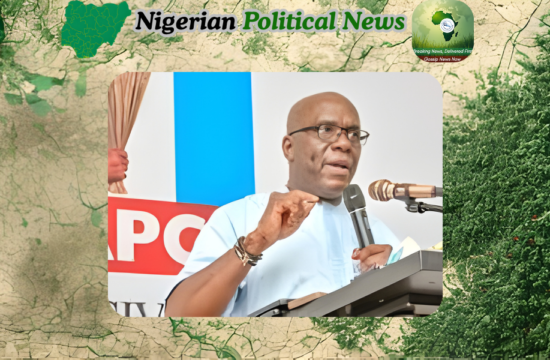
However, the Niger Delta Accountability and Resource Protection Network pushed back strongly against those assertions. The group’s president, Ebikabo West, said such statements risk misrepresenting the progress already made since the legislation was introduced.
West described the accusations as exaggerated and potentially damaging to the fragile stability the oil sector has recently begun to experience. According to Gossip News Now reports that the organisation believes that the regulatory environment created by the PIA has actually strengthened oversight mechanisms rather than weakened them.
He further explained that the framework guiding host community development funds is now subject to clearer monitoring and accountability rules. In his view, the new system ensures that communities affected by oil exploration benefit directly from projects and structured development programmes.
The NDARPN leader also warned that politically charged narratives could have unintended consequences for Nigeria’s energy sector. He noted that comments suggesting massive financial losses may undermine investor confidence at a time when authorities are trying to rebuild trust with international oil companies.
Another point raised by the advocacy group concerns environmental management responsibilities within oil-producing areas. West argued that compliance requirements under the new law have improved oversight of environmental obligations, creating stronger enforcement measures compared with previous regulatory arrangements.
He stressed that Nigeria is only beginning to reap the benefits of the legislative reforms after years of uncertainty that discouraged investment. According to him, the stability introduced by the PIA has helped restore confidence among investors who had previously reduced their presence due to policy inconsistencies.
West concluded by emphasising that parliamentary oversight remains an essential part of democratic governance. However, he urged lawmakers to base their assessments on verifiable facts rather than speculation capable of escalating tension within the petroleum industry.
Commentary and Analysis
The debate surrounding the Petroleum Industry Act highlights the broader challenge of balancing accountability with economic stability in Nigeria’s oil sector. While legislative bodies have the responsibility to scrutinise implementation, advocacy groups argue that exaggerated claims could discourage investment and disrupt ongoing reforms.
The controversy also underscores the importance of transparency in how host community funds are managed. If properly executed, the PIA’s framework could improve relationships between oil companies, regulators, and local communities—an issue that has historically been a major source of conflict in the Niger Delta.
As Nigeria continues implementing the law, the key test will be whether the reforms translate into measurable improvements in community development, environmental protection, and investor confidence.
© 2025 Gossip News Now , a division of CHIEJOS HARBIAN DIGITAL MEDIA LTD. Contact us via admin@gossipnewsnow.online