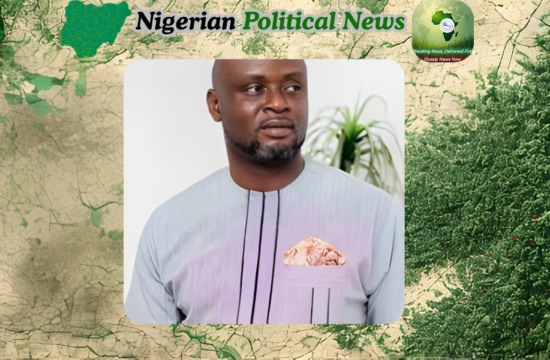


Fresh controversy has trailed the recent wave of violence in Plateau State, with a prominent figure in the All Progressives Congress, Saleh Zazzaga, alleging that opposition forces are behind the unrest. His claims have added a political dimension to an already tense security situation in the region.
Rising Violence and Public Anxiety
The killings, which reportedly claimed dozens of lives in parts of Jos North, have reignited fears of instability in Plateau State. Communities are once again grappling with uncertainty, as concerns grow over a possible escalation into wider unrest if decisive action is not taken.
While authorities continue to assess the situation, political reactions have begun to shape public discourse around the causes of the attacks.
Allegations of Political Motives
In his reaction, Saleh Zazzaga, who also leads the North-Central APC Forum, suggested that the violence may not be random. Instead, he linked the attacks to political interests aimed at influencing future electoral outcomes.
According to Gossip News Now, his argument centers on the belief that certain actors are attempting to weaken the political standing of both Bola Tinubu and Plateau State Governor Caleb Muftwang ahead of the 2027 elections.
He conveyed that those orchestrating the violence are allegedly trying to create instability in order to damage public confidence in the current leadership.
Electoral Calculations and Regional Stakes
The North-Central region has been identified as a crucial voting bloc in future elections, with projections suggesting significant electoral influence. Saleh Zazzaga indicated that the region had already shown strong political alignment, which could be disrupted by insecurity.
From his perspective, the violence may serve a strategic purpose:
- To weaken voter confidence in the current administration
- To reduce voter turnout in key communities
- To challenge the political gains of recent party realignments
- To cast doubt on governance at both state and federal levels
These claims suggest a broader political strategy tied to electoral outcomes rather than isolated security incidents.
Link to Party Defections
Another angle raised by Saleh Zazzaga involves the political shift of Caleb Muftwang toward the APC. He argued that this development may have unsettled rival interests, prompting resistance that could manifest in destabilizing actions within the state.
This interpretation frames the violence not just as a security issue but as a reaction to changing political loyalties in Plateau.
Reframing the Narrative
In a reworded reflection of his position, Saleh Zazzaga suggested that those responsible for the attacks may be attempting to manipulate public perception by creating the impression of governance failure. He implied that such tactics are designed to undermine both leadership credibility and electoral strength.
Commentary and Analysis
The situation highlights the complex intersection between security challenges and political rivalry in Nigeria. While allegations of politically motivated violence are not new, they often complicate efforts to address the root causes of conflict.
Observers note that without clear evidence, such claims risk deepening divisions and shifting focus away from immediate security solutions. However, they also underline the high political stakes surrounding Plateau State and the broader North-Central region.
Ultimately, the unfolding events raise critical questions about how political narratives shape public understanding of violence—and whether lasting peace can be achieved amid intense electoral competition.
© 2025 Gossip News Now , a division of CHIEJOS HARBIAN DIGITAL MEDIA LTD. Contact us via admin@gossipnewsnow.online