

Nigeria’s political environment witnessed renewed debate following the decision of Abubakar “Abba” Atiku to join the ruling All Progressives Congress (APC), a move that immediately sparked contrasting opinions within party ranks and across the wider political landscape.
Rather than universal celebration, reactions revealed a blend of optimism and caution. Prominent APC figure Joe Igbokwe publicly welcomed reports of the defection but urged party members to remain vigilant. In a social media remark that quickly circulated online, he hinted that enthusiasm should be balanced with careful political assessment, stressing the importance of protecting party unity.
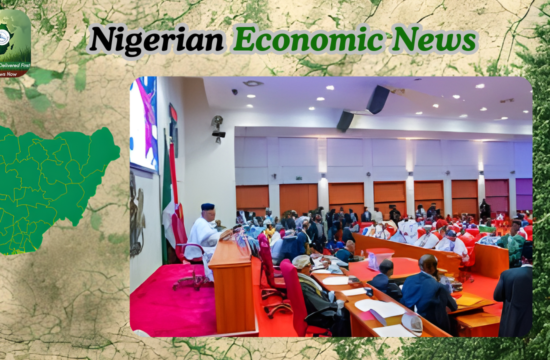
The younger Atiku’s formal entrance into the APC reportedly took place during a ceremony at the National Assembly complex in Abuja, where influential northern leaders received him into the party structure. The event underscored the symbolic weight attached to the development, particularly given the political stature of his family name.
During the gathering, Abba declared support for President Bola Ahmed Tinubu and encouraged his political associates to embrace the administration’s Renewed Hope Agenda. Observers noted that his message focused on forward-looking political collaboration rather than past party affiliations.
What has intensified national discussion, however, is the political contrast between father and son. While Abba aligned with the APC, former Vice President Atiku Abubakar recently charted a different course by leaving the Peoples Democratic Party (PDP) for the African Democratic Congress (ADC), where he is believed to be working toward a broader opposition coalition ahead of the 2027 elections.
Addressing public reactions, Atiku clarified that his son’s decision should be seen strictly as an individual choice. Emphasizing democratic principles, he explained that political independence applies even within families, reiterating his continued criticism of the current federal administration and his commitment to building an alternative national platform.
Within APC circles, responses reflected diverse strategic interpretations rather than a single narrative. Some leaders framed the defection as evidence that political boundaries remain flexible in modern Nigerian politics, while others interpreted it as a personal decision carrying broader symbolic implications.
Key party voices expressed their views in varying tones:
- Supportive Reception: Senator Barau Jibrin praised the move as courageous and conviction-driven.
- Strategic Acceptance: APC National Vice Chairman (North-East) Mustapha Salihu described it as an example of politics transcending traditional loyalties.
- Presidential Camp Perspective: A presidential aide portrayed the development as a political homecoming.
- Critical Interpretation: Lagos APC spokesman Seye Oladejo argued that the defection raised questions about Atiku Abubakar’s political credibility.
- Internal Caution: Former presidential aspirant Adamu Garba warned party members against excessive celebration, suggesting the implications should be carefully evaluated.
Interestingly, commentary from Lagos APC officials framed the move as politically significant, arguing that actions sometimes communicate more powerfully than prolonged political rhetoric. Their statement suggested that when close associates choose divergent political paths, public scrutiny naturally intensifies.
Political Context and Emerging Trends
Abba Atiku’s defection arrives at a time when Nigeria’s political alliances are undergoing rapid transformation. Across several regions, politicians are repositioning themselves as parties begin early strategic preparations for the 2027 general elections.
Analysts observe that cross-party movements are increasingly driven by coalition-building efforts, regional calculations, and access to political influence rather than strict ideological divisions. The North, in particular, has become a focal point of these realignments, with both ruling and opposition platforms seeking to consolidate support bases.
Commentary & Analysis
The contrasting political choices of father and son highlight a broader evolution within Nigerian democracy — one where personal political identity can diverge from family legacy. Such developments challenge traditional assumptions about loyalty and underscore the individualized nature of modern political participation.
For the APC, the defection offers symbolic momentum but also raises strategic questions about internal cohesion and long-term expectations. Welcoming high-profile entrants can strengthen political reach, yet it also requires careful integration to avoid factional tensions.
Meanwhile, Atiku Abubakar’s continued opposition strategy ensures that political competition remains vibrant. The situation effectively creates parallel narratives: consolidation within the ruling party and coalition-building among opposition forces.
Ultimately, Abba Atiku’s move reflects more than a personal political decision; it signals the early maneuvering phase of Nigeria’s next electoral cycle, where alliances, perceptions, and strategic timing may prove decisive long before campaigns officially begin.
© 2025 Gossip News Now, a division of CHIEJOS HARBIAN DIGITAL MEDIA LTD. Contact us via admin@gossipnewsnow.online