

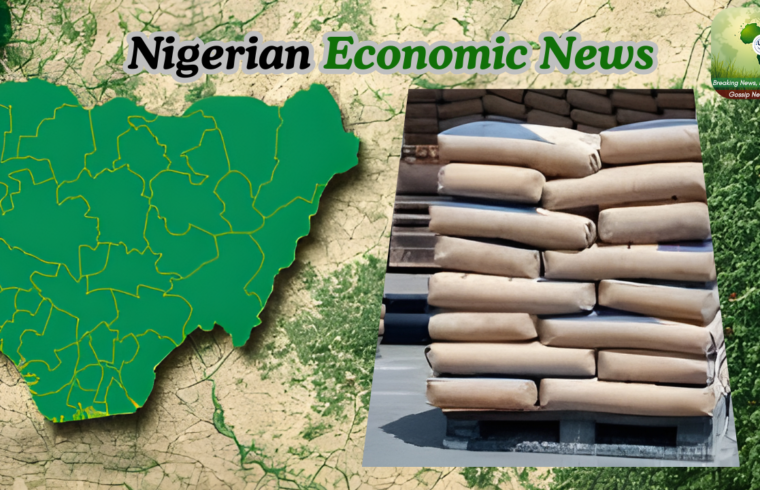
Nigeria’s building materials market has entered another phase of price adjustment, with cement costs rising steadily across different regions. The latest market checks reveal that contractors and individual home builders are now facing significantly higher expenses as cement prices climb in early 2026.
Across retail depots and distribution centers, popular brands have revised their selling prices upward, reflecting broader economic pressures affecting production and supply chains. Traders report that a 50kg bag of cement now sells above ₦10,000 nationwide, marking a clear shift from the relatively lower prices recorded in previous months.
Current market observations indicate that Mangal Cement is trading close to ₦10,500 per bag, Dangote Cement averages around ₦10,400, while BUA Cement remains slightly lower at approximately ₦10,200. Although variations exist depending on city location, transportation distance, and dealer margins, the nationwide pattern suggests a consistent upward movement.
Market Signals and Industry Reaction
The increase has sparked concern among stakeholders within Nigeria’s construction ecosystem. Developers warn that rising cement costs inevitably translate into more expensive housing projects, delayed construction timelines, and increased financial strain for prospective homeowners.
Builders who depend heavily on bulk purchases say the price changes are already altering project budgets. Many smaller contractors now face difficult decisions between scaling down projects or transferring additional costs to clients.
Key Drivers Behind the Price Movement
Industry analysts attribute the surge to a combination of economic and operational challenges rather than a single cause. The following factors are widely believed to be influencing current pricing trends:
- Energy-related expenses: Cement production consumes large amounts of diesel and gas. Persistent increases in fuel prices continue to raise manufacturing costs.
- Exchange rate volatility: Imported machinery components, maintenance parts, and chemical additives are priced in foreign currency, making production more expensive as the naira weakens.
- Logistics pressure: Haulage costs have risen due to poor road conditions, longer delivery times, and higher vehicle operating expenses.
- Supply limitations: Temporary factory shutdowns, maintenance activities, and regional security concerns occasionally restrict output levels.
- Demand expansion: Rapid urban growth and ongoing infrastructure projects have increased nationwide consumption of cement.
- General inflation: Rising prices across the economy force manufacturers to adjust product pricing to remain operational.
Regional Differences Still Exist
Although national averages provide a general picture, cement prices are not uniform across Nigeria. Markets closer to production plants may experience slightly lower prices, while distant locations often record higher retail figures due to added transportation costs.
Dealers also note that fluctuations can occur weekly depending on supply availability, seasonal construction demand, and bulk purchase negotiations.
Construction Sector Feeling the Impact
Real estate experts warn that the ripple effects of higher cement prices could reshape Nigeria’s housing landscape. When core building materials become more expensive, developers typically increase property prices or rental costs to recover investments.
This trend may further widen the affordability gap in urban areas where housing demand already exceeds supply. Small-scale builders, who form a large segment of Nigeria’s housing delivery system, appear particularly vulnerable to continuous price increases.
Commentary & Market Analysis
The recurring rise in cement prices reflects deeper structural challenges within Nigeria’s industrial economy. Despite strong local production capacity, manufacturers remain exposed to foreign exchange pressures, energy costs, and logistical inefficiencies.
Observers argue that stabilizing cement prices will likely require improvements in transport infrastructure, expanded domestic manufacturing of industrial equipment, and policies aimed at strengthening currency stability. Until such reforms take effect, construction costs may continue to trend upward, influencing both infrastructure development and residential housing availability.
In practical terms, cement pricing has evolved into a broader economic indicator — one that reveals how inflation, currency performance, and industrial productivity intersect within Nigeria’s economy.
© 2025 Gossip News Now , a division of CHIEJOS HARBIAN DIGITAL MEDIA LTD. Contact us via admin@gossipnewsnow.online