
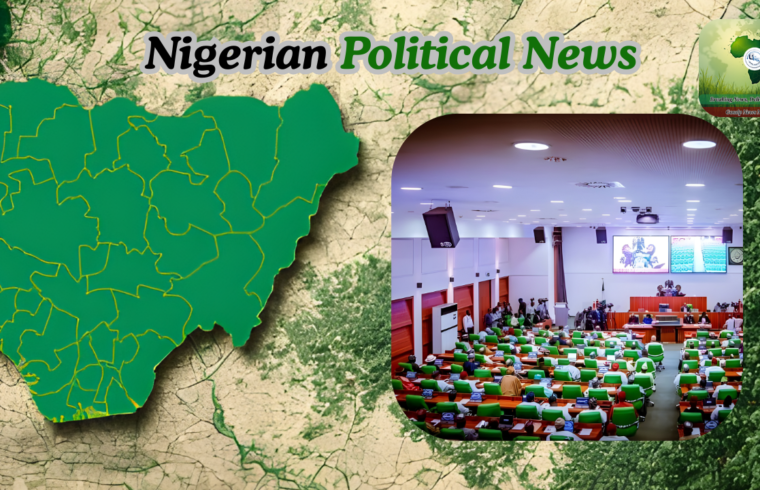
Nigeria’s House of Representatives Nigeria has endorsed a significant increase in the amount political candidates can spend during election campaigns as part of proposed amendments to the Electoral Act 2022.
The decision was reached during a plenary session in which lawmakers reviewed the proposed electoral reform bill clause by clause. The revisions are intended to update campaign finance rules ahead of the 2027 general elections.
One of the most notable changes affects presidential candidates, whose permitted campaign spending limit has now been raised to ₦10 billion—double the previous ceiling of ₦5 billion.
Members of the legislature also approved adjustments affecting other political offices, arguing that campaign costs have increased considerably in recent years.
Under the revised framework, candidates seeking state governorship positions may now spend up to ₦3 billion on their campaigns.
The review also introduced new limits for legislative contests at the federal level.
For aspirants contesting seats in the National Assembly:
- Those running for the Senate can now spend up to ₦500 million during their campaigns.
- Candidates seeking election into the House of Representatives have a new cap of ₦250 million.
At the state level, individuals contesting seats in State Houses of Assembly were granted a higher financial ceiling for campaign activities.
Their allowable campaign expenditure has been increased to ₦100 million.
Local government elections were also included in the spending review.
The updated limits for grassroots political contests include:
- ₦100 million for candidates seeking the position of local government chairman.
- ₦10 million for councillorship candidates.
Another major aspect of the amendment involves political donations from individuals and organisations.
The House approved a substantial increase in the amount a single donor can contribute to a candidate.
Under the revised proposal, the donation cap has been raised tenfold—from ₦50 million to ₦500 million.
Lawmakers explained that the changes were designed to reflect Nigeria’s current economic conditions and the rising cost of political campaigns across the country.
They argued that adjusting the financial thresholds would align the electoral law with contemporary realities faced by candidates during elections.
The spending revisions form part of a broader effort by the National Assembly to update Nigeria’s electoral framework before the next nationwide polls.
In a related development earlier in the week, the House also supported another electoral reform measure that would require real-time electronic transmission of election results.
This proposal has long been advocated by civil society organisations and election monitoring groups seeking greater transparency in Nigeria’s voting process.
However, the amendments to the Electoral Act are not yet final.
For the proposals to become law, they must still receive approval from the Senate of Nigeria and subsequently be signed by Bola Ahmed Tinubu.
Commentary and Analysis
The decision to increase campaign spending limits highlights the complex relationship between money and politics in Nigeria.
Supporters of the amendment argue that previous spending caps had become unrealistic due to inflation, the rising cost of media advertising, and the scale of nationwide political campaigns.
They believe updating the limits could encourage greater transparency by aligning legal thresholds with the actual financial demands of running for office.
Critics, however, worry that significantly higher spending allowances may further tilt the political playing field in favour of wealthy candidates or parties with access to large financial resources.
The debate also raises questions about the effectiveness of enforcement mechanisms designed to ensure candidates comply with campaign finance regulations.
As the country approaches the 2027 elections, the success of these reforms may ultimately depend on how effectively electoral authorities monitor spending and enforce the new rules.
© 2025 Gossip News Now, a division of CHIEJOS HARBIAN DIGITAL MEDIA LTD. Contact us via admin@gossipnewsnow.online