
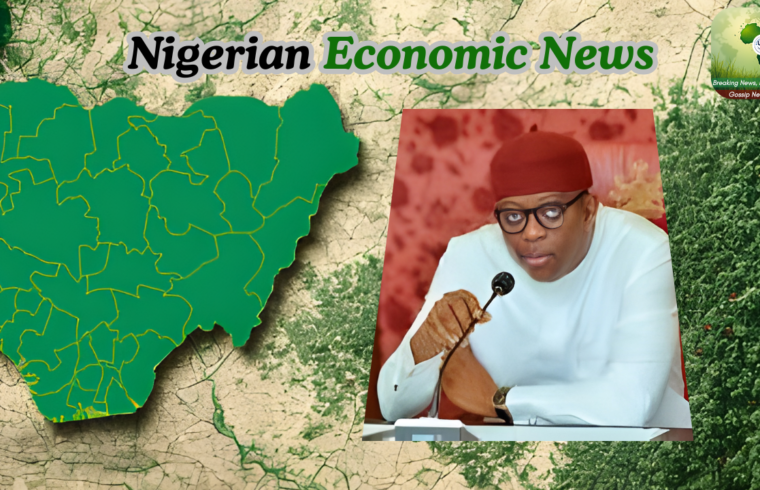
Fresh developments have intensified the political uncertainty in Rivers State after judicial authorities and lawmakers appeared to move along parallel paths regarding impeachment proceedings against Governor Siminalayi Fubara and his deputy, Ngozi Odu.
The Rivers State House of Assembly confirmed that the state’s Chief Judge, Justice Simeon Amadi, officially acknowledged documents forwarded to him relating to allegations of misconduct against the two top state officials. The confirmation marked a significant procedural step in an already tense political confrontation.
Legislative sources disclosed that the impeachment initiative originated from accusations categorized as gross misconduct. The notice was introduced during plenary by the Assembly Leader and reportedly carried the endorsement of more than two-thirds of lawmakers, satisfying the constitutional threshold required to trigger the process.
Following deliberations, the Assembly adopted a motion requesting the constitution of an investigative panel. Lawmakers listed several concerns forming the basis of their action, including disputes over public finance management, alleged unauthorized expenditures, delays surrounding the presentation of the 2026 budget proposal, and claims that funds meant for legislative operations were withheld.
However, the unfolding process encountered a major legal complication when a High Court sitting in Port Harcourt issued an interim restraining order. The directive, granted after separate suits filed by both the governor and his deputy, temporarily barred the Chief Judge from taking any action connected to impeachment communications submitted by the legislature.
The court order specifically restricted the judicial office from examining, transmitting, or acting upon impeachment-related correspondence while the legal challenge remains unresolved. This intervention introduced a new layer of constitutional interpretation into the already complex political situation.
Despite the court’s position, the Assembly insisted that its constitutional duties had already been fulfilled before the restraining order emerged. Enemi George, chairman of the House committee responsible for information and petitions, stated that all relevant documentation had been delivered and formally acknowledged by the Chief Judge.
According to the lawmaker, the legislative arm acted strictly within constitutional provisions guiding the removal of a sitting governor. He maintained that the Assembly’s steps complied fully with the procedures outlined in Section 188 of the 1999 Constitution, emphasizing that due process remained intact.
George also appealed to residents of Rivers State to remain calm amid growing political tension, warning against misinformation capable of undermining democratic institutions. He reassured citizens that the legislature’s objective was adherence to constitutional governance rather than political destabilization.
Commentary and Analysis
The Rivers impeachment episode highlights the delicate balance between legislative authority and judicial oversight in Nigeria’s democratic framework. While the constitution empowers state assemblies to initiate impeachment proceedings, courts frequently serve as arbiters when procedural disputes arise.
The simultaneous acknowledgment of impeachment documents and issuance of a restraining order illustrates how political conflicts often migrate into legal arenas. Such developments can create institutional standoffs where both sides claim constitutional legitimacy.
Beyond legal technicalities, the crisis reflects broader power negotiations within Rivers State’s political landscape. Impeachment processes rarely unfold in isolation; they often symbolize deeper struggles over political influence, loyalty networks, and control of governance structures.
As events progress, the outcome will likely depend on judicial interpretation, political negotiation, and public perception. Whether the process advances or stalls, the situation underscores how constitutional mechanisms can become focal points for larger political contests.
© 2025 Gossip News Now, a division of CHIEJOS HARBIAN DIGITAL MEDIA LTD. Contact us via admin@gossipnewsnow.online