
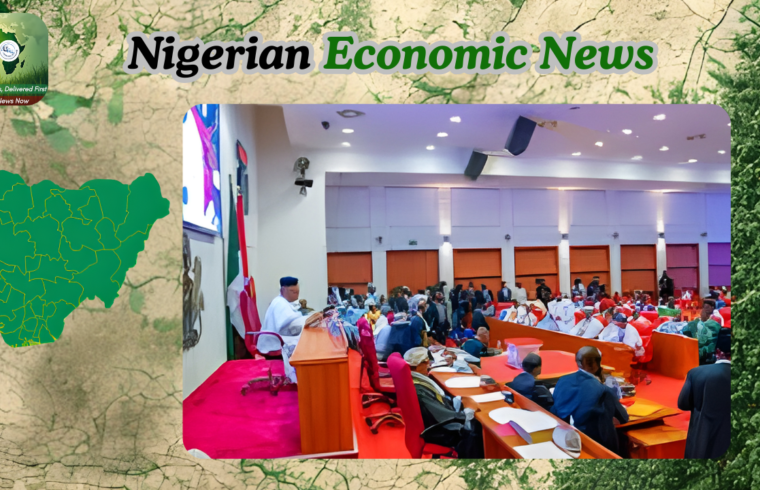
Tensions escalated at the National Assembly after members of the Senate Committee on Finance ordered the arrest of Hussaini Ishaq Magaji, Registrar General of the Corporate Affairs Commission (CAC), citing repeated absence from legislative oversight proceedings.
The directive emerged during a budget defence session involving agencies under the Federal Ministry of Finance, where senators expressed frustration over what they described as continued non-compliance with parliamentary invitations.
Committee Chairman Senator Sani Musa stated that the commission’s chief executive had consistently failed to attend scheduled hearings despite multiple summons. According to him, lawmakers were seeking clarification on unresolved financial matters but had repeatedly received junior representatives instead of the agency’s principal officer.
Lawmakers Raise Concerns Over Revenue Accountability
Central to the dispute were questions surrounding the reconciliation of the CAC’s revenue records. Senators indicated that discrepancies identified during financial reviews required direct explanations from the Registrar General.
Rather than narrating discussions in strict order, the committee’s concerns revolved around several accountability issues:
- Incomplete reconciliation of agency earnings
- Lack of direct engagement with oversight authorities
- Repeated delegation of appearances to subordinate officials
- Perceived disregard for legislative summons
Members argued that oversight hearings are constitutionally mandated and cannot be handled through proxy representation when critical financial clarifications are required.
Calls for Stronger Legislative Measures
During deliberations, Senator Orji Uzor Kalu reportedly urged the committee to consider recommending disciplinary action, including possible removal from office, arguing that continued absence weakened institutional respect between executive agencies and the legislature.
Another member, Senator Adams Oshiomhole, proposed financial consequences if the situation persists. His suggestions included suspending approval of future budget allocations to the commission and restricting access to internally generated funds until the agency head personally appears before lawmakers.
The committee supported the recommendation, signaling a tougher approach toward agencies perceived to be ignoring parliamentary authority.
Oversight Powers at the Center of Dispute
Lawmakers emphasized that the action was not personal but tied to their constitutional responsibility to scrutinize government finances. According to senators, accountability mechanisms depend on cooperation between government institutions and legislative committees.
The warrant of arrest represents one of the strongest enforcement tools available to parliamentary panels when officials decline to comply with invitations.
Commentary & Analysis
The confrontation highlights recurring tensions between regulatory agencies and legislative oversight bodies in Nigeria’s governance structure. Committees of the National Assembly rely heavily on cooperation from agency heads to verify revenue performance, spending patterns, and compliance with appropriation laws.
Political analysts note that oversight disputes often arise when agencies operate with significant internally generated revenue, making transparency a major concern for lawmakers seeking fiscal accountability.
The Senate’s decision also sends a broader signal to heads of government agencies about the importance of appearing personally before investigative panels. Failure to do so can be interpreted not merely as administrative delay but as institutional defiance.
Ultimately, the development underscores the balance of power embedded in Nigeria’s democratic framework — where legislative scrutiny serves as a key check on executive agencies managing public resources.
© 2025 Gossip News Now, a division of CHIEJOS HARBIAN DIGITAL MEDIA LTD. Contact us via admin@gossipnewsnow.online