
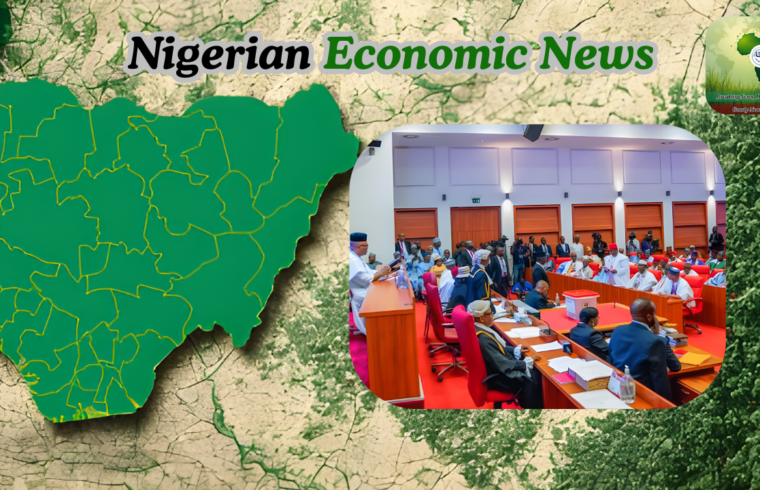
Nigeria’s Senate has approved a revision to the crude oil benchmark used for the country’s 2026 fiscal projections, lowering the estimated price from $64.80 to $60 per barrel as part of the federal government’s medium-term economic framework.
The decision forms part of the 2026–2028 Medium Term Expenditure Framework and Fiscal Strategy Paper (MTEF/FSP) tied to the proposed ₦54.46 trillion national budget.
Lawmakers adopted the adjustment after reviewing recommendations submitted by the Senate Committee on Finance, chaired by Senator Sani Musa of Niger East.
According to the committee, the revised benchmark reflects caution amid uncertainties in global energy markets. Ongoing geopolitical tensions in regions such as Europe and the Middle East were cited as factors contributing to fluctuations in international oil prices.
By lowering the benchmark price used for revenue estimates, lawmakers believe the budget framework will be more resilient if oil prices experience sudden downturns.
Although the oil price estimate for 2026 was reduced, projections for subsequent years were revised upward. The Senate approved benchmark prices of $65 per barrel for 2027 and $70 per barrel for 2028, indicating expectations of improved market conditions in the medium term.
Meanwhile, crude oil production targets remain unchanged in the fiscal plan. The government expects output to average 1.84 million barrels per day in 2026, with modest increases projected for the following years.
Production is expected to reach 1.88 million barrels daily in 2027 and 1.92 million barrels per day in 2028, according to the approved projections.
Beyond oil revenue assumptions, lawmakers also endorsed several macroeconomic indicators designed to guide fiscal planning.
Exchange rate projections approved by the Senate place the naira at approximately ₦1,512 per dollar in 2026, with gradual improvements expected over the following years.
The projections estimate the currency could strengthen to around ₦1,432.15 per dollar in 2027 and ₦1,383.18 per dollar by 2028, reflecting anticipated stabilization efforts by economic authorities.
Inflation is also expected to decline gradually within the same period.
Government projections suggest the rate could drop from 16.5 percent in 2026 to 13 percent in 2027, before reaching about 9 percent in 2028 if fiscal and monetary policies remain effective.
Economic growth forecasts within the framework were retained as previously proposed.
Real Gross Domestic Product (GDP) growth is expected to rise from 4.68 percent in 2026 to 5.96 percent in 2027, before reaching 7.9 percent in 2028.
Lawmakers noted that these projections depend heavily on the successful implementation of economic reforms and the impact of recently introduced tax legislation.
The finance committee also recommended additional reforms aimed at boosting government revenue.
Among the proposals is the introduction of a National Scanning Policy linked to the Nigeria Revenue Service’s Single Window system, designed to improve trade monitoring, reduce revenue leakages, and strengthen national security.
In terms of overall spending, the federal government’s proposed 2026 budget totals ₦54.46 trillion.
Out of this amount, projected government revenue stands at ₦34.33 trillion, leaving a significant gap that will require borrowing.
The Senate therefore approved ₦17.88 trillion in new borrowing, expected to come from both domestic and international sources.
Debt servicing obligations are projected to consume a large portion of government spending, with ₦15.52 trillion allocated for that purpose.
Additional allocations within the budget include ₦1.376 trillion for pensions, gratuities, and benefits for retired public workers.
Capital investment remains a major component of the spending plan, with ₦20.131 trillion earmarked for infrastructure and development projects.
Statutory transfers are expected to reach ₦3.152 trillion, while the government also set aside ₦388.54 billion for the Sinking Fund, used to repay maturing debts.
Other allocations include ₦15.265 trillion for recurrent (non-debt) expenditure, alongside intervention funds aimed at supporting key sectors of the economy.
The Senate Committee on Finance expressed appreciation to lawmakers for their collaboration in reviewing and approving the framework.
Committee members emphasized that effective implementation of the fiscal plan will be crucial for maintaining economic stability and supporting Nigeria’s long-term development goals.
Commentary and Analysis
The Senate’s decision to lower the oil benchmark highlights the importance of cautious fiscal planning in an economy heavily influenced by global oil prices.
Using a conservative benchmark can protect government finances if market prices fall below expectations, reducing the risk of revenue shortfalls.
However, the large borrowing component of the 2026 budget raises concerns about Nigeria’s growing public debt burden.
With debt servicing already consuming a substantial share of federal expenditure, analysts argue that improving non-oil revenue generation will be critical for maintaining fiscal sustainability.
The projected improvements in inflation, exchange rates, and GDP growth reflect optimism about the impact of ongoing economic reforms.
Still, achieving these targets will depend on consistent policy implementation, improved tax collection, and stronger economic diversification.
As Nigeria moves toward the 2026 fiscal year, the success of the approved budget framework will ultimately depend on how effectively government institutions translate these projections into real economic outcomes.
© 2025 Gossip News Now , a division of CHIEJOS HARBIAN DIGITAL MEDIA LTD. Contact us via admin@gossipnewsnow.online