
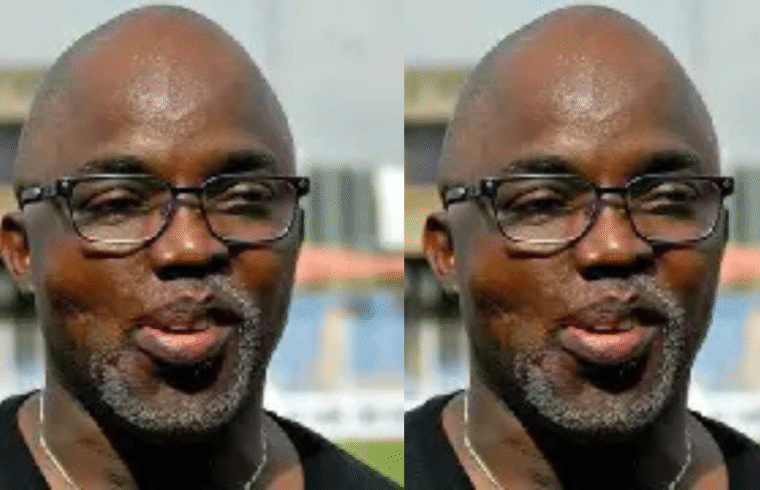
Former Nigeria Football Federation president Amaju Pinnick has appealed to critics of the federation to be more measured in how they address allegations of financial misconduct, arguing that constant public attacks are hurting Nigeria’s reputation beyond its borders. He made the remarks during an appearance on Arise TV, where he spoke about the fallout from accusations linked to football administration in the country.
The former football administrator, who headed the NFF between 2014 and 2022, said repeated claims of corruption and misuse of funds create a damaging impression of Nigeria in the eyes of the international community. In his view, the issue is no longer just about local criticism, but about how those accusations shape the nation’s global image.
At the center of the controversy are allegations surrounding money from FIFA’s Forward 2.0 Programme, which was reportedly allocated for the construction of two mini-stadiums said to be worth about $1.2 million each. Even though the federation has denied wrongdoing, debate over the handling of the funds has remained intense, especially online, where many football supporters continue to question the spending.
Pinnick defended the federation’s position and suggested that a large share of the backlash is being driven by distorted narratives, emotion, and suspicion rather than established facts. He argued that public institutions should not be condemned recklessly, especially when the full truth has not been clearly established.
He also expressed worry that this pattern of criticism could undermine Nigeria’s chances of securing international sporting opportunities. According to him, the country is already battling a trust deficit in some global circles, and constant internal attacks only make matters worse when bids are being considered for major events. Gossip News Now recalls that Pinnick linked this concern to Nigeria’s failed attempt to host the Commonwealth Games.
In another part of his remarks, he stressed that Nigerians should learn to challenge public institutions in a way that is constructive rather than destructive. He maintained that when government bodies or national institutions make progress, citizens should be willing to acknowledge that while still demanding accountability where necessary.
Pinnick went further to describe Nigeria as a country worth defending, saying citizens should not contribute to narratives that weaken its standing. He emphasized that the nation remains deeply valuable despite its many challenges and insisted that public discourse should reflect a sense of responsibility.
Another issue he raised was the effect of hostility in Nigeria’s public space on those considering service in government or sports leadership. He said the atmosphere of bitterness, anger, and distrust has become so intense that many qualified people may no longer feel motivated to participate in public life. For him, the problem is not just criticism itself, but the toxic manner in which it is often delivered.
He also spoke about the stigma Nigerians face abroad, lamenting that the country’s image sometimes leads to extra suspicion during international travel. That broader image problem, he suggested, is part of what makes the constant circulation of damaging narratives so troubling.
Touching on football specifically, Pinnick connected the country’s image concerns to the wider development of Nigerian sports. He referenced the Super Eagles’ 2026 FIFA World Cup qualification push and noted that even if Nigeria makes it to the tournament, other practical issues such as visa access for supporters could still affect fan participation. His point was that image, logistics, and opportunity are often tied together more closely than many people realize.
Even with his defense of the federation, Pinnick made it clear that he was not suggesting the NFF should be placed beyond scrutiny. Rather, he said any judgment should be rooted in facts and honesty, not assumption. He maintained that speaking truthfully is a duty, especially for those who have served the country in official positions.
The dispute continues to draw attention because the FIFA Forward Development Programme was created to improve infrastructure and governance in football across member nations. In Nigeria’s case, although the NFF insists the money in question was used appropriately, critics are still pushing for an independent review of the mini-stadium projects in the interest of transparency.
Commentary and Analysis
Pinnick’s intervention appears aimed at shifting the conversation from outrage to reputation management, but it also highlights the tension between protecting national image and demanding accountability. Many Nigerians believe institutions should face serious questioning when public funds or international grants are involved, especially in sectors with a long history of distrust.
At the same time, his warning touches on a real concern. Countries seeking to host international events or improve sporting credibility often depend not only on infrastructure and performance, but also on the confidence others have in their institutions. The real challenge, therefore, may be finding a balance where transparency is strengthened without turning every controversy into a broader attack on the country itself.
© 2025 Gossip News Now, a division of CHIEJOS HARBIAN DIGITAL MEDIA LTD. Contact us via admin@gossipnewsnow.online