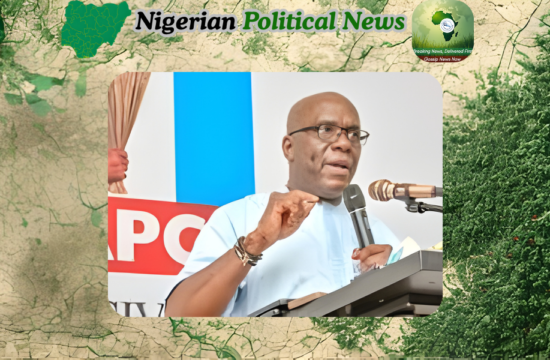


Former Minister of Transportation, Rotimi Amaechi, has revisited the political atmosphere surrounding Nigeria’s 2015 general election, describing it as a defining moment shaped not only by political actors but by widespread citizen mobilisation aimed at safeguarding the integrity of the vote.
Speaking during a public lecture, Amaechi argued that the success of that electoral cycle was largely driven by the determination of ordinary Nigerians who refused to remain passive observers. According to him, the atmosphere at the time sent a strong signal locally and internationally that any attempt to manipulate the electoral outcome would meet firm resistance.
He recalled that political stakeholders anticipated possible irregularities and therefore invested heavily in grassroots engagement. The mobilisation effort, he explained, was intended to demonstrate that electoral malpractice could trigger serious national consequences, a message he said resonated beyond Nigeria’s borders.
Amaechi used the reflection to criticize growing voter apathy, warning that disengagement among citizens weakens democratic accountability. In his view, public complaints about flawed elections become ineffective when voters themselves withdraw from participation, creating opportunities for outcomes decided by minority turnout.
He insisted that meaningful electoral reform cannot be imposed solely through legislation or government initiatives. Instead, he argued that democratic credibility begins with active civic responsibility, urging Nigerians to move beyond rhetoric and take ownership of the electoral process.
During his remarks, Amaechi emphasized that persistent claims that elections are predetermined often discourage participation and unintentionally benefit incumbents. He warned that when citizens assume outcomes are already decided, turnout drops, allowing leaders to secure victory without broad national endorsement.
Turning to leadership selection, the former minister challenged Nigerians to prioritize competence over ethnic or regional loyalty. He encouraged voters to evaluate candidates based on capacity for national transformation and commitment to protecting electoral integrity rather than identity politics.
Reflecting on campaign dynamics in 2015, Amaechi described how widespread mobilisation created political momentum that limited opponents’ influence in certain regions. According to him, public enthusiasm and organised civic engagement reshaped the campaign environment and strengthened confidence in the electoral process.
Commentary and Analysis
Amaechi’s reflections highlight a recurring debate within Nigeria’s democratic journey: whether institutional reforms or citizen participation plays the greater role in ensuring credible elections. His argument leans strongly toward public ownership of democracy, suggesting that active voter engagement remains the most effective safeguard against manipulation.
The comments also reveal a broader concern about declining political participation. As electoral skepticism grows, the risk of low turnout increases, potentially weakening democratic legitimacy. Political analysts often note that public confidence in elections depends as much on citizen behavior as on institutional transparency.
By emphasizing competence-based leadership selection, Amaechi’s message aligns with ongoing calls for issue-driven politics rather than identity-based voting patterns. Whether such appeals translate into sustained civic engagement will likely shape the tone of future elections as Nigeria prepares for another electoral cycle.
© 2025 Gossip News Now, a division of CHIEJOS HARBIAN DIGITAL MEDIA LTD. Contact us via admin@gossipnewsnow.online