
A political controversy recently unfolded within the African Democratic Congress (ADC) after activist Aisha Yesufu publicly acknowledged an error involving the publication of names included in a newly announced party committee.
The issue arose when the party unveiled a 50-member committee tasked with developing policy ideas and a manifesto aimed at strengthening the party’s political agenda and presenting an alternative vision for governance in Nigeria.
The initiative, which received approval from the ADC’s leadership structure including the National Working Committee and National Chairman, Senator David Mark, was intended to bring together respected voices to craft policy proposals reflecting the expectations of Nigerians.
However, shortly after the announcement was made public, questions emerged about how some individuals were included in the committee list.
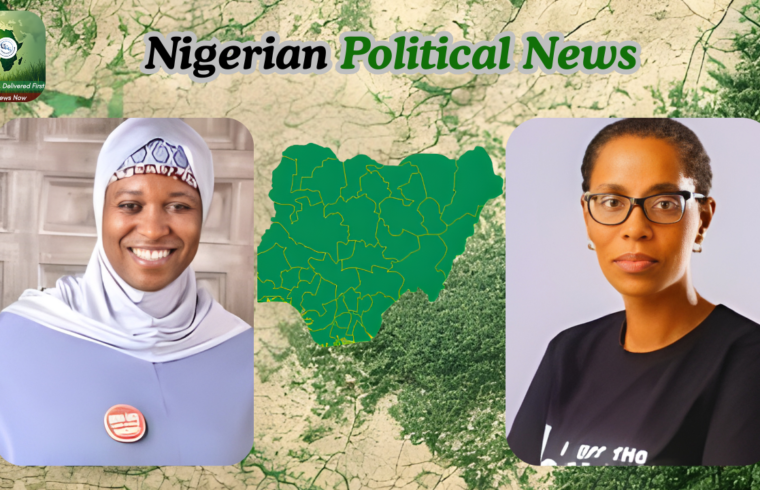
Among those who raised concerns was Yemi Adamolekun, the former Executive Director of Enough is Enough Nigeria (EiE). She reacted strongly after discovering her name had appeared on the committee list despite not giving prior approval.
Taking to social media platform 𝕏, Adamolekun openly questioned why her name was included in the announcement without her consent. She also clarified that she is not affiliated with the ADC as a member.
Her reaction highlighted concerns about credibility and transparency in political processes, particularly when individuals are publicly associated with initiatives they had not agreed to join.
Following the backlash, the party’s National Publicity Secretary, Bolaji Abdullahi, provided clarification regarding the composition of the committee.
According to him, participation in the committee was not limited strictly to members of the ADC or active politicians. He explained that the intention was to include professionals and individuals from diverse backgrounds who could contribute valuable policy perspectives.
Abdullahi further noted that the party had attempted to reach out to the individuals recommended for the committee and believed that the appropriate notifications had been made.
Despite that explanation, the controversy continued to generate discussions online, prompting Aisha Yesufu to address the matter directly.
In a message shared through her own 𝕏 account, Yesufu acknowledged that the situation should have been handled differently.
She admitted that the inclusion of Adamolekun’s name without prior confirmation was an oversight and described the situation as unacceptable.
While apologising, she emphasized that the party holds Adamolekun in high regard and respects her commitment to national development.
Yesufu explained that the mistake occurred during the process of assembling the list of individuals expected to contribute to the policy and manifesto project.
She also extended the apology beyond Adamolekun, noting that any other individuals whose names may have been published without proper consultation deserved the same acknowledgement and correction.
In her remarks, she emphasized that enthusiasm for rebuilding Nigeria must always be balanced with proper procedure and respect for consent.
Yesufu also thanked Adamolekun for drawing attention to the issue, noting that constructive criticism plays a role in helping institutions improve their processes.
At the time of the statement, Yesufu was serving on the ADC Revalidation, Mobilisation and Registration Committee, a role connected to the party’s ongoing efforts to expand its political base ahead of future elections.
Commentary and Analysis
The incident reflects a broader challenge within political organizations where administrative oversights can quickly evolve into public controversies, especially in the age of social media.
For opposition parties seeking to present themselves as credible alternatives, attention to procedural integrity becomes especially important.
Adamolekun’s response demonstrates how civil society figures are increasingly vigilant about maintaining independence and transparency when their names appear in political contexts.
Meanwhile, Yesufu’s prompt apology suggests an effort by the ADC to manage the situation and prevent the issue from escalating further.
The episode also highlights the delicate relationship between political parties and civil society actors, many of whom contribute ideas and expertise but remain cautious about formal political affiliation.
Ultimately, how political organizations handle such mistakes can influence public perception of their commitment to accountability and professionalism.
© 2025 Gossip News Now, a division of CHIEJOS HARBIAN DIGITAL MEDIA LTD. Contact us via admin@gossipnewsnow.online