
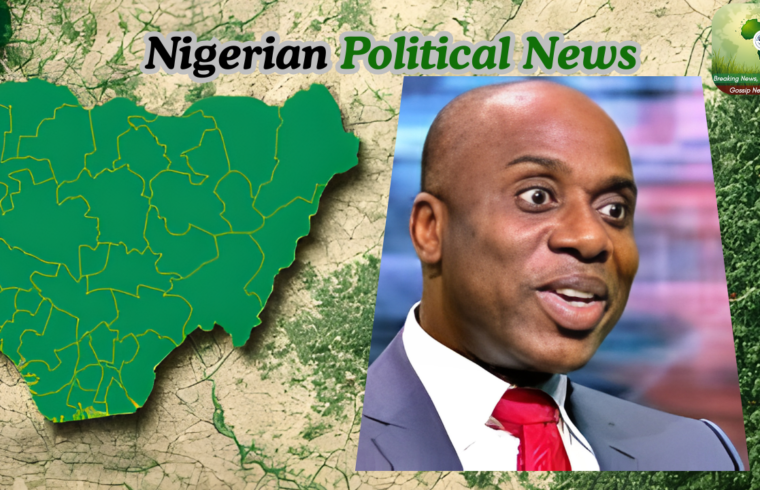
Former Minister of Transportation Rotimi Amaechi has challenged the prevailing narrative surrounding Nigeria’s political landscape, insisting that President Bola Tinubu’s dominance is less about personal political strength and more about weaknesses within opposition parties.
During a public lecture that quickly gained attention across political circles, Amaechi argued that the opposition’s internal failures—not the ruling party—represent the greatest barrier to political change. According to him, portraying the president as unbeatable distracts from deeper structural problems confronting rival political movements.
He explained that opposition groups have increasingly concentrated on internal competition and regional calculations rather than presenting clear solutions to Nigeria’s economic and governance challenges. In his view, political debates have shifted away from policy discussions toward struggles over influence and positioning.
Amaechi warned that such priorities alienate voters who expect leadership focused on national recovery and development. He noted that instead of debating governance strategies or evaluating leadership competence, many political actors remain preoccupied with questions of zoning arrangements and power distribution.
While addressing the broader political climate, the former Rivers State governor suggested that citizens sometimes unknowingly reinforce elite political strategies when public discourse becomes centered on personalities rather than performance. He argued that this pattern weakens democratic accountability and reduces meaningful competition.
Looking ahead, Amaechi disclosed that he has begun consultations with political stakeholders as part of preparations toward the 2027 general elections. He indicated that discussions are ongoing across different political platforms aimed at building a viable alternative capable of contesting future national leadership.
The African Democratic Congress (ADC) chieftain maintained that a credible opposition must develop a unified vision capable of inspiring public confidence rather than relying solely on dissatisfaction with the ruling government.
Commentary and Analysis
Amaechi’s remarks reflect a broader conversation within Nigeria’s political environment about the role of opposition parties in sustaining democratic balance. His argument shifts attention from the strength of incumbency to the organizational effectiveness of challengers.
Political analysts often note that ruling parties benefit when opposition forces remain fragmented or ideologically unclear. Without coherent messaging, strong internal discipline, and policy-driven campaigns, opposition movements struggle to convert public frustration into electoral victories.
By emphasizing strategic planning ahead of 2027, Amaechi appears to signal an emerging effort to reorganize opposition politics beyond traditional alliances. Whether such consultations produce a unified political front remains uncertain, but his comments underscore a growing recognition that electoral competitiveness depends as much on opposition renewal as on government performance.
Ultimately, the debate raised by Amaechi suggests that Nigeria’s democratic evolution may hinge less on defeating individuals and more on building institutions, ideas, and coalitions capable of offering voters credible alternatives.
© 2025 Gossip News Now, a division of CHIEJOS HARBIAN DIGITAL MEDIA LTD. Contact us via admin@gossipnewsnow.online