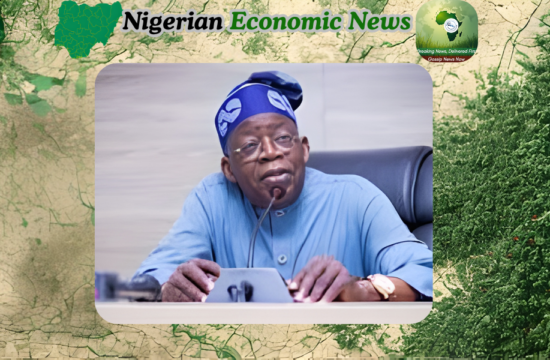

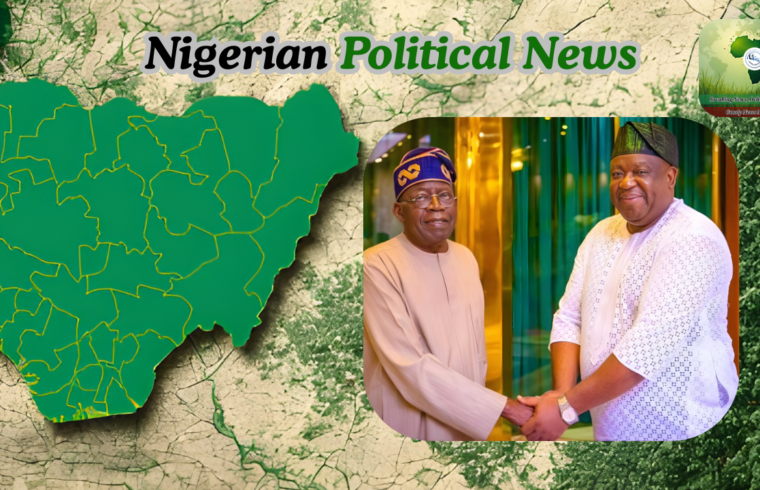
Governor Caleb Mutfwang has confirmed that his recent decision to leave the Peoples Democratic Party and join the All Progressives Congress came after repeated invitations from Nigeria’s president, Bola Ahmed Tinubu.
The Plateau State leader disclosed this shortly after formally announcing his switch to the ruling party, shedding light on the political developments that led to the move.
According to Mutfwang, President Tinubu had approached him on several occasions with an invitation to align with the APC. However, he said he initially declined the offers out of loyalty to his former political platform.
The governor revealed that despite his refusal at the time, the president maintained a respectful and cordial relationship with him and his administration.
He made the remarks while addressing political appointees and key stakeholders at the Government House in Jos, where he explained the reasoning behind his eventual decision.
Mutfwang noted that the invitation to join the APC did not come from the president alone. Several governors within the ruling party had also encouraged him to reconsider his political alignment.
Nevertheless, he insisted that he remained committed to the PDP for a long time and resisted the pressure to defect.
The turning point, according to the governor, was the growing instability within the PDP at the national level.
He argued that persistent structural issues within the party had weakened its ability to function effectively, making it difficult for state chapters to operate with confidence.
In his view, the challenges facing the national leadership of the party created a political environment that threatened the stability of governance at the state level.
Mutfwang also stressed that remaining within a struggling political structure posed significant risks, especially given the responsibility he carries toward the people of Plateau State.
He explained that his administration could not afford to gamble with the mandate given by voters.
The governor further noted that Plateau residents have previously endured difficult periods of political tension and uncertainty.
Because of those past experiences, he said it was important to avoid decisions that could potentially lead to renewed instability.
Reflecting on his political journey, Mutfwang remarked that winning an election is only one part of the democratic process.
He pointed out that ensuring that electoral mandates are protected and effective governance continues is equally important.
The governor also acknowledged that his relationship with the Plateau chapter of the APC had not always been smooth.
However, he said the cooperative approach shown by the Tinubu administration toward his government influenced his eventual decision.
According to him, the president’s willingness to maintain respectful engagement even when he refused earlier invitations demonstrated a level of political maturity.
Mutfwang suggested that aligning with the ruling party could also open new opportunities for Plateau State in terms of federal appointments and development initiatives.
He concluded that the move would allow the state to access resources and partnerships that could benefit its citizens in the long term.
Commentary and Analysis
Governor Mutfwang’s defection reflects a broader pattern in Nigerian politics where alliances often shift due to both strategic considerations and structural challenges within political parties.
In many cases, state leaders evaluate how their political alignment might influence access to federal support and national decision-making structures.
The governor’s remarks also highlight the importance of political stability in a country where party crises can significantly affect governance at different levels.
Another notable aspect of the development is the emphasis he placed on respectful engagement by the presidency, which he cited as a factor that encouraged dialogue rather than confrontation.
For Plateau State, the political shift may reshape relationships between state and federal authorities, potentially affecting policy cooperation and development projects.
As the political landscape continues to evolve, observers will be watching closely to see how the move influences governance, party dynamics, and public perception in the state.
© 2025 Gossip News Now, a division of CHIEJOS HARBIAN DIGITAL MEDIA LTD. Contact us via admin@gossipnewsnow.online