

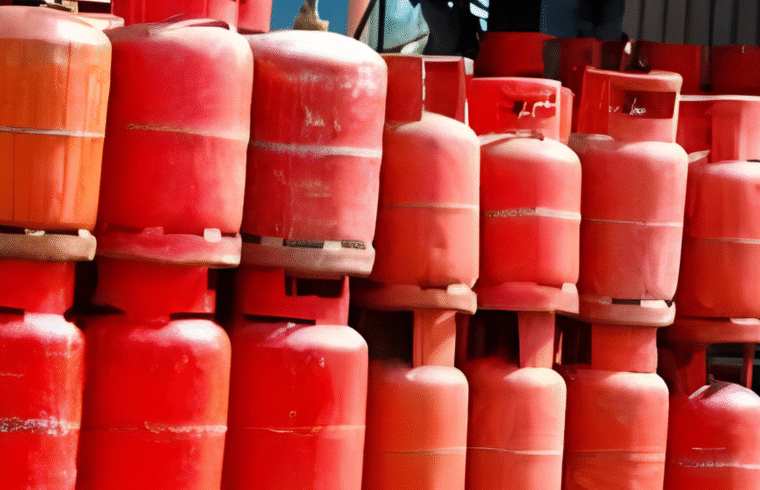
Nigerian households are facing increasing pressure as the cost of Liquefied Petroleum Gas (LPG)—commonly used for cooking—continues to climb. Recent checks across retail outlets indicate that the price of refilling cooking gas has risen significantly, forcing many families to adjust their monthly spending on essential household energy.
Reports from gas retailers show that the average cost now stands at about ₦1,180 per kilogram, a sharp rise compared with what consumers paid roughly a year ago. The increase has been linked to several economic factors affecting the supply chain, including currency fluctuations and higher distribution costs.
Gossip News Now reports that the rising price trend has become noticeable across multiple cities, with many marketers pointing to a combination of global and local pressures influencing LPG pricing.
Current Cooking Gas Refill Estimates
Based on information gathered from different LPG outlets, refill prices now roughly fall within the following range depending on cylinder size:
| Cylinder Size | Estimated Cost |
|---|---|
| 1kg refill | ₦1,180 |
| 3kg refill | ₦3,540 |
| 5kg refill | ₦5,900 |
| 10kg refill | ₦11,800 |
| 12kg refill | ₦14,160 |
| 12.5kg refill | ₦14,750 |
These prices may vary slightly depending on location, supply conditions, and the retailer’s operational expenses.
Why Cooking Gas Prices Are Increasing
Several economic and logistical issues have contributed to the steady rise in LPG refill costs across the country. The most commonly cited factors include:
International LPG price changes:
Nigeria still imports a significant portion of its cooking gas. When prices increase in the global LPG market, the impact is quickly felt locally.
Exchange rate instability:
Because LPG imports are paid for in U.S. dollars, fluctuations in the naira increase the overall cost of bringing the product into the country.
Transportation challenges:
Gas distribution often relies on trucks powered by diesel. Rising fuel prices and long delivery routes from coastal depots significantly raise transport expenses.
Additional charges and levies:
Marketers often face multiple operational fees, including depot charges, union levies, and local government payments.
Infrastructure and Supply Limitations
Another major challenge affecting gas prices is the limited number of storage facilities nationwide. Insufficient storage means suppliers must transport gas more frequently, increasing handling and distribution costs.
Logistics problems, including road conditions and long-distance delivery from seaports, also add to the overall cost before the product reaches retail outlets.
Seasonal Demand Pressure
Cooking gas prices in Nigeria sometimes rise during certain periods of the year when demand increases. These periods often include:
- End-of-year festive seasons
- Major religious celebrations
- Dry-season social events and gatherings
During such periods, higher demand can push refill prices upward.
Other Operational Expenses
Retailers also point to everyday business expenses that influence final gas prices. These costs may include equipment maintenance, shop rent, staff salaries, cylinder servicing, and safety compliance requirements.
Security concerns in some regions can further increase expenses, as suppliers may include additional costs to cover operational risks in certain areas.
Commentary and Analysis
The steady increase in cooking gas prices reflects broader economic pressures affecting Nigeria’s energy market. Heavy reliance on imported LPG makes domestic prices vulnerable to international market fluctuations and foreign exchange volatility.
Experts have often suggested that expanding local gas production and improving storage infrastructure could help stabilize prices in the long term. Improved transport networks and more efficient distribution systems could also reduce the cost of moving LPG across the country.
Until such structural improvements occur, many households may continue to face higher cooking gas costs as part of Nigeria’s broader inflationary environment.
© 2025 Gossip News Now, a division of CHIEJOS HARBIAN DIGITAL MEDIA LTD. Contact us via admin@gossipnewsnow.online