
//US Tightens Entry Rules, Places Nigeria and 37 Other Nations Under Visa Bond Requirement — Rewritten Version
US Tightens Entry Rules Places Nigeria and 37 Other Nations Under Visa Bond Requirement - Gossip News Now

US Tightens Entry Rules, Places Nigeria and 37 Other Nations Under Visa Bond Requirement — Rewritten Version

Spread the love

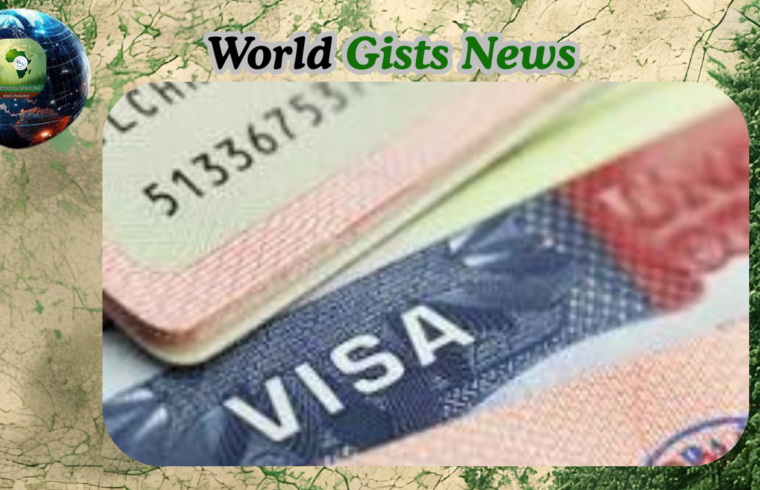
Nigerians and other foreign nationals applying for B1/B2 business and tourist visas to the United States may soon be required to pay visa bonds of up to $15,000, following a fresh directive issued by the U.S. Department of State.

According to reports, the new regulation — which further stiffens entry requirements — was introduced barely a week after the U.S. placed partial travel limitations on Nigeria and several other countries.

Visa bonds serve as financial guarantees imposed on applicants from countries considered “high-risk,” particularly those with noted security or compliance concerns.

The purpose of the bond is to ensure that travellers adhere to all visa conditions, including returning to their home countries once their authorised stay in the United States expires.

Information posted on the State Department portal, Travel.State.Gov, makes it clear that paying the bond without explicit instruction from a consular officer does not increase one’s chances of visa approval and will not be refunded.

Nigeria Among 24 African Countries Listed

Out of the 38 countries affected by the new requirement, 24 are African nations — Nigeria included — according to the updated list released by the State Department on Tuesday, January 6.

The Department explained that citizens of these countries have been classified under the visa bond requirement, with each nation receiving a specific implementation timeline.

The listed countries include Algeria, Angola, Antigua and Barbuda, Bangladesh, Benin, Bhutan, Botswana, Burundi, Cabo Verde, Central African Republic, Côte d’Ivoire, Cuba, Djibouti, Dominica, Fiji, Gabon, The Gambia, Guinea, Guinea-Bissau, Kyrgyzstan, Malawi, Mauritania, Namibia, and Nepal.

Additional nations affected are Nigeria, São Tomé and Príncipe, Senegal, Tajikistan, Tanzania, Togo, Tonga, Turkmenistan, Tuvalu, Uganda, Vanuatu, Venezuela, Zambia, and Zimbabwe.

For Nigeria specifically, U.S. authorities linked the decision to ongoing security concerns, including the operations of extremist groups such as Boko Haram and factions of the Islamic State within parts of the country.

The Department stated that these issues have led to “significant screening and vetting challenges” for Nigerian applicants.

Nigeria’s visa bond enforcement date has been set for January 21, 2026.

Overstay Concerns Highlighted

The U.S. government also pointed to Nigeria’s recorded visa overstay rates as a major reason for the country’s inclusion. Nigeria reportedly had an overstay rate of 5.56% for B1/B2 visitors and 11.90% for F, M, and J student and exchange visa categories.

As a result, the directive impacts not only immigrant visas but several non-immigrant classifications as well — including B-1, B-2, B-1/B-2, F, M, and J visas.

The policy document further explains that “Any citizen or national travelling with a passport issued by one of these countries, and who is otherwise qualified for a B1/B2 visa, must provide a bond of $5,000, $10,000, or $15,000, as determined at the visa interview.”

Applicants must also complete the Department of Homeland Security’s Form I-352 and formally agree to the bond requirements through the U.S. Treasury’s online payment system, Pay.gov.

The rule remains applicable regardless of which U.S. embassy or consulate receives the visa application.

Travellers required to post the bond must enter the United States through designated airports, including Boston Logan International Airport, John F. Kennedy International Airport in New York, and Washington Dulles International Airport in Virginia.

The State Department also clarified that the bond will only be refunded if Homeland Security confirms that the visa holder departed the U.S. on or before the approved stay expiration, did not use the visa before its validity lapsed, or was denied entry at a U.S. port of entry.

Nigeria was previously listed among 15 primarily African countries affected by a partial travel suspension issued by the U.S. government on December 16, signalling a continued tightening of American immigration and travel measures targeting specific nations.


© 2025 Gossip News Now, a division of CHIEJOS HARBIAN DIGITAL MEDIA LTD. Contact us via admin@gossipnewsnow.online


TAGS: