
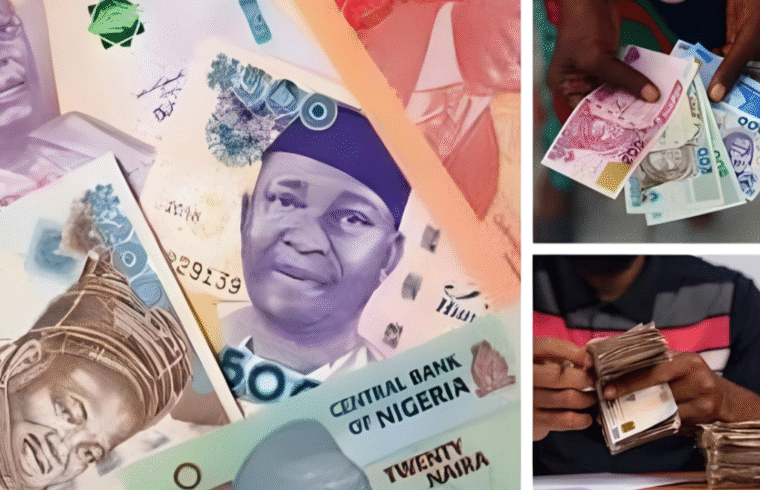
Nigeria’s foreign exchange market continues to draw attention as the naira–dollar exchange rate fluctuates across both the official and parallel markets.
On December 10, 2025, currency traders in Lagos reported notable differences between the rates available in the informal market and those recorded within the official banking system.
Parallel Market (Black Market) Exchange Rates
Information obtained from Bureau De Change (BDC) operators indicates that the U.S. dollar traded at different buying and selling prices in the Lagos parallel market.
Traders quoted the following figures for the day:
- Dollar selling price: ₦1,495 per $1
- Dollar buying price: ₦1,480 per $1
These rates reflect what individuals might encounter when exchanging foreign currency outside the official banking channels.
Official CBN Foreign Exchange Range
In contrast, the Central Bank of Nigeria (CBN) recorded lower rates within the formal financial system.
According to available data, the official exchange range for the day fell between:
- Highest rate: ₦1,457 per $1
- Lowest rate: ₦1,450 per $1
These figures represent transactions processed within the regulated foreign exchange framework.
Key Differences Between Both Markets
The gap between official and parallel market rates remains a common feature of Nigeria’s foreign exchange environment.
Several factors often contribute to this difference, including:
- Limited supply of foreign currency through official channels
- High demand from businesses and importers
- Market speculation and dealer pricing strategies
- Regional variations in currency trading activity
Because of these dynamics, the exchange rate in the parallel market can sometimes move faster than the official rate.
CBN Position on Parallel Market Transactions
The Central Bank of Nigeria continues to maintain that it does not recognize the black market as part of the official financial system.
Individuals and businesses in need of foreign currency are therefore advised by the apex bank to obtain forex through licensed commercial banks and other authorized channels.
This policy aims to strengthen transparency and maintain regulatory oversight in the country’s foreign exchange market.
Important Note for Currency Traders
It is important to recognize that exchange rates can vary depending on the location of the transaction and the dealer involved.
Currency values in the parallel market may shift several times within a single day as demand and supply conditions change.
As a result, the prices quoted above should be viewed as general market indicators rather than fixed rates.
Commentary and Analysis
Nigeria’s forex market has experienced persistent pressure due to strong demand for the U.S. dollar and ongoing economic adjustments.
While official reforms aim to stabilize the naira and improve liquidity in the banking system, many individuals and businesses still rely on the parallel market for quicker access to foreign currency.
The continued difference between official and black market rates highlights the challenges of managing currency stability in an economy where import dependence and foreign exchange demand remain high.
Until supply through official channels becomes more consistent, the parallel market is likely to remain a significant reference point for everyday currency transactions.
© 2025 Gossip News Now , a division of CHIEJOS HARBIAN DIGITAL MEDIA LTD. Contact us via admin@gossipnewsnow.online