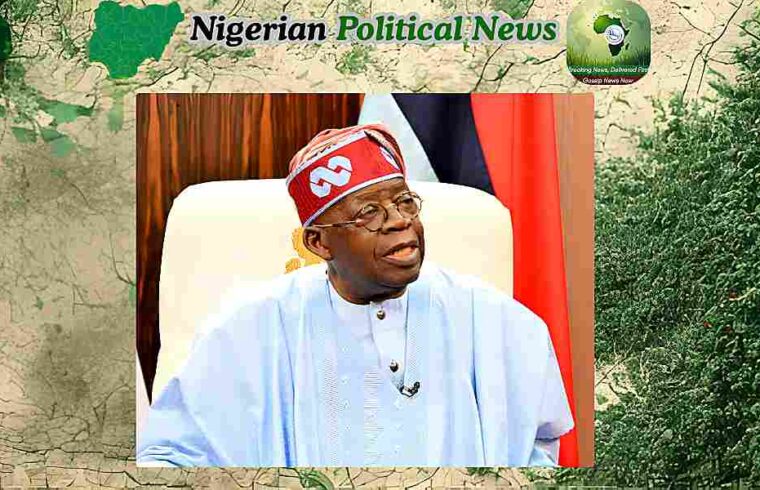
Former All Progressives Congress (APC) National Vice Chairman (South-West), Bankole Oluwajana, has dismissed the strength of the opposition ahead of the 2027 election, arguing that its activities amount largely to attacks against President Bola Tinubu on social media.
Oluwajana, who spoke during an interview with Punch, said serious political competition requires a strong organisational structure, which he claimed the opposition currently lacks.
He also argued that the political groupings emerging ahead of 2027 contain politicians with competing ambitions and interests.
At a Glance
- Bankole Oluwajana says there is no serious opposition to President Bola Tinubu ahead of 2027.
- He argues that political contenders need strong structures to mount a serious electoral challenge.
- The APC chieftain criticised opposition figures for what he described as social-media attacks against Tinubu.
- He divided opposition presidential hopefuls into three broad categories.
- Oluwajana questioned whether prominent opposition figures could agree on a single presidential candidate.
- He also defended Tinubu’s naira deregulation and subsidy-removal policies.
What Happened?
Oluwajana’s assessment centres on the readiness of opposition politicians and parties to challenge the ruling APC in the 2027 presidential election.
According to him, the existence of political figures seeking to oppose Tinubu does not automatically translate into a serious electoral challenge. He maintained that structure remains essential to winning elections in a democratic system.
He pointed to the United States and other democracies as examples where political contenders depend on established structures to compete effectively.
Oluwajana further criticised what he described as the opposition’s reliance on social media, saying its approach to campaigning had so far been focused on attacking Tinubu rather than demonstrating the organisational strength required for a presidential contest.
He consequently declared that, in his assessment, the electoral battle had already been won before the contest had properly begun.
The remarks amount to a strong political assessment by a senior APC figure, rather than an independent determination of the likely outcome of the 2027 election.
The Politicians At The Centre Of His Argument
Oluwajana’s criticism extends beyond opposition parties as institutions to the individual politicians involved in emerging political alignments.
He specifically mentioned former Governor Rauf Aregbesola, former Senate President David Mark and former Vice President Atiku Abubakar while questioning whether politicians with different backgrounds and political interests could form a unified opposition.
His argument was that political cooperation becomes difficult when the individuals involved retain competing ambitions, particularly over who should ultimately emerge as the presidential candidate.
That concern forms one of the central themes of his assessment of the opposition.
Oluwajana’s Three Categories Of Opposition Candidates
Oluwajana grouped opposition presidential hopefuls into three categories.
The first, he said, consists of what he described as “dreamers,” whom he claimed could be influenced by religious figures and unrealistic expectations.
The second category, according to the APC chieftain, comprises serial presidential contenders and politicians united largely by opposition to Tinubu. He described some members of this group as “strange bedfellows” because of their different political backgrounds and previous affiliations.
The third category, he said, consists of younger politicians whom he characterised as ambitious but lacking the political structure needed to win power.
He also warned against relying on protests, riots or other forms of political upheaval as a route to power, arguing that such developments could ultimately harm those seeking to benefit from them.
His Social Media Criticism
One of Oluwajana’s strongest criticisms was directed at the way he believes opposition politicians are conducting their campaign against Tinubu.
He said:
“Election is just a few months away, and the understanding of major opposition of what campaign means is to abuse President Tinubu on social media like kindergarten fighting over a bar of chocolate or groundnuts.”
He used the comparison to argue that social-media criticism alone does not constitute an effective political campaign.
Oluwajana also maintained that the opposition lacked the structure necessary to mount what he considered a credible challenge.
The Question Of A Common Candidate
Beyond political structure, Oluwajana identified another difficulty facing opposition cooperation: the question of who would eventually give up a presidential ambition for another candidate.
He argued that political figures seeking the presidency may find it difficult to form a genuinely unified team if each retains an interest in securing the presidential ticket.
Referring to the politicians involved in the emerging opposition arrangements, he said:
“The issues will be who steps down for the other.”
That question could become particularly important if opposition parties attempt to consolidate their political strength around one presidential candidate before the 2027 election.
Why He Questioned The Opposition Alliance
Oluwajana specifically questioned the combination of Aregbesola, David Mark and Atiku, pointing to what he described as their different political backgrounds and ideological orientations.
He said:
“How can we explain Aregbesola, a known progressive socialist, pairing up with David Mark, who retired as a military irredentist and an aggressive capitalist like Atiku?”
He argued that such differences could make it difficult for the politicians to operate as a unified political team.
His comments therefore frame the opposition challenge not simply as a question of numbers, but also of whether politicians with different histories, ambitions and political identities can maintain a common purpose.
Background To The 2027 Contest
The comments come as political actors position themselves for the 2027 general elections.
The source material presents Oluwajana’s argument primarily from the perspective of the APC and does not include a detailed response from the opposition to his assessment.
As a result, his descriptions of opposition politicians, their motivations and their chances of defeating Tinubu should be understood as his political assessment, rather than established facts about the 2027 contest.
That distinction is important because the strength of an electoral challenge cannot be determined solely from one politician’s assessment.
Strategic Assessment
Oluwajana’s argument places political structure, organisation and candidate coordination at the centre of the 2027 contest.
His comments suggest that, from the APC chieftain’s perspective, opposition politicians face a strategic challenge if they want to convert individual political ambitions and alliances into a coordinated presidential campaign.
The question of a common candidate is particularly significant within his argument. If several prominent politicians remain interested in the presidency, reaching an agreement over who should lead a joint ticket could become a difficult stage in any coalition-building process.
At the same time, the supplied material does not establish that the opposition lacks the capacity to compete in 2027 or that Tinubu has already secured victory. Those remain political claims made by Oluwajana.
What Oluwajana Says About Tinubu’s Policies
While criticising the opposition, Oluwajana offered a strong defence of the Tinubu administration.
He described President Tinubu as “very brilliant” and said the president knows where he is taking Nigeria.
Oluwajana also defended the administration’s economic policies, particularly naira deregulation and the removal of fuel subsidy.
He argued that previous governments had focused mainly on governance, while Tinubu’s administration had added what he described as restructuring, growth and economic stability to its agenda.
According to him, any mistakes or shortcomings in the administration should not necessarily be interpreted as deliberate failures, adding that such difficulties could be addressed over time.
His Defence Of Naira Deregulation And Subsidy Removal
Oluwajana maintained that the government’s economic reforms would benefit Nigeria over time.
He specifically argued that the removal of subsidy and naira deregulation had changed the economic relationship between Nigerians travelling abroad and the goods they take with them.
He said Nigerians could now travel abroad with goods to sell and return with empty boxes, contrasting this with what he described as the previous pattern in which Nigerians travelled abroad with empty boxes and returned with imported goods.
Oluwajana argued that the reversal was beneficial to the Nigerian economy.
These are his views on the government’s economic policies and were presented in the interview as part of his broader defence of the Tinubu administration.
Political Implications
Oluwajana’s remarks add another layer to the increasingly competitive political narrative surrounding the 2027 election.
For the opposition, the issues he raised—political structure, competing ambitions and the search for a common candidate—are among the areas that could shape how any alliance develops.
For the APC, such arguments also provide a basis for presenting Tinubu as the stronger and more organised political force ahead of the election.
However, the eventual strength of the competing parties will depend on developments beyond the claims contained in this interview, including their organisation, candidate decisions, alliances and ability to translate political support into an electoral campaign.
A Contest Still To Be Decided
Oluwajana has presented a confident assessment of Tinubu’s position and a sharply critical view of the opposition.
His central argument is that social-media attacks cannot substitute for political structure, while competing ambitions could make it difficult for opposition figures to unite behind one candidate.
He has also used his assessment to defend the Tinubu administration’s economic direction.
But while the APC chieftain declared that there is “no contest,” that remains his assessment of the 2027 political landscape, not the outcome of an election that has yet to be held.