Leadership Choice, Not Political Arithmetic, May Define Nigeria’s 2027 Election
As political parties begin positioning themselves for the 2027 General Elections, discussions are increasingly extending beyond campaign alliances to broader questions about the qualities Nigerians expect from their next President.
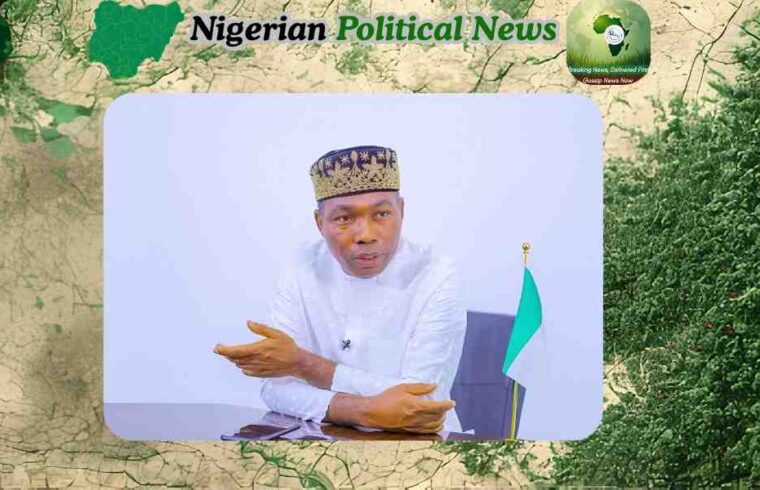
Against that backdrop, Social Democratic Party (SDP) presidential candidate Prince Adewole Adebayo has argued that the central issue should not be whether opposition parties succeed in building electoral coalitions, but whether the country can rally behind a leader committed to constitutional governance, accountability and respect for democratic institutions.
According to Adebayo, the success of the next election will depend less on political calculations and more on presenting Nigerians with a credible leadership alternative capable of restoring confidence in governance.
In Brief
Prince Adewole Adebayo has called on Nigerians to unite behind what he described as a credible alternative to President Bola Tinubu ahead of the 2027 General Elections.
Speaking on the direction of the country’s politics, the SDP presidential candidate said discussions should move beyond coalition negotiations and instead concentrate on identifying a leader who would uphold the Constitution, strengthen public institutions and govern with accountability.
He argued that meaningful political change would require support from Nigerians across political parties, ethnic groups and religious backgrounds rather than relying solely on opposition alliances.
Adebayo Urges Broader National Unity
Speaking on preparations for the next presidential election, Adebayo maintained that replacing the current administration should not be viewed as the responsibility of opposition political parties alone.
Instead, he said Nigerians from different political, ethnic and religious backgrounds must work towards identifying and supporting a candidate capable of providing responsible national leadership.
According to the SDP presidential candidate, the country’s democratic future depends on citizens placing national interest above partisan calculations.
“What we want is for all Nigerians to unite, not only the opposition. The issue is ensuring that person is not President Tinubu.”
Coalition Talks Should Not Overshadow Leadership Qualities
While coalition discussions continue across the political landscape, Adebayo argued that excessive attention on political permutations risks diverting focus from the qualities required of the country’s next leader.
He maintained that regardless of whether a presidential candidate emerges through a coalition arrangement or from a single political party, Nigeria can only have one President at a time.
For that reason, he said public debate should concentrate on competence, integrity and the ability to govern within the framework of the Constitution rather than on political negotiations alone.
Constitution and Accountability at the Centre of His Message
Expanding on his vision, Adebayo said Nigeria requires a President who respects democratic institutions, upholds the rule of law and remains accountable to citizens.
He argued that effective governance begins with adherence to constitutional principles and a willingness to respond constructively to issues affecting the country.
According to him, leadership should be measured by commitment to public service, institutional integrity and responsible decision-making rather than political advantage.
Political Change Requires More Than Opposition Parties, Adebayo Says
Expanding on his vision for the 2027 General Elections, Prince Adewole Adebayo argued that political transformation cannot be achieved by opposition parties acting alone.
He maintained that meaningful national change would require the active participation of Nigerians from every region, political affiliation, ethnic background and religious community.
According to the SDP presidential candidate, elections should be viewed as a collective national responsibility rather than a contest limited to political organisations seeking power.
He said building broad public confidence behind a credible presidential candidate would be more important than the number of parties participating in coalition negotiations.
National Interest Should Come Before Party Interests
Adebayo stressed that discussions surrounding the next presidential election should focus on identifying the most capable individual to lead the country instead of concentrating on political calculations between parties.
In his view, the success of any future administration will depend on the character, competence and constitutional commitment of the eventual President rather than the political arrangement that produces the candidate.
He argued that Nigerians should evaluate prospective leaders based on their willingness to strengthen institutions, uphold democratic principles and govern responsibly.
For Adebayo, national unity must take precedence over partisan interests if the country is to overcome its longstanding governance challenges.
Northern Nigeria Holds Untapped Development Potential
Beyond electoral politics, Adebayo rejected suggestions that Northern Nigeria should be blamed for the country’s developmental difficulties.
Instead, he described the region as one of Nigeria’s greatest strategic assets, pointing to its large population and abundant natural resources as opportunities capable of driving national growth.
According to him, the North possesses enormous economic potential that can be unlocked through purposeful leadership and sustained public investment.
Rather than viewing the region through the lens of political stereotypes, he urged policymakers to focus on expanding opportunities that would benefit both the North and the country as a whole.
Education, Agriculture and Infrastructure Identified as Priorities
Discussing areas requiring long-term attention, Adebayo highlighted education, agriculture and infrastructure as sectors capable of transforming Northern Nigeria’s economic prospects.
He argued that consistent investment in these areas would improve productivity, expand employment opportunities and contribute significantly to national development.
The SDP presidential candidate maintained that strengthening these sectors should form part of a broader national development strategy rather than being treated as regional concerns alone.
According to him, improving educational opportunities and modernising agricultural and transport infrastructure would enable communities to contribute more effectively to Nigeria’s economic growth.
Leadership, Not Geography, Is the Real Challenge
Adebayo rejected narratives that attribute Nigeria’s economic, security and governance problems to any particular region or ethnic group.
Instead, he argued that poor leadership has remained the principal factor behind many of the country’s persistent challenges.
He maintained that with accountable leadership, effective institutions and responsible policy implementation, every part of Nigeria possesses the capacity to contribute meaningfully to national progress.
For that reason, he said discussions ahead of the 2027 election should focus on leadership quality and governance rather than regional divisions or political stereotypes.
Adebayo Questions Tinubu Administration’s Approach to Governance
Turning to the performance of the current administration, Prince Adewole Adebayo argued that Nigeria’s leadership should be more responsive to concerns raised by citizens and national institutions.
He criticised what he described as the Federal Government’s approach to constitutional governance, maintaining that public officials should regard criticism as an opportunity to improve governance rather than as political opposition.
According to the SDP presidential candidate, democratic accountability requires leaders to remain open to differing opinions, particularly when they come from respected national voices.
Catholic Bishops’ Engagement Cited as Missed Opportunity
Adebayo referred to President Bola Ahmed Tinubu’s recent engagement with Catholic bishops, saying the occasion presented an opportunity for the administration to respond more directly to concerns affecting Nigerians.
According to him, the government adopted what he described as a defensive posture instead of constructively addressing issues raised during the interaction.
He argued that national conversations involving respected religious institutions should encourage dialogue on governance rather than become occasions for political disagreement.
Those remarks reflect Adebayo’s assessment of the administration’s handling of public criticism.
Calls for Greater Democratic Accountability
Expanding on his position, Adebayo encouraged religious leaders, community organisations and other stakeholders to continue participating in public discussions on governance.
He said voices from outside government play an important role in drawing attention to issues such as insecurity, economic hardship and institutional performance.
According to him, constructive criticism should be viewed as a valuable element of democratic governance because it provides elected leaders with opportunities to reassess policies and improve public service delivery.
He added that citizens and public institutions alike should never be discouraged from holding governments accountable.
Final Assessment of the Current Administration
Concluding his remarks, Adebayo argued that many of Nigeria’s governance challenges extend beyond individual policy decisions.
He suggested that public explanations offered for some government actions have, in his view, generated additional public concern rather than resolving existing issues.
Summarising his assessment, he said:
“A failed government is one in which the explanation is worse than the problem.”
The statement formed part of his broader appeal for Nigerians to evaluate the performance of the current administration as preparations for the 2027 General Elections continue.
Election Outlook
As political activities gradually intensify ahead of the 2027 elections, statements from prospective presidential candidates are expected to shape debates on governance, accountability and national development.
Adebayo’s remarks place renewed emphasis on leadership standards, institutional integrity and citizen participation rather than coalition politics alone.
Whether those themes gain wider political traction will depend on how parties present their policy alternatives and how voters assess competing visions for Nigeria’s future during the election campaign.
Reader Discussion
Prince Adewole Adebayo argues that the 2027 presidential election should be determined by leadership quality, constitutional governance and national unity rather than coalition politics or regional interests.
Do you believe Nigeria’s next election will be decided more by the strength of candidates’ ideas and governance records, or will political alliances and coalition building remain the decisive factors? Share your views respectfully in the comments below.
© 2025 Gossip News Now, a division of CHIEJOS HARBIAN DIGITAL MEDIA LTD. Contact us: admin@gossipnewsnow.online