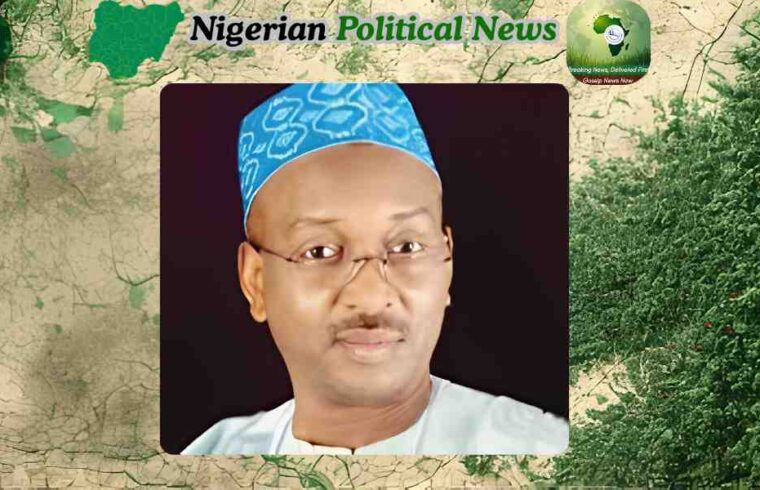
Nigeria’s opposition parties could strengthen their challenge to the incumbent in the 2027 presidential election if they overcome their differences and unite behind a single candidate, former African Democratic Congress (ADC) chieftain Salihu Lukman has argued.
Lukman said experience from elections in Nigeria and other countries showed that opposition parties competing separately could fragment their votes, resources and political strength, potentially giving an advantage to the incumbent.
Lukman’s Proposal
The public affairs analyst made the call in a statement at the weekend, urging opposition parties to cooperate and develop a common strategy ahead of the January 16, 2027, presidential election.
According to Lukman, the opposition needs to move beyond individual party interests and establish a cohesive political front capable of attracting enough support to challenge President Bola Tinubu’s re-election bid.
He argued that cooperation should not simply be treated as a political aspiration but as a deliberate electoral strategy.
Why Lukman Wants A Single Candidate
Lukman said elections have repeatedly demonstrated the difficulty an opposition faces when several parties draw support from the same broad constituency.
He maintained that when opposition parties divide their votes, resources and political energies among competing candidates, they can unintentionally strengthen the candidate they are seeking to remove from office.
He said:
“The experience of elections in Nigeria and elsewhere has repeatedly demonstrated that a divided opposition often strengthens the incumbent.”
Lukman further argued that opposition parties must therefore transform their differences into cooperation if they want to mount an effective challenge in 2027.
“Division is a choice. Cooperation must now become a strategy.”
His argument is centred on the idea that a unified opposition candidate could consolidate votes that might otherwise be distributed among several presidential contenders.
The G100 Coalition
Lukman’s latest position follows an earlier call for opposition members to remain united and focused on their objective of defeating President Bola Tinubu.
He made that appeal during an appearance on Arise Television, where he also discussed the proposed G100 opposition coalition.
According to Lukman, the coalition is intended to provide a structure through which opposition members can work together and develop a more cohesive political platform.
He said the G100 was needed to encourage candidate engagement, address issues confronting Nigeria and establish a clear plan for the period after the election.
The proposal therefore goes beyond simply asking opposition parties to cooperate during the campaign. Lukman’s position is that they need to develop a common political framework capable of bringing different interests together.
Stakeholder Position
Lukman’s position is that opposition parties have a better strategic chance of challenging the incumbent if they avoid splitting their support across multiple presidential candidates.
He has specifically advocated cooperation around one presidential candidate and presented the G100 as part of the effort to create a more cohesive opposition front.
However, the supplied report does not contain responses from President Bola Tinubu, the ruling party or other opposition parties to Lukman’s proposal.
As a result, the argument for a single opposition candidate remains Lukman’s stated political position, rather than an established consensus among the parties involved.
Strategic Assessment
The central strategic issue raised by Lukman is the potential effect of opposition fragmentation on the distribution of votes in a presidential election.
If parties with overlapping voter bases present separate candidates, their combined support could be divided among them rather than concentrated behind one contender. A unified candidate, by contrast, could potentially consolidate a larger share of that support.
But achieving such unity would require opposition parties to agree on more than a common objective. They would also need to resolve questions around candidate selection, party interests, political leadership and the distribution of influence within any coalition.
The supplied report does not establish whether the opposition parties have reached such an agreement. Lukman’s proposal therefore represents a strategic argument about what he believes they should do ahead of the election.
Political Implications
The debate over opposition unity could become an important part of preparations for the 2027 presidential contest.
A credible coalition involving multiple opposition parties could alter the competitive landscape if the parties are able to agree on a common candidate and maintain their cooperation throughout the electoral process.
At the same time, the practical challenge would be converting calls for unity into an organisational structure that competing political interests are willing to support.
Lukman’s emphasis on the G100 suggests that he sees coordination, candidate engagement and a common post-election plan as necessary components of such an effort.
Whether opposition parties ultimately adopt that strategy remains an open political question.
Political Significance
Lukman’s intervention places opposition unity at the centre of the strategic debate ahead of the 2027 presidential election.
His argument is straightforward: competing opposition parties risk dividing the votes, resources and political energy available to challenge the incumbent, while cooperation around a single candidate could create a more concentrated electoral challenge.
The significance of the proposal will ultimately depend on whether opposition parties can move from calls for unity to an agreed structure, candidate and strategy.
For now, the call for a single opposition presidential candidate remains Lukman’s prescription for creating a stronger challenge in 2027.