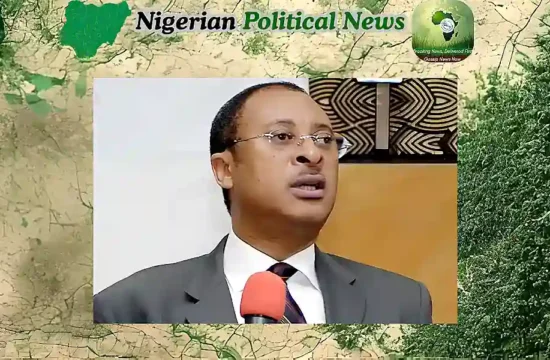
As political activities begin to gather pace ahead of the 2027 general elections, the All Progressives Congress (APC) in Lagos State has launched a sharp critique of opposition parties, describing them as fragmented, ineffective, and lacking a clear sense of direction.
The party’s spokesperson, Seye Oladejo, raised concerns over what he portrayed as a troubling decline in the quality of opposition politics in Nigeria. He suggested that instead of playing their expected democratic role, opposition groups have drifted into inconsistency and internal disorder.
Reframing his remarks, Oladejo indicated that a functional democracy depends heavily on a strong opposition capable of challenging policies and offering alternatives. However, he argued that the current landscape falls short of that standard, with many parties struggling to present coherent ideas or unified leadership.
Political developments today by Gossip News Now reports that the APC believes the absence of a structured and visionary opposition could weaken democratic engagement, as citizens may feel disconnected when credible alternatives are lacking.
Concerns Over Political Ideology and Consistency
According to Seye Oladejo, one of the major issues affecting opposition parties is the lack of ideological grounding. He pointed out that frequent defections and shifting alliances have created a perception of opportunism rather than principled politics.
He further implied that many politicians appear more focused on personal ambition than long-term national interest, leading to a political environment marked by uncertainty and inconsistency.
Key criticisms highlighted by the APC include:
- Weak internal structures within opposition parties
- Absence of a unified political philosophy
- Frequent party-switching driven by personal interests
- Limited policy alternatives to challenge government actions
Tinubu’s Opposition Legacy Highlighted
In drawing comparisons, Seye Oladejo referenced President Bola Ahmed Tinubu’s earlier years in opposition politics, portraying him as a disciplined strategist who helped redefine political engagement in Nigeria.
He suggested that Tinubu’s approach was rooted in clear ideology, consistency, and a long-term vision, which eventually contributed to the emergence of the APC as a dominant political force.
Policy Debate and National Direction
The APC also took aim at what it described as the opposition’s failure to present actionable plans in critical sectors such as:
- Economic reform and growth strategies
- Education system improvements
- National security solutions
Oladejo stressed that merely criticizing government initiatives without offering practical alternatives does little to advance national discourse.
Analysis: Implications for Nigeria’s Democracy
The ongoing exchange highlights a deeper issue within Nigeria’s political system—the balance between governance and opposition. A weak opposition may limit accountability, while a disorganized political alternative could reduce voter confidence in the democratic process.
For the APC, reinforcing its narrative of stability and direction could strengthen its position ahead of 2027. On the other hand, opposition parties may need to rebuild trust, clarify their ideologies, and present credible solutions if they hope to remain competitive.
Ultimately, the strength of Nigeria’s democracy will depend not just on those in power, but also on how effectively opposing voices can organize, challenge, and contribute to national development.
© 2025 Gossip News Now , a division of CHIEJOS HARBIAN DIGITAL MEDIA LTD. Contact us via admin@gossipnewsnow.online