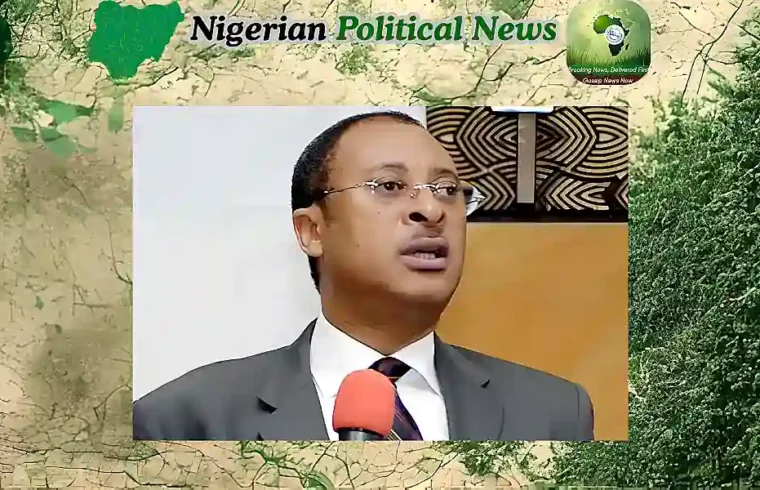
The ability of professional workers to meet everyday expenses has come under scrutiny after political economy professor Pat Utomi questioned the gap between what some Nigerians earn and the amount of money he says politicians spend during primary elections.
Utomi argued that the cost of living has made low monthly incomes increasingly difficult to stretch, using university professors and other workers as examples of people whose earnings may not match their expenses.
His comments also raised questions about the purchasing power of professional incomes and the contrast he perceives between those earnings and political spending.
Key Facts
- Pat Utomi said university professors in Nigeria may earn, at best, about ₦500,000 a month, particularly those working in government universities.
- He claimed that 70% of Nigerians do not earn more than ₦100,000 monthly.
- Utomi linked the income situation to rising prices and the cost of maintaining a household.
- He questioned how politicians could spend millions of naira during primary elections while some professionals struggle to meet basic expenses.
- The comments were shared by Utomi in a post on X, according to the report.
What Utomi Said
Utomi’s argument centred on the difficulty of maintaining purchasing power when monthly earnings are relatively low compared with everyday expenses.
He said some Nigerians earn less than ₦100,000 a month and used the cost of filling his car’s fuel tank to illustrate how quickly such income can be consumed by a single expense.
“Some of us in Nigeria earn less than ₦100,000 a month. That takes nearly two and a half times to fill the tank of my car, and I’m asking myself, is it possible that people even need to think of it?”
He then turned his attention to university professors, questioning how much they are able to retain after meeting major household expenses.
According to Utomi, professors working in government universities earn “probably, at best, ₦500,000 a month.”
He further argued that electricity costs alone could take a significant portion of such income for people living in areas where they have to spend heavily on power.
“They probably live in an area where power will take up ₦150,000 or ₦200,000 of that money. How is it possible that people are still alive and going?”
The Political Spending Question
Utomi’s comments then moved from individual earnings to political spending.
He said he had watched primary elections in which politicians appeared to be spending millions of naira, prompting him to question the source and scale of such spending when professional workers may struggle to cover their monthly expenses.
His concern was expressed through a direct comparison between political expenditure and the purchasing power of a professor’s monthly salary.
“Yet, I watched primary elections and saw politicians spending millions of naira. How can they have all that money when professors can’t even fill a tank with their entire month’s salary? What’s going on?” he asked.
The comparison forms the central argument of Utomi’s remarks: while some Nigerians are dealing with limited incomes and rising expenses, he believes the amount of money visible in political contests raises questions about the wider economic and political environment.
Why the Income Comparison Matters
The significance of Utomi’s comments lies in the relationship between income and purchasing power.
A monthly salary cannot be considered in isolation from the expenses that workers face. Utomi’s examples connect earnings with fuel, electricity and other rising costs, arguing that nominal income figures may not adequately reflect what people can actually afford.
His comments about professors are also presented as part of a broader concern about Nigerians who depend on relatively fixed monthly incomes.
However, the specific figures cited by Utomi — including his claims about professors earning no more than ₦500,000 and 70% of Nigerians earning no more than ₦100,000 — are his stated figures in the remarks reported here.
The same applies to his assessment of political spending during primary elections. The comments establish what Utomi argued, but the supplied report does not independently provide expenditure figures or supporting data to verify those claims.
Questions to Consider
- What does a monthly income mean when essential expenses consume a large portion of earnings?
- How should the purchasing power of professional salaries be assessed against rising living costs?
- What does the contrast raised by Utomi say about perceptions of political spending in Nigeria?
- What level of transparency should accompany large amounts of money spent during political contests?
Editorial Wrap-Up
Utomi’s remarks place the issue of earnings and purchasing power alongside questions about the amount of money visible in Nigerian political contests. His comments do not, on their own, establish the accuracy of each figure he cited, but they highlight a wider debate about how far professional and household incomes can stretch when major expenses consume a substantial share of monthly earnings.
The comparison he drew between professors’ salaries and political spending ultimately centres on a question of economic disparity: how can workers with limited monthly incomes meet rising expenses while large sums of money appear to be available during political contests?
That question remains at the heart of the concerns raised by the professor.