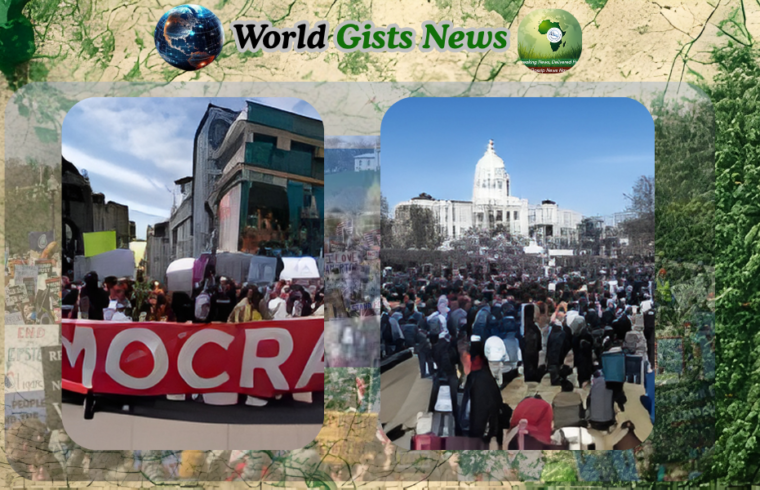
A wave of nationwide demonstrations has erupted across the United States, as millions of citizens voiced strong opposition to policies linked to President Donald Trump. The protests, tagged the third installment of the “No Kings” movement, reflected growing dissatisfaction over foreign policy decisions, immigration enforcement, and economic pressures affecting everyday Americans.
From bustling urban centers to quieter communities, the protests spread rapidly, signaling a unified message from participants who believe the current administration’s direction raises serious concerns about governance and democratic values.
Across cities such as New York, Washington, Los Angeles, and Houston, massive crowds flooded streets and public squares. Demonstrators carried placards and symbolic displays targeting not just Trump but also Vice President JD Vance and other key figures within the administration. The tone of the protests centered on rejecting what many described as an overreach of executive authority.
Gossip News Now reports that the demonstrations were not limited to major cities alone, as smaller towns also witnessed notable participation. This expansion highlighted the widespread nature of public sentiment, with communities across different regions echoing similar frustrations.
Organisers of the movement framed their actions as a stand against perceived authoritarian tendencies. Rather than presenting isolated grievances, the protests combined multiple issues into a broader demand for accountability and democratic balance. Many participants emphasized that leadership should reflect the will of the people rather than concentrate power at the top.
In Minnesota, the protests took on a more emotional dimension. Thousands gathered following tragic incidents involving two American citizens, bringing renewed attention to immigration enforcement policies. The rally drew political figures and activists who addressed the crowd, urging reforms and transparency.
The atmosphere intensified further when legendary musician Bruce Springsteen delivered a performance tied to the theme of immigration struggles. His appearance energized attendees and reinforced the cultural dimension of the protest movement.
Meanwhile, New York City became one of the focal points of the demonstrations. Large crowds filled iconic locations, causing significant disruptions to normal activities. Authorities confirmed that attendance figures reached remarkable levels, reflecting one of the largest coordinated protest turnouts in recent years.
In the nation’s capital, demonstrators gathered around historic landmarks, using the symbolic setting to amplify their message. Signs criticizing both international conflict decisions and domestic enforcement policies dominated the scene, as protesters marched through key areas of Washington, D.C.
Despite the scale of the protests, the White House maintained a dismissive stance. Officials downplayed the demonstrations, suggesting they were exaggerated events driven largely by media attention. The administration insisted that such gatherings did not reflect the views of the broader American population.
President Trump himself rejected claims that his leadership style mirrors authoritarian rule. He maintained that his actions are aimed at strengthening the country, even as critics argue that certain policies and executive decisions undermine democratic institutions.
Beyond U.S. borders, the protests gained international traction. American expatriates and supporters organized parallel demonstrations in European cities, reinforcing the global attention surrounding the movement. Participants abroad echoed calls for accountability and policy change.
In addition, several states took precautionary measures by activating National Guard units. However, organisers consistently emphasized that the protests remained peaceful, focusing on civic expression rather than confrontation.
Commentary and Analysis
The “No Kings” protests represent more than just opposition to a single administration—they highlight a deeper divide within American society. The blending of issues such as foreign policy, immigration, and economic concerns into one unified movement suggests a broader struggle over national identity and governance.
What makes this wave of protests particularly significant is its reach. From metropolitan hubs to smaller towns and even international cities, the movement demonstrates how interconnected political concerns have become. It also reflects a growing trend where public demonstrations serve as a primary outlet for civic engagement.
At the same time, the administration’s response underscores a widening gap between leadership and segments of the population. While officials dismiss the protests, critics argue that ignoring such large-scale expressions of dissent may further deepen tensions.
Ultimately, the “No Kings” movement could shape future political discourse in the United States, influencing both policy debates and electoral dynamics in the years ahead.
© 2025 Gossip News Now , a division of CHIEJOS HARBIAN DIGITAL MEDIA LTD. Contact us via admin@gossipnewsnow.online