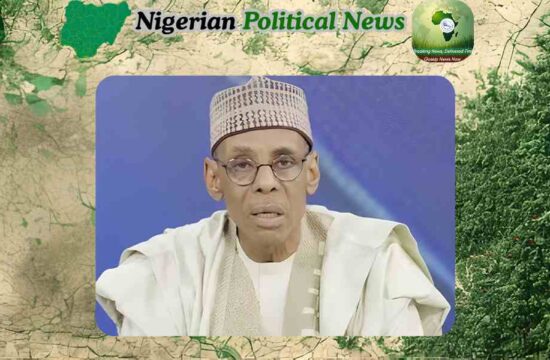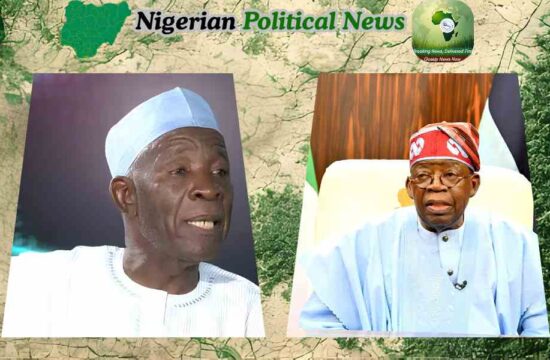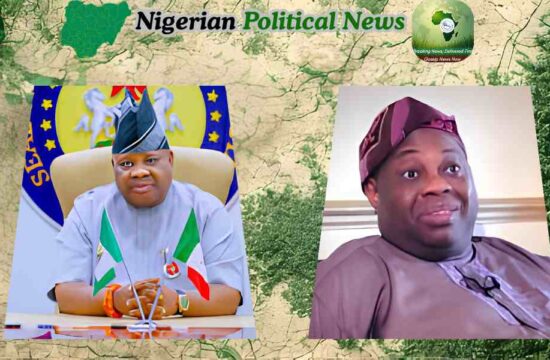
A fresh debate has emerged over Nigeria’s fiscal approach as the Presidency moved to justify its borrowing strategy following criticism from Muhammed Sanusi, the Emir of Kano and former central bank chief.
The response came through Daniel Bwala, Special Adviser on Policy Communication to Bola Ahmed Tinubu, who addressed concerns raised about the government’s continued reliance on loans despite the removal of fuel subsidy.
Sanusi had earlier questioned the logic behind ongoing borrowing, suggesting that eliminating subsidy payments should have reduced financial pressure rather than sustaining debt accumulation. He also expressed reservations about Nigeria’s historical dependence on external refining systems despite being a major oil producer.
Gossip News Now reports that the Presidency, however, framed the borrowing approach as a calculated economic decision aimed at long-term growth rather than short-term relief.
Bwala explained that funds obtained through borrowing are being directed toward critical sectors, particularly infrastructure, which he described as the backbone of sustainable economic development.
Recasting his position in a broader context, he indicated that Nigeria’s infrastructure gap requires massive investment annually—far beyond current budgetary allocations—making borrowing an unavoidable option.
He further noted that the government’s spending needs fall within a wide range, with estimates suggesting that tens of billions of dollars are required each year to adequately address structural deficiencies across the country.
While acknowledging Sanusi’s perspective on subsidy removal, the Presidency maintained that the reform itself was necessary, even if its immediate financial impact has not translated into reduced borrowing.
At the same time, Sanusi had pointed to recent improvements in local refining and export capacity as positive developments, though he argued that such progress should ideally reduce dependence on external financial support.
Analysis and Commentary
The exchange highlights a broader policy dilemma facing Nigeria—balancing immediate fiscal discipline with long-term investment needs. While borrowing can accelerate infrastructure development, it also raises concerns about debt sustainability and economic efficiency.
For the Tinubu administration, the challenge lies in ensuring that borrowed funds translate into visible and measurable outcomes that justify the strategy. Without tangible improvements, public skepticism may continue to grow.
On the other hand, Sanusi’s critique reflects a cautious approach to economic management, emphasizing consistency between policy decisions and financial outcomes.
As the debate continues, the effectiveness of Nigeria’s borrowing strategy will likely be judged not by intent, but by its impact on growth, stability, and the everyday lives of citizens.
© 2025 Gossip News Now, a division of CHIEJOS HARBIAN DIGITAL MEDIA LTD. Contact us via admin@gossipnewsnow.online