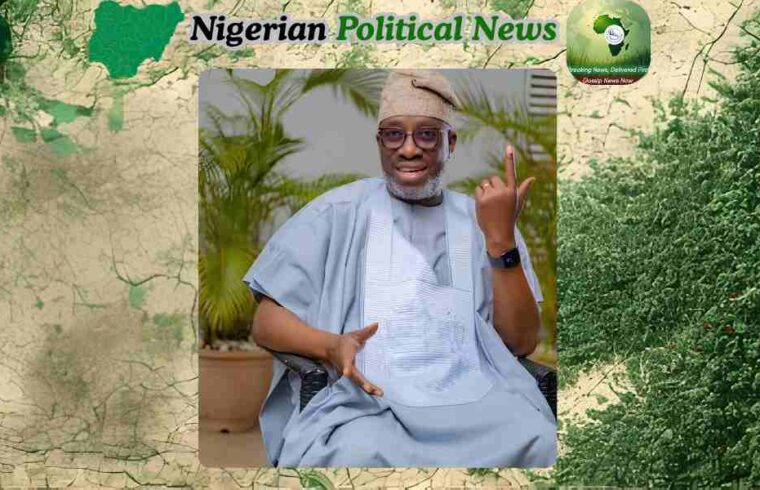
The outcome of the 2027 presidential election may not be the only challenge facing Nigeria, according to Peoples Democratic Party (PDP) chieftain, Segun Sowunmi, who has raised concerns about how political actors and their supporters could respond to the result.
Sowunmi said he “pities” President Bola Tinubu because a victory at the polls could be followed by allegations that the election was rigged.
In Brief
Sowunmi made the comments during an interview on Channels Television’s Politics Today programme on Wednesday.
While responding to a question about whether he believed Tinubu could win the 2027 presidential election, the PDP chieftain shifted attention from the possible winner to what could happen after the result is announced.
His argument was that Nigeria’s political stability would depend largely on whether candidates and their supporters accept the outcome of the election.
Key Political Figures
President Bola Tinubu is expected to be a central figure in the 2027 presidential contest, while Sowunmi remains a prominent voice within the opposition Peoples Democratic Party.
Sowunmi’s comments focused on a possible scenario in which Tinubu emerges victorious but faces allegations from opponents that the election was manipulated.
Rather than predicting that such allegations will definitely occur, he raised the issue as a potential challenge that could emerge after the election.
What Sowunmi Said
Asked whether he believed Tinubu could win the 2027 presidential election, Sowunmi said:
“I pity Tinubu because after he wins, they’re going to start saying he rigged.”
He argued that the more important issue for Nigeria would be how political actors respond to the eventual result.
According to him, the country’s stability would depend less on who wins or loses and more on whether the losing side accepts the decision of the electorate.
Sowunmi said:
“The biggest challenge for the stability of this country going forward is not so much who will win or who will lose, but how they will accept outcomes.”
The Political Background
The 2027 presidential election is expected to generate intense competition among Nigeria’s major political parties and their candidates.
Against that backdrop, Sowunmi’s comments focus on the possibility of disputes arising after the votes have been counted.
His concern is not limited to the candidate who eventually wins. He argued that political stability also depends on whether candidates and their supporters are prepared to accept that voters may choose their opponents.
The 2027 Election Context
Sowunmi stressed that voters have the right to choose between competing candidates.
He argued that if voters decide to support one candidate over another, the losing side should accept the electorate’s decision rather than continue challenging the legitimacy of the winner.
He said:
“Because if you do an election and people can vote for you, they can vote for your rival.”
Sowunmi added that the situation becomes problematic when a losing candidate or their supporters respond to an electoral defeat by repeatedly rejecting the result and agitating against the winner.
Editorial Analysis
The central point in Sowunmi’s argument is that an election does not necessarily end political tension when the winner is declared.
For him, the acceptance of the result is an important part of maintaining political stability. His comments suggest that even a candidate who wins an election could face continued political pressure if opponents refuse to accept the outcome.
However, Sowunmi’s remarks are framed around a possible 2027 scenario. The supplied account does not establish that allegations of rigging will follow a Tinubu victory, nor does it establish what the eventual election result will be.
What is established is that Sowunmi believes the response of political actors and their supporters to the result will be an important factor in determining the country’s political stability.
Potential Political Risks
A disputed election outcome can become more politically difficult when opposing sides refuse to recognise the legitimacy of the result.
That is the risk highlighted by Sowunmi.
His concern is that continued rejection of an electoral outcome could turn a contest between candidates into a wider dispute involving their supporters and the broader society.
He therefore placed emphasis on political actors accepting the choice made by voters, including when the electorate chooses an opposing candidate.
Future Outlook
As Nigeria approaches the 2027 presidential election, the question of how candidates and their supporters respond to the eventual result is likely to remain an important part of political discussions.
Sowunmi’s comments place particular emphasis on the period after the votes are counted, arguing that political stability will depend on whether the competing sides accept the electorate’s decision.
Whether the scenario he described eventually emerges will depend on the actual election, the conduct of the contest and the responses of political actors to the result.
Final Editorial Wrap-Up
Sowunmi’s comments have shifted attention from the question of whether Tinubu can win the 2027 presidential election to what could happen after the winner is declared.
His argument is that the identity of the winner is only part of the political equation. The willingness of candidates and their supporters to accept the electorate’s decision, particularly when their preferred candidate loses, could also have consequences for political stability.
His “I pity Tinubu” remark was therefore tied to a broader warning about the possibility of allegations and disputes following the 2027 election.
For now, the election remains in the future, and the outcome cannot be determined from the comments. But Sowunmi’s intervention places the issue of accepting electoral outcomes at the centre of his assessment of Nigeria’s political stability ahead of 2027.