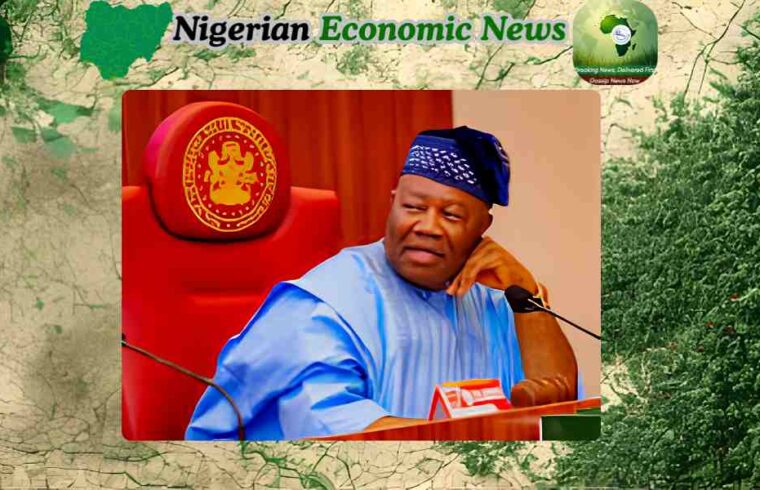
Senate President Godswill Akpabio has defended the economic reforms introduced by President Bola Tinubu’s administration, describing measures such as fuel subsidy removal and foreign-exchange reforms as necessary steps to address long-standing economic challenges.
Akpabio said the reforms were not “abstract theories” but concrete measures intended to reposition the Nigerian economy and create a stronger foundation for long-term growth.
Akpabio’s Case For Tinubu’s Economic Reforms
Akpabio made the remarks on Saturday while receiving a high-level delegation from the Northern Ethnic Groups Assembly in Abuja.
He urged Northern youths to support the administration’s economic reforms and policy continuity, arguing that the policies had reached a critical stage where their benefits were beginning to emerge.
According to Akpabio, the reforms were designed to tackle structural problems that had affected the economy for years.
He said the administration’s approach required difficult decisions but argued that those decisions were necessary to change the direction of the economy.
Why Akpabio Says The Reforms Were Necessary
Akpabio specifically pointed to the removal of the fuel subsidy and efforts to stabilise the foreign-exchange market.
He argued that both measures were necessary for achieving greater fiscal sustainability.
In describing the broader purpose of the reforms, Akpabio said they were intended to dismantle what he called long-standing structural bottlenecks and unlock Nigeria’s economic potential.
He said:
“The reforms initiated by President Tinubu are not abstract theories; they are concrete, courageous actions designed to dismantle long-standing structural bottlenecks and unlock Nigeria’s vast potential.”
Akpabio also acknowledged that the measures initially created challenges for Nigerians.
However, he compared the reforms to “surgical procedures” that he said were required to redirect resources towards areas such as healthcare, education and infrastructure.
Fuel Subsidy Removal And The Fiscal Argument
Fuel subsidy removal is one of the major economic measures highlighted by Akpabio in his defence of the administration’s reforms.
He argued that removing the subsidy was necessary to improve the government’s financial position and create room for resources to be redirected to other areas.
Akpabio did not provide specific figures in the supplied remarks to quantify the fiscal savings or demonstrate the precise amount redirected to healthcare, education or infrastructure.
His argument was instead that the subsidy reform formed part of a broader effort to address Nigeria’s long-standing fiscal pressures.
Foreign-Exchange Reform Is Part Of The Wider Programme
Akpabio also identified efforts to stabilise the foreign-exchange market as another important component of the administration’s economic programme.
He linked the reforms to the broader objective of achieving fiscal sustainability and repositioning the economy.
The supplied remarks do not provide specific exchange-rate figures or independent measurements of the reform’s effect on the foreign-exchange market.
Instead, Akpabio presented the reform as part of a wider economic restructuring programme.
Akpabio Claims Early Positive Economic Indicators
While defending the reforms, Akpabio said they were beginning to produce positive indicators.
He pointed to what he described as:
- improved revenue collection;
- increased investor confidence; and
- renewed interest from international partners.
These points represent Akpabio’s assessment of the reforms. The supplied article does not provide independent statistics or external economic assessments to verify the extent of those improvements.
That distinction is important when assessing claims about the performance of major economic reforms.
Akpabio Wants Northern Youths To Participate In Governance
Beyond the economic measures themselves, Akpabio urged Northern youths to take a more active role in governance.
He told the youths that they should not simply view themselves as future leaders but should take responsibility for participating in the country’s development now.
He stated:
“You are architects of today, not just leaders of tomorrow.”
Akpabio also encouraged young people to engage constructively with the reforms and to examine information critically.
He said:
“Your innovation and engagement are the lifeblood of these reforms. We urge you to be critical consumers of information and to engage in constructive dialogue.”
What The 10th National Assembly Says It Is Prioritising
Akpabio said the 10th National Assembly was prioritising reforms aimed at strengthening transparency, accountability and the rule of law.
He presented these priorities alongside his call for greater youth participation, linking governance and public engagement to the broader reform agenda.
The supplied article does not provide specific legislative measures or bills to demonstrate how these priorities are being implemented.
Therefore, the claim is best understood as Akpabio’s description of the National Assembly’s reform priorities rather than as a detailed assessment of legislative performance.
What Do Tinubu’s Reforms Mean For Nigeria’s Economy?
Akpabio’s argument is that the reforms should be viewed as part of a longer-term effort to change how Nigeria’s economy is managed.
His comments focus on fiscal sustainability, the removal of fuel subsidies, foreign-exchange reform and the redirection of resources.
However, the supplied material does not provide enough economic data to independently determine whether the reforms have already achieved their intended long-term outcomes.
The more significant question, therefore, is whether the positive indicators cited by Akpabio can develop into sustained improvements in government finances, investment and living conditions.
Questions About Tinubu’s Economic Reforms
What economic reforms did Akpabio defend?
Akpabio specifically defended the removal of the fuel subsidy and efforts to stabilise the foreign-exchange market as part of the Tinubu administration’s broader reform programme.
Why does Akpabio say fuel subsidy removal was necessary?
He said removing the fuel subsidy was necessary to help achieve fiscal sustainability and redirect resources towards areas such as healthcare, education and infrastructure.
What does Akpabio say about foreign-exchange reform?
He described efforts to stabilise the foreign-exchange market as another necessary component of the administration’s economic reforms.
What benefits does Akpabio say the reforms are producing?
Akpabio claimed that the reforms were producing early positive indicators, including improved revenue collection, increased investor confidence and renewed interest from international partners.
Are those claimed benefits independently established in the supplied report?
No. The supplied article presents them as Akpabio’s claims and does not provide supporting economic statistics or independent assessments to verify them.
Why did Akpabio address Northern youths?
He urged them to support policy continuity and become active participants in governance, telling them that they were “architects of today” rather than merely leaders of tomorrow.
Key Takeaways
- Akpabio described Tinubu’s economic reforms as concrete measures rather than abstract theories.
- He defended fuel subsidy removal and foreign-exchange reforms as necessary steps towards fiscal sustainability.
- He acknowledged that the measures initially created challenges but argued that they were needed to address structural economic problems.
- Akpabio claimed the reforms were producing early positive indicators, including improved revenue collection and investor confidence.
- Those claimed improvements are not independently quantified or verified in the supplied material.
- He urged Northern youths to support policy continuity and participate actively in governance.
- Akpabio also said the 10th National Assembly was prioritising transparency, accountability and the rule of law.
Ultimately, Akpabio’s defence rests on the argument that Nigeria’s economic reforms should be judged as part of a longer-term attempt to address structural and fiscal challenges. Whether the claimed benefits become sustained improvements for Nigerians remains a question that requires evidence beyond the statements contained in the report.