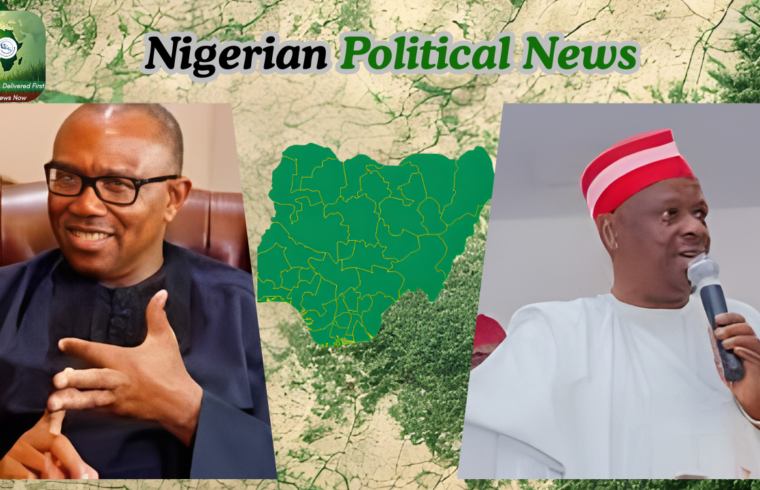
Political calculations ahead of Nigeria’s 2027 presidential election appear to be entering a new phase as influential stakeholders intensify efforts to unite opposition forces under a single platform. Recent developments suggest that conversations linking Peter Obi and former Kano State governor Rabiu Musa Kwankwaso are no longer informal political exchanges but part of a broader strategy encouraged by respected national figures.
Behind the scenes, sources familiar with the discussions indicate that former President Olusegun Obasanjo has taken a leading advisory role in promoting cooperation between the two politicians. His involvement, insiders say, is aimed at strengthening a viable alternative political bloc capable of mounting a competitive national campaign.
Structured Planning Takes Shape
Investigations reveal that representatives aligned with both Obi and Kwankwaso have constituted a working group designed to draft operational guidelines for a possible joint presidential ticket on the platform of the African Democratic Congress (ADC). The committee’s mandate reportedly includes harmonising political interests, expanding regional support networks, and preparing the foundation for a formal alliance announcement when negotiations mature.
Although the arrangement has not yet reached its final stage, political observers note that the existence of such a coordination structure signals growing seriousness about collaboration ahead of the next electoral cycle.
Obasanjo’s Influence and Political Backing
Multiple party insiders attribute the momentum behind the alliance to Obasanjo’s sustained political engagement. Having previously supported Obi during the 2023 presidential race, the former president is said to have encouraged him to deepen engagement with the ADC while simultaneously fostering dialogue with Kwankwaso.
Long before current negotiations gained attention, Obasanjo publicly assessed the presidential contenders during the 2023 election period, arguing that leadership evaluation should focus on competence, discipline, experience, and integrity. Within that assessment, Obi was described as a candidate who distinguished himself among competitors — a viewpoint that continues to shape Obasanjo’s political positioning today.
The former president’s connection with Kwankwaso also stretches back decades, strengthened during the period when the Kano political leader served as Minister of Defence under Obasanjo’s administration. Analysts believe this longstanding relationship has made Obasanjo uniquely positioned to act as mediator between both camps.
Dynamics Within the ADC
While Kwankwaso has yet to formally register as a member of the ADC, influential figures within the party already see him as a potential addition to a growing coalition of heavyweight politicians. The party’s internal landscape currently includes notable aspirants such as former Vice President Atiku Abubakar, Peter Obi, and former Transportation Minister Rotimi Amaechi, all viewed as possible presidential contenders.
Sources suggest that Obi’s earlier declaration that he would serve only a single term if elected has contributed positively to negotiations. This position is believed to have eased concerns within Kwankwaso’s camp regarding power rotation and future political opportunities.
Northern Outreach and Coalition Expansion
Insiders disclosed that Obasanjo has been actively facilitating conversations beyond party leadership circles, particularly among northern political influencers. The objective, according to those familiar with the process, is to build wider acceptance for a unified opposition front before official alignments are announced.
One party source explained that the former president continues to engage regional stakeholders in discussions meant to demonstrate the strategic advantage of collaboration. Another figure within the Kwankwasiyya Movement confirmed that the alliance concept itself originated from Obasanjo’s initiative, adding that participants remain encouraged by the progress achieved so far.
Commentary and Political Analysis
The unfolding developments highlight a recurring trend in Nigerian politics: influential elder statesmen often play decisive roles in shaping coalition movements long before public declarations emerge. Obasanjo’s involvement reflects an attempt to prevent opposition fragmentation — a challenge that has historically weakened electoral competitiveness.
From a strategic standpoint, combining Obi’s reform-oriented appeal with Kwankwaso’s entrenched northern political machinery could significantly alter the dynamics of the 2027 race. However, unresolved issues surrounding party integration, leadership hierarchy, and internal party ambitions remain potential obstacles.
Political analysts argue that success will depend on balancing three critical elements:
- mutual concessions between leading figures
- acceptance by grassroots party structures
- clarity regarding presidential and vice-presidential positioning
If these factors align, the proposed alliance may evolve into one of the most consequential political coalitions Nigeria has witnessed in recent electoral history.
For now, negotiations continue quietly, guided by political calculations, personal relationships, and strategic mediation — with Obasanjo positioned at the centre of efforts to transform dialogue into a functional alliance.
© 2025 Gossip News Now , a division of CHIEJOS HARBIAN DIGITAL MEDIA LTD. Contact us via admin@gossipnewsnow.online