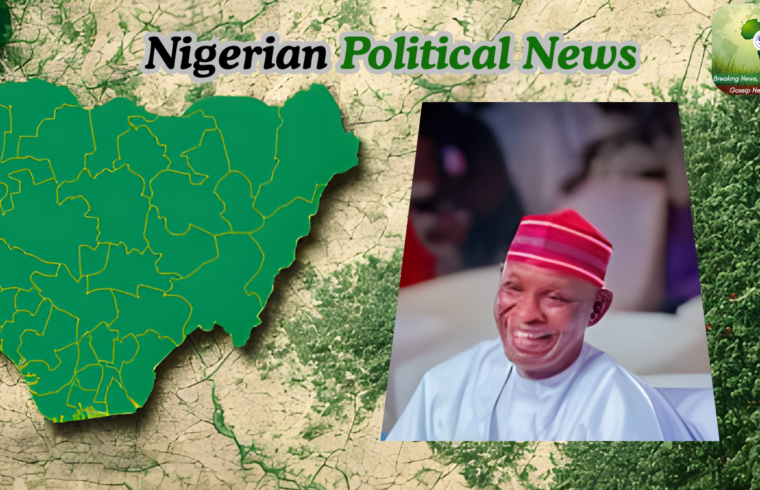
Speculation surrounding the possible movement of Kano State Governor Abba Kabir Yusuf to the All Progressives Congress (APC) has taken a more complicated turn, as ongoing consultations and strategic demands continue to delay any formal announcement.
Although early political discussions suggested the governor’s defection would occur at the beginning of 2026, multiple postponements have followed. Political insiders reveal that Yusuf has been holding extensive meetings with federal lawmakers, state legislators, and influential APC stakeholders before making a final decision.
At the centre of the hesitation is a key political condition reportedly set by the governor. Sources familiar with the negotiations indicate that Yusuf is seeking firm guarantees regarding his political future, particularly assurances connected to the 2027 governorship race.
According to an insider, the governor is determined not to enter a new political platform without clear protections against internal rivalry. The source explained that Yusuf wants certainty that party structures would not later be used to promote alternative candidates against him after defecting.
The complexity of the negotiations appears to stem from the APC’s difficulty in satisfying this request, leaving discussions ongoing. Political observers note that the situation reflects broader competition within the ruling party, where several incumbents across the country are also positioning themselves for re-election.
Balancing Political Alliances and Risks
Another factor influencing Yusuf’s cautious approach is his long-standing relationship with NNPP national leader Rabiu Musa Kwankwaso. Analysts believe a move without Kwankwaso’s backing could reshape political loyalties in Kano and potentially weaken the governor’s traditional support base.
Insiders suggest that if both figures were aligned in a joint transition, the process might have been smoother. However, indications that Kwankwaso is unwilling to make an immediate switch have added uncertainty to the governor’s calculations.
Political sources also hint that Yusuf is awaiting clearer signals from President Bola Ahmed Tinubu, whose position could influence final negotiations. Expectations reportedly increased following the President’s return to the country, with many anticipating decisive guidance in the coming days.
Internal Party Dynamics Complicate Decision
Beyond external negotiations, divisions within the New Nigeria Peoples Party have contributed to the unfolding political dilemma. Disagreements over party identity and leadership direction reportedly deepened tensions between factions loyal to different power blocs.
One visible point of contention involved a controversial change to the party’s symbol, which sparked resistance from Yusuf’s allies and eventually escalated into legal disputes. Observers say the disagreement exposed underlying fractures within the party structure.
Support for the governor appears mixed within his immediate political circle. While several local government chairmen and the Speaker of the Kano State House of Assembly are believed to favour his strategic repositioning, other influential figures — including members of the executive council — remain aligned with Kwankwaso’s camp.
Key Political Factors Shaping the Delay (Rearranged Overview)
Rather than viewing the situation as a single event, the delay can be understood through interconnected pressures:
Negotiation Conditions
- Request for guaranteed political security ahead of 2027
- Ongoing dialogue with APC leadership
Alliance Considerations
- Risk of losing established political backing
- Absence of a unified move with key allies
Internal Party Challenges
- Symbol dispute reflecting deeper NNPP divisions
- Mixed loyalty among political associates
Commentary & Analysis
Governor Yusuf’s cautious posture illustrates how political defections in Nigeria often involve complex negotiations extending beyond ideology. Party switching is rarely spontaneous; it is usually driven by calculations about survival, influence, and electoral security.
The demand for an “automatic ticket,” whether formally acknowledged or not, reflects a common concern among incumbent politicians — the need to secure continuity within new political environments. Joining a larger ruling party can expand opportunities but also exposes entrants to internal competition from established power brokers.
At the same time, internal instability within the NNPP may be pushing the governor toward exploring alternatives, demonstrating how party cohesion often determines political loyalty as much as policy alignment.
Ultimately, Yusuf’s next move could reshape Kano’s political landscape and influence broader national alignments ahead of the 2027 elections. Until negotiations conclude, the governor’s future remains one of the most closely watched political questions in northern Nigeria.
© 2025 Gossip News Now, a division of CHIEJOS HARBIAN DIGITAL MEDIA LTD. Contact us via admin@gossipnewsnow.online