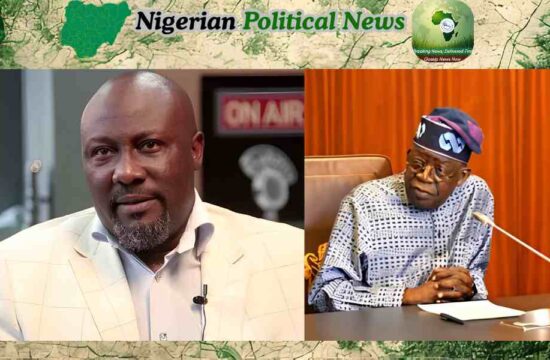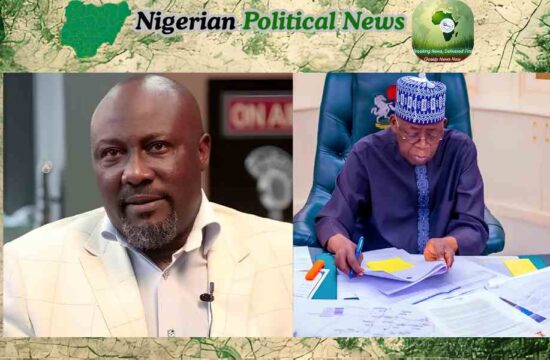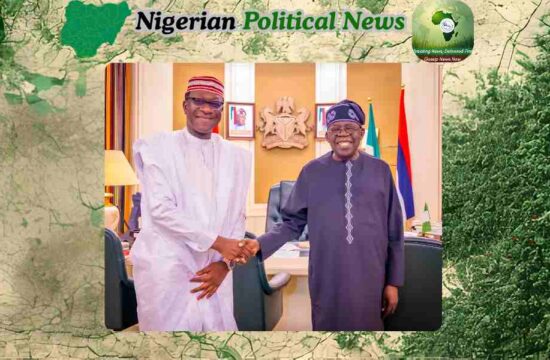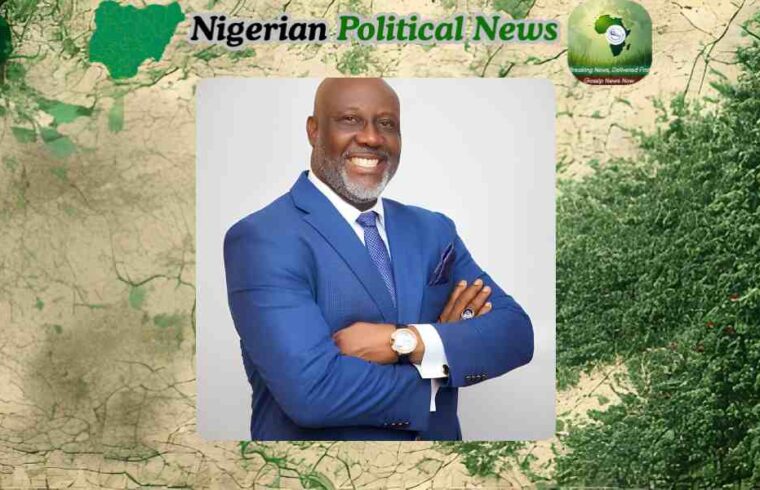
A chieftain of the African Democratic Congress (ADC), Dino Melaye, has said opposition political parties are continuing discussions on the possibility of working together ahead of the 2027 general election.
Melaye made the statement during an appearance on Arise Television, where he said the opposition was working toward forming a broad coalition capable of challenging President Bola Tinubu and the All Progressives Congress (APC).
In Brief
- Dino Melaye says opposition parties are holding talks on working together ahead of 2027.
- He said Peter Obi and Donald Duke have indicated willingness to participate in the discussions.
- Melaye said the opposition may not bring every party on board but could unite a majority of them.
- He predicted that a broad opposition coalition could defeat Tinubu and the APC.
- He also claimed that Tinubu is aware of the opposition’s activities and believes his administration could lose power.
Key Players
Dino Melaye is an ADC chieftain and the principal source of the claims contained in the report.
President Bola Tinubu is the incumbent president and the political figure at the centre of Melaye’s prediction about the 2027 election.
Peter Obi and Donald Duke were also mentioned by Melaye in connection with the ongoing opposition discussions.
Melaye said he had personally interacted with Duke about the possibility of opposition parties coming together, while he also referred to comments attributed to Obi concerning the continuation of the talks.
What Melaye Said
Melaye said the opposition parties were not merely discussing a possible alliance but were already working toward greater cooperation.
According to him, the discussions may not produce an alliance involving every opposition party, but he expects a majority of them to eventually come together.
He expressed confidence that such cooperation could challenge the APC’s hold on power in 2027.
Melaye also said the opposition discussions were making progress and expressed hope that the parties would reach an agreement.
Stakeholder Positions
Melaye’s position is that opposition parties have an opportunity to overcome the APC’s established political structures by working together.
He argued that the ruling party’s network of governors, legislators and other political structures would not necessarily determine the outcome of the next election.
Melaye further claimed that public dissatisfaction with the APC-led government would work against the ruling party.
However, the statements about how Nigerians will vote, the strength of the opposition and the likely outcome of the 2027 election remain Melaye’s political assessment, rather than established electoral outcomes.
How the Opposition Talks Developed
According to Melaye, discussions among opposition parties are already underway as political groups consider how they could cooperate ahead of the 2027 election.
He cited Peter Obi’s reported comments in Port Harcourt as an indication that the talks are continuing.
Melaye also said he had spoken with Donald Duke, who he claimed was willing to discuss the possibility of opposition parties working together.
The ADC chieftain acknowledged that achieving complete unity among all opposition groups may be difficult, but maintained that a majority could still form a formidable coalition.
The 2027 Election Context
The discussions come as political parties and opposition figures look ahead to the 2027 general election.
For the opposition, cooperation could provide a way of combining political structures, support bases and influential figures across different parties.
For the APC, any broad opposition alliance could create a more coordinated challenge to the ruling party during the next presidential election.
At this stage, however, the material available does not establish that a final coalition agreement has been reached or that a single opposition candidate has been selected.
Political Implications
A successful opposition alliance could change the political dynamics ahead of the 2027 presidential election by bringing several political groups into a common platform.
Such an arrangement could also increase the importance of negotiations over leadership, candidate selection, party structures and the distribution of political responsibilities.
At the same time, bringing several opposition parties together could present its own challenges, particularly where the groups have different political interests, leadership structures and electoral strategies.
The significance of the current discussions will therefore depend largely on whether the parties can move from negotiations to a formal and workable arrangement.
Strategic Assessment
From Melaye’s account, the opposition’s strategy is centred on cooperation rather than allowing multiple parties to compete separately against the APC.
His argument is that a broader coalition could combine the strengths of different opposition groups and create a stronger challenge in the 2027 election.
However, the success of such a strategy would depend on whether the parties can agree on common objectives and resolve differences over leadership and political representation.
Melaye’s prediction that the coalition will defeat Tinubu and the APC should therefore be understood as his political assessment, not as a confirmed forecast of the 2027 election result.
Fact Check: What Is Confirmed?
The confirmed information from the supplied report is that Dino Melaye said opposition parties are engaged in discussions about working together.
He also stated that Peter Obi and Donald Duke were willing to participate in the discussions.
Other claims in the report—including that Nigerians have already decided to vote against the APC and that Tinubu knows he is on his way out—are statements made by Melaye.
There is no independent evidence in the supplied material establishing those claims as facts.
Similarly, the report does not establish that the opposition parties have already reached a final coalition agreement or selected a common presidential candidate.
What’s Next?
The next major development will be whether the ongoing opposition discussions produce a formal coalition involving multiple political parties and influential opposition figures.
Further negotiations could determine the structure of any alliance, its leadership and how the groups would approach the 2027 presidential election.
For now, Melaye’s comments point to continuing opposition talks, while the broader question of whether the parties can unite behind a common political strategy remains unresolved.