
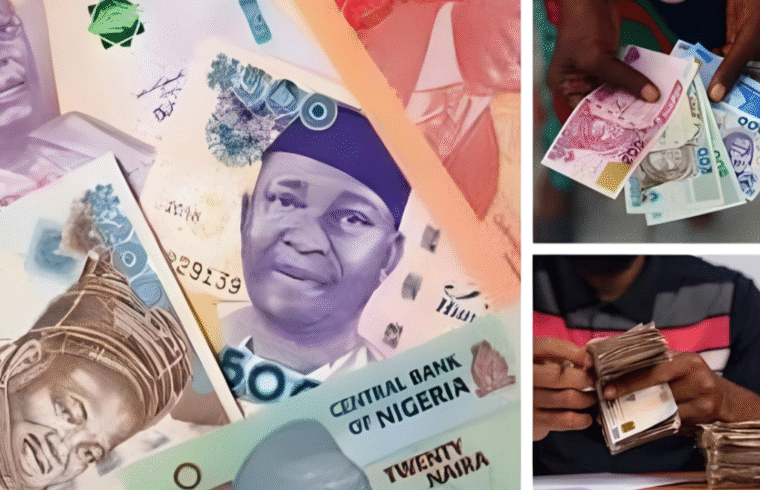
Nigeria’s foreign exchange market continues to draw attention as fluctuations in the value of the naira against the U.S. dollar remain a major concern for individuals and businesses alike. The gap between official and parallel market rates persists, reflecting ongoing pressures in the currency market.
According to available figures from Bureau De Change operators in Lagos, the parallel market recorded notable activity with varying rates depending on demand and supply conditions across locations.
In practical terms, the exchange dynamics in the black market can be summarized as follows:
- One dollar is purchased by dealers at around ₦1,480
- The same dollar is resold to buyers at approximately ₦1,502
This spread highlights the margin within which traders operate, often influenced by scarcity and market sentiment.
Gossip News Now reports that while many Nigerians still rely on the parallel market due to accessibility, the Central Bank of Nigeria maintains its position against such transactions. The apex bank continues to encourage all foreign exchange dealings to be conducted through official banking channels.
On the official side, the Central Bank’s rate range presents a slightly lower valuation of the dollar when compared to the black market. The figures indicate a controlled band within which the currency trades under regulatory oversight.
A breakdown of the official window shows:
- Peak rate hovering around ₦1,475 per dollar
- Lower benchmark recorded near ₦1,464
These figures illustrate the disparity between both markets, a situation that has remained a defining feature of Nigeria’s forex landscape.
It is important to understand that exchange rates are not static. Variations can occur based on geographic location, transaction volume, and prevailing economic factors. As a result, the rates quoted may differ slightly from one dealer or region to another at any given time.
Commentary and Analysis
The continued divergence between the official and black market rates underscores deeper structural issues within Nigeria’s foreign exchange system. Limited dollar supply, coupled with high demand, has sustained the relevance of the parallel market despite regulatory efforts.
For many businesses, especially import-dependent ones, accessing forex through official channels remains challenging, pushing them toward alternative markets where rates are less controlled but more accessible.
This dual-rate environment also affects pricing, inflation, and overall economic stability. Until liquidity improves and confidence in the official system strengthens, the gap between both markets is likely to persist.
Ultimately, understanding these trends is crucial for individuals and businesses making financial decisions in Nigeria’s evolving economic climate.
© 2025 Gossip News Now, a division of CHIEJOS HARBIAN DIGITAL MEDIA LTD. Contact us via admin@gossipnewsnow.online