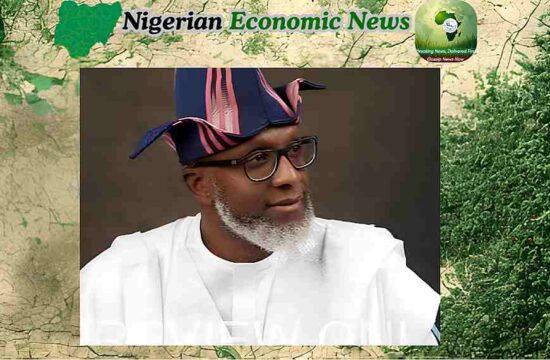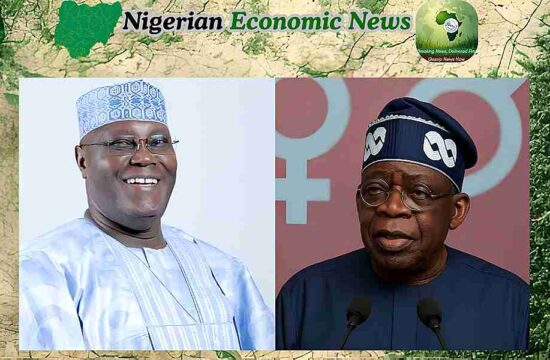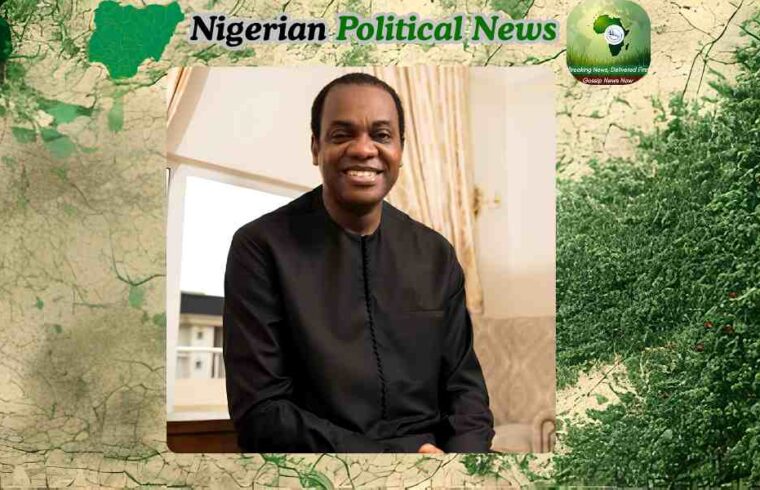
Former Cross River State Governor and Peoples Redemption Party (PRP) presidential candidate, Donald Duke, has said he will support whichever opposition candidate emerges from ongoing efforts to establish a united platform for the 2027 presidential election.
Duke made the position known on Monday in Abuja at the G100 Summit of Nigeria’s Opposition Political Parties, where representatives of major opposition parties gathered to discuss a possible alliance ahead of the election.
The PRP candidate said his personal ambition would not prevent the opposition from reaching an agreement, stressing that he would remain committed to the process regardless of who is eventually selected as the common candidate.
“We will support any political party that emerges in 2027. Whatever decision is arrived at today, I will not walk away but will strive all along because that’s what the people want to see.”
Opposition Parties Work Towards Common Platform
The summit was organised by the G100 in collaboration with the Minority Caucus of the House of Representatives and brought together participants from six opposition parties.
The parties represented were the African Democratic Congress (ADC), Allied Peoples Movement (APM), Nigeria Democratic Congress (NDC), Peoples Democratic Party (PDP), Peoples Redemption Party (PRP) and Social Democratic Party (SDP).
The discussions centred on developing a political arrangement through which the opposition parties could cooperate ahead of the 2027 presidential election.
A representative of the G100, Salihu Lukman, said the experience of the 2023 presidential election demonstrated the consequences of entering an election with opposition votes divided among different candidates.
According to Lukman, opposition candidates collectively secured roughly 13 million votes in 2023 but were unable to convert the combined figure into victory because they contested separately.
“Nobody stole thirteen million votes. We divided them ourselves, in public, and we did it knowing exactly what the consequence would be.”
He urged the parties to learn from the political arrangement that produced the opposition alliance ahead of the 2015 election.
Lukman argued that the parties involved did not necessarily have identical interests but were able to cooperate because they established the rules governing their relationship before determining who would ultimately benefit from the arrangement.
“What they had was not affection. What they had was sequence. They agreed on the rules before they knew the outcome.”
Candidate Selection At The Centre Of Negotiations
The proposed arrangement is designed to give the participating parties a process through which their interests can be discussed before a common presidential candidate is selected.
Lukman stressed that the initiative was not asking any party to dissolve or disappear into another political organisation.
He also said the process was not immediately demanding that any candidate withdraw from the presidential race.
Instead, the parties are being asked to endorse a framework through which they can negotiate their interests and work towards a mutually acceptable political arrangement.
Five working groups are expected to be established, with each participating party nominating a representative.
The groups will consider proposals covering democratic renewal, a single-term transition, a national reform agenda, opposition unity and the selection of a common presidential candidate.
The documents are expected to be completed within four weeks before being presented at a second summit for consideration and possible adoption.
Proposed Structure For The Coalition
The proposed coalition would also have a Central Leadership Committee comprising senior party officials as well as presidential and vice-presidential candidates.
A Publicity and Communication Committee would be responsible for coordinating the coalition’s public messaging, while a Legal Committee would handle legal matters arising from the proposed alliance.
The wider framework also proposes that any resulting administration should operate as a “Government of National Competence” and implement a four-year National Reset Programme.
The proposed arrangement would be supported by an enforceable Transition Charter intended to keep participating parties and individuals bound by the agreements reached during the negotiations.
The Political Cost Of Unity
The negotiations also highlight one of the most difficult questions facing the proposed opposition alliance: whether politicians with individual presidential ambitions will accept an outcome that does not favour them.
Lukman cautioned participants against entering the negotiations with fixed positions, arguing that a workable alliance would require concessions from those involved.
He said political unity would inevitably mean that some individuals would have to accept decisions that did not match their personal ambitions.
“There is no version of this that costs nobody anything. Someone in this hall will have to accept an outcome he/she did not want. That is what unity is. It is not a communiqué. It is somebody’s disappointment, borne well.”
Duke’s earlier commitment to support whichever candidate emerges from the process therefore places his position within one of the central challenges confronting the proposed alliance: convincing competing political interests to accept a collective decision.
Lessons From 2023
The proposed arrangement represents an attempt to address the problem Lukman identified in the 2023 presidential election, when opposition candidates contested separately despite their combined electoral strength.
The current process instead seeks to establish the rules of cooperation before determining the candidate who would eventually represent the opposition platform.
That approach could allow the participating parties to negotiate their interests before the most sensitive question of candidate selection is settled.
However, the source material does not establish that the parties have already reached an agreement on a common candidate or finalised the proposed coalition structure.
A Common Candidate Remains The Central Test
Lukman said the G100 was not supporting any particular presidential aspirant, maintaining that its objective was to create a credible alternative for Nigerians in 2027.
He said the initiative was based on the principle that democracy requires not only elections but also the credible possibility of an alternative government.
“Today, that possibility is in this room. It is in nobody else’s hands.”
The discussions therefore place the question of political sacrifice at the heart of the proposed opposition alliance. While Duke has indicated his willingness to support the eventual choice, the broader process will require participating parties and politicians to negotiate their interests, accept the agreed rules and determine whether they can collectively settle on a candidate capable of representing the proposed platform in 2027.