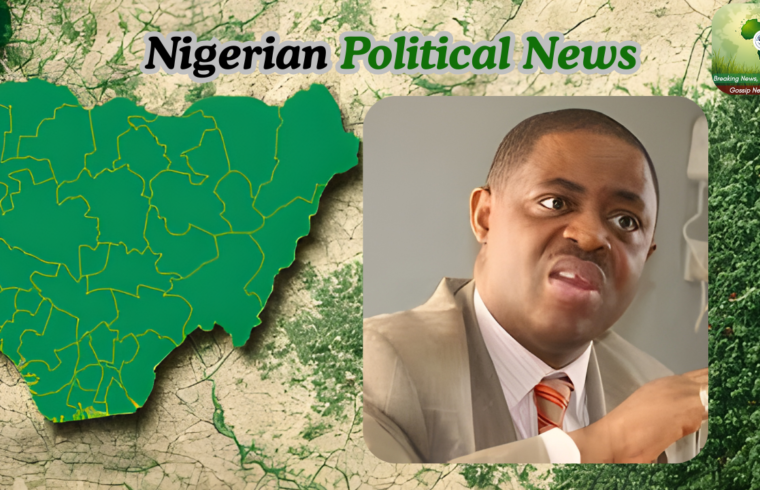
Former Aviation Minister Femi Fani-Kayode has dismissed allegations claiming he once linked President Bola Tinubu to the death of late Lagos politician Funso Williams.
The former minister reacted strongly after activist Omoyele Sowore reportedly referenced old political statements allegedly connected to him during ongoing discussions surrounding a criminal defamation matter.
Fani-Kayode Rejects Alleged Statement About Tinubu
In a statement released publicly, Femi Fani-Kayode insisted that he never directly accused Bola Tinubu of involvement in the killing of Funso Williams.
The former minister clarified that a controversial comment he made years ago had been widely misunderstood and repeatedly taken out of context by political opponents and online commentators.
According to Fani-Kayode, the statement in question emerged during the heated atmosphere of the 2015 presidential election campaign when political tensions across parties were extremely intense.
He explained that campaign seasons often generate emotional rhetoric and aggressive political exchanges, especially among rival camps battling for power.
Former Minister Says Earlier Comment Was Retracted
Addressing the controversy further, Femi Fani-Kayode revealed that he had already withdrawn the remark many years ago after realizing it could easily be misinterpreted.
He stressed that the old comment should not now be presented as evidence to support allegations against President Bola Tinubu.
Gossip News Now reports that the former minister also pointed out that both he and former presidential aide Reno Omokri have since distanced themselves from previous criticisms directed at the president.
According to him, relying on old political remarks made during election battles is misleading and unfair within the context of current legal disputes.
Fani-Kayode Highlights His Current Support For Tinubu
The former minister also referenced his political journey after leaving the Peoples Democratic Party (PDP) and joining the All Progressives Congress (APC).
He noted that he officially aligned himself with the ruling party in 2021 and later became an active supporter of Bola Tinubu’s presidential ambition.
During the 2023 election campaign, Fani-Kayode reportedly served as Director of New Media and Special Operations within Tinubu’s campaign structure.
He explained that his involvement included coordinating a large media team that contributed to the president’s electoral victory.
The former minister argued that his continued support for the administration clearly contradicts claims suggesting personal hostility toward the president.
Reno Omokri Also Mentioned In Clarification
While discussing the issue, Femi Fani-Kayode also referenced Reno Omokri, noting that although Omokri previously criticized Tinubu before the 2023 elections, he later softened his stance after the president assumed office.
According to the former minister, both men have moved beyond past political disagreements and should not be dragged into ongoing legal controversies involving Omoyele Sowore.
He described attempts to connect them to the matter as unreasonable and politically motivated.
Call For Evidence Or Retraction
In his concluding remarks, Femi Fani-Kayode challenged Omoyele Sowore to either withdraw the allegations concerning Bola Tinubu or present evidence capable of supporting such claims in court.
The former minister maintained that public accusations involving serious criminal matters should not be made carelessly without verifiable proof.
Political Reactions And Public Analysis
The development has sparked fresh conversations online regarding the role of past political statements in current legal and political debates.
Observers noted that Nigerian politics often involves shifting alliances, with former critics later becoming allies depending on evolving political realities.
Analysts also believe the controversy highlights how old campaign remarks frequently resurface years later, especially during periods of heightened political tension.
For many followers of Nigerian politics, the latest clarification from Femi Fani-Kayode reflects ongoing efforts by public figures to redefine past narratives while maintaining present political loyalties.