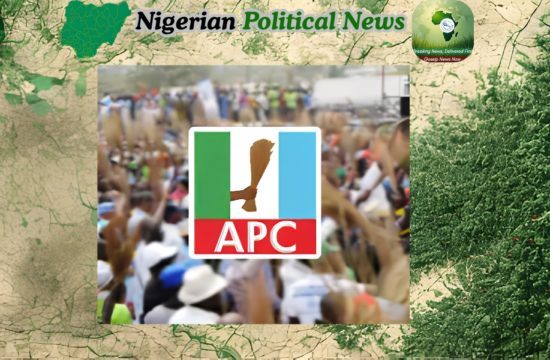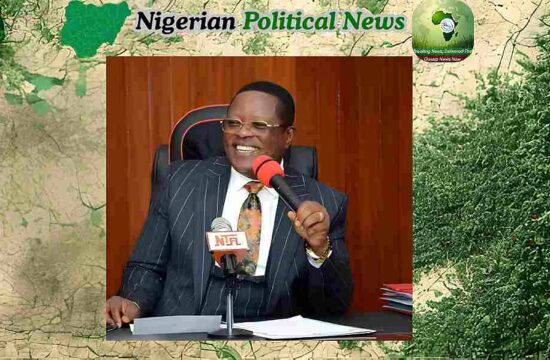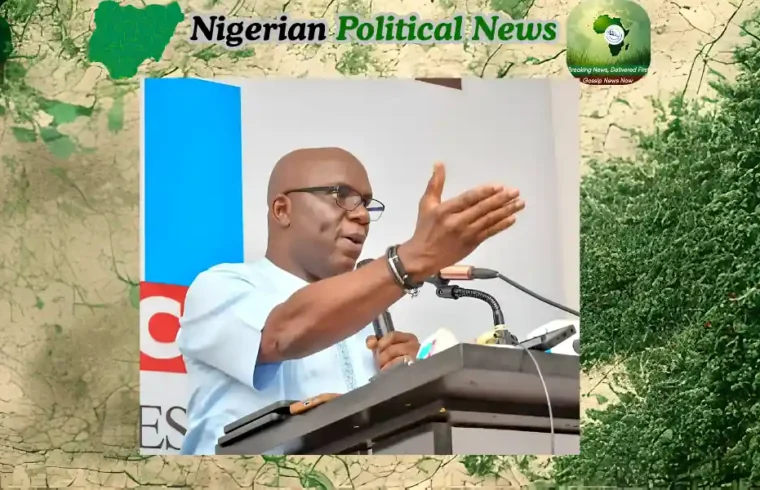
The National Publicity Secretary of the All Progressives Congress (APC), Felix Morka, has defended President Bola Tinubu’s decision to end Nigeria’s petrol subsidy, arguing that the policy had already been legislated before Tinubu assumed office.
Morka said the President did not unilaterally abolish the subsidy, insisting that the previous National Assembly had already removed it and that no provision was made for subsidy payments in the 2023 budget.
He made the remarks during an interview on Arise News, where he also responded to criticism from former Vice President Atiku Abubakar and his allies over the policy.
Key Facts
- Felix Morka says Tinubu did not independently remove the petrol subsidy.
- He argues that the previous National Assembly had already legislated the removal.
- Morka says there was no provision for subsidy payments in the 2023 budget.
- He defended the decision on the grounds of Nigeria’s financial position.
- The APC spokesman acknowledged that subsidy removal would cause hardship.
- He also accused Atiku and his allies of presenting the issue for political reasons.
What Happened?
The controversy centres on who should be held responsible for the removal of Nigeria’s petrol subsidy.
Morka argued that the policy was already effectively abolished through legislation before Tinubu became President. According to him, the President’s declaration at the beginning of his administration was an announcement of an existing legislative position rather than a unilateral decision.
“When you say this president on day one announced a subsidy was gone, you forget, and I think we need to remind Nigerians, that the National Assembly under the previous government had already completely removed subsidy,” Morka said.
He added that there was no budgetary provision for subsidy payments in 2023.
“There was no budgetary provision to pay for subsidy in 2023. That was gone already. So the president simply announced what the National Assembly had legislated,” he said.
Morka also linked the policy to the financial pressures facing the country at the time Tinubu took office.
The Key Players
Felix Morka is the APC National Publicity Secretary and the principal political voice defending the administration’s position in the supplied report.
Bola Tinubu is at the centre of the controversy because the removal was publicly announced at the beginning of his presidency.
Atiku Abubakar and his political allies are identified by Morka as critics of the subsidy removal.
The National Assembly under the previous administration is also central to Morka’s argument because he attributes the legislative removal of the subsidy to that period.
The Background Behind the Subsidy Dispute
The petrol subsidy had become a major issue in Nigeria’s public finances before the Tinubu administration took office.
Morka argued that the government faced a difficult financial situation, claiming that a substantial portion of the country’s earnings was being consumed by subsidy payments and debt servicing.
He further claimed that the Nigerian National Petroleum Company Limited (NNPCL) was not remitting funds to the national treasury when Tinubu assumed office.
“The NMPC was not contributing a dollar to the National Treasury at the time that this president was inaugurated. So where was the money going to come from?” he asked.
Morka also claimed that more than 93 per cent of the country’s earnings were being consumed by subsidy payments and debt servicing.
Those figures and financial assertions form part of Morka’s justification for the administration’s position and are presented as his claims in the political debate.
Stakeholder Positions
Morka’s position is that Tinubu inherited a subsidy arrangement that had already been legislatively terminated and that the President therefore did not create the policy change from scratch.
His argument also focuses on the financial consequences of continuing the subsidy regime.
Atiku and his allies, meanwhile, have criticised the administration’s handling of the subsidy removal, according to Morka’s account of the political dispute.
Morka accused the former Vice President and his supporters of appealing to the emotions of Nigerians when discussing the policy.
He maintained that they understood the economic realities surrounding the subsidy but were presenting the issue differently for political reasons.
The supplied report does not include a detailed response from Atiku or his representatives to Morka’s specific claims.
What Morka Said About the Cost of Keeping the Subsidy
Morka acknowledged that ending the subsidy would inevitably create hardship because Nigerians had become accustomed to lower petrol prices supported by government intervention.
“When you have created, our country has created a system of dependency on subsidy, on cheap fuel, there was no way to remove it that the consequences that we have had to deal with would not be present,” he said.
He nevertheless argued that maintaining the arrangement would have prolonged opportunities for corruption and rent-seeking while putting additional pressure on government finances.
Morka went further in defending the decision, saying the country’s economic situation could have become worse had the policy remained.
“This country today would have been long gone. The economy as we know it today would have been long expired had this president not taken the action that he did,” he said.
Editorial Analysis: What the Responsibility Dispute Means
The central political issue is not simply whether the subsidy was removed, but how responsibility for the policy change is being assigned.
Morka’s argument is designed to separate Tinubu’s public announcement from the legislative history of the subsidy. By pointing to the previous National Assembly and the absence of a 2023 budget provision, the APC spokesman is presenting the President’s action as a response to an existing policy and fiscal situation.
At the same time, the administration’s defence does not remove the political significance of Tinubu’s announcement. The President publicly communicated the end of the subsidy at the beginning of his administration, making the policy closely associated with his government.
The debate therefore contains both a policy question and a political one: who initiated the change, and who should be held responsible for its consequences?
Morka’s comments represent the APC’s position in that debate. His explanation should therefore be distinguished from independently established facts, particularly where he provides financial figures or makes claims about the actions of political opponents.
Political Implications
The subsidy debate remains politically significant because its consequences extend beyond government finances to the cost of living and public perception of the Tinubu administration.
For the APC, establishing that the policy had already been legislated before Tinubu took office provides an important defence against the argument that the President alone created the subsidy burden faced by Nigerians after May 2023.
For the opposition, criticism of the policy remains a means of challenging the administration’s economic decisions and their impact on citizens.
Morka’s comments also show how economic policies can become part of wider political contests, with different parties seeking to assign responsibility for difficult decisions and their consequences.
The competing narratives are therefore likely to remain part of the broader political debate surrounding Tinubu’s administration.
A Balanced Assessment
Morka’s defence presents the subsidy removal as a decision shaped by legislation and an inherited fiscal situation rather than a policy created solely by Tinubu.
His argument also rests on the claim that continuing the subsidy would have placed additional pressure on government finances and prolonged opportunities for rent-seeking.
At the same time, the APC spokesman acknowledged that ending the subsidy would create hardship, particularly because Nigerians had become accustomed to cheaper petrol prices under the subsidy system.
The political dispute therefore involves two connected questions: the history of the policy itself and the responsibility for its consequences. Morka’s statements provide the APC’s explanation of that history, while criticism from Atiku and his allies represents an opposing political position.
The supplied report does not independently establish every financial assertion made by Morka, meaning those claims should remain clearly attributed when the issue is discussed.
Final Editorial Wrap-Up
The latest comments from Felix Morka place the history of Nigeria’s petrol subsidy at the centre of the political debate over the Tinubu administration’s economic policies.
Rather than accepting that Tinubu alone removed the subsidy, Morka argues that the previous National Assembly had already legislated its removal and that the administration inherited a difficult fiscal position.
His defence also highlights the political disagreement with Atiku Abubakar and his allies over how the subsidy decision should be understood and judged.
Ultimately, Morka’s intervention is an APC defence of the policy and of Tinubu’s responsibility for it, rather than independent evidence that settles every aspect of the subsidy debate.