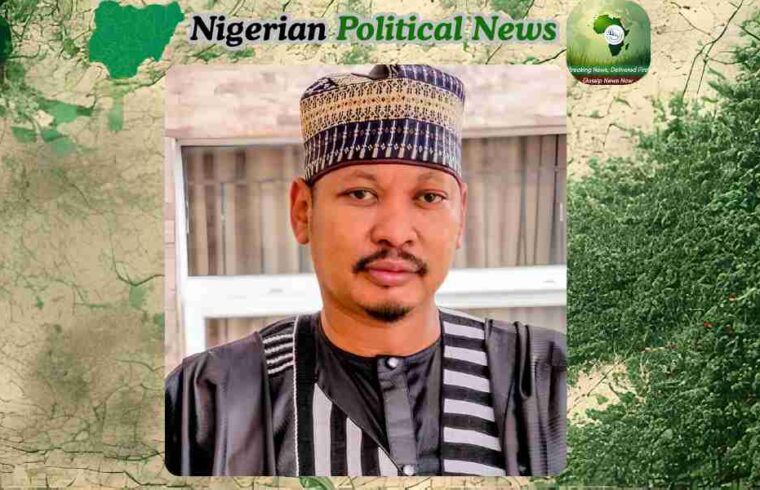
Abdulaziz Ganduje, the eldest son of former All Progressives Congress (APC) National Chairman Abdullahi Ganduje, has returned to the ruling party after spending about three months with the Nigeria Democratic Congress (NDC).
Abdulaziz was formally welcomed back by APC members and party officials on Sunday at the Ganduje Ward office in Dawakin Tofa Local Government Area of Kano State.
He also collected a new APC membership card during the event, formally confirming his return to the party.
What Happened?
Abdulaziz had previously left the APC and joined the NDC in Kano State.
His movement to the opposition party came as political parties began positioning themselves ahead of the 2027 general elections.
During his brief period with the NDC, Abdulaziz took steps towards participating in the next election after obtaining the party’s nomination form to contest the Dawakin Tofa/Tofa/Rimin Gado Federal Constituency seat.
His subsequent return to the APC therefore marks a reversal of the political move he made about three months earlier.
Key Players In The Kano Political Development
Abdulaziz’s return involves both of Kano’s major political camps, having moved from the APC to the NDC before returning to the APC.
His father, Abdullahi Ganduje, is a former governor of Kano State and former National Chairman of the APC, giving the development an additional connection to the state’s wider political landscape.
The NDC, meanwhile, has been positioning itself ahead of the 2027 elections, with former Kano State Governor Rabiu Kwankwaso serving as its vice-presidential candidate.
Why Abdulaziz Left APC
Before returning to the APC, Abdulaziz had joined the NDC and obtained its nomination form for the Dawakin Tofa/Tofa/Rimin Gado Federal Constituency contest.
The move placed him on a different political platform from the party with which his father has been closely associated.
His stay in the NDC, however, lasted about three months before he returned to the APC and received a new membership card at his ward.
The circumstances behind his decision to leave the NDC and return to the APC were not stated in the report provided.
Related Kano Political Developments
The development comes against the backdrop of wider political exchanges involving leading figures in Kano State.
Kwankwaso recently dismissed the political relevance of former governors Ibrahim Shekarau and Abdullahi Ganduje, as well as incumbent Governor Abba Yusuf, claiming that the trio were politically finished in the state.
The former Kano governor made the assertion while speaking during the News Agency of Nigeria Personality Interview Series on Sunday in Abuja.
Kwankwaso also argued that Ganduje’s political career would have been better had he maintained the political structure they built together, describing the former governor’s current situation as a consequence of his decision to part ways with him.
Those remarks provide wider context to the political environment surrounding Ganduje’s return to the APC, although the available report does not establish that Kwankwaso’s comments were responsible for Abdulaziz’s decision.
What The Return Means
Abdulaziz Ganduje’s return demonstrates a change in his political affiliation after a relatively short period with the NDC and after he had already taken steps towards seeking elective office under the opposition party.
The move also places him back within the APC ahead of the 2027 general election, although the available information does not establish whether he will retain his earlier ambition to contest the Dawakin Tofa/Tofa/Rimin Gado Federal Constituency seat or seek another political position.
For now, the confirmed development is his return to the APC and the formal recognition of that return through the issuance of a new party membership card.
APC Confirms Ganduje’s Return
Abdulaziz was formally received by APC members and officials at the Ganduje Ward office in Dawakin Tofa Local Government Area of Kano State on Sunday.
The new membership card issued to him provides formal confirmation of his return to the party after his brief period with the NDC.
The development comes as political parties and their prospective candidates continue to position themselves ahead of the 2027 general elections.