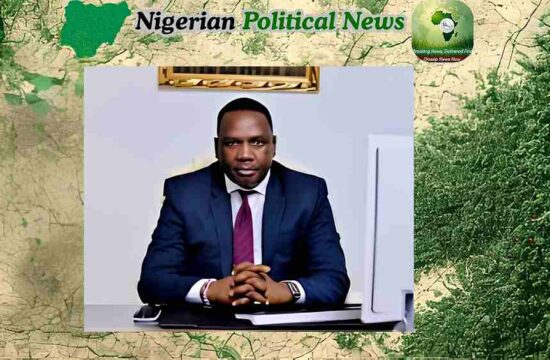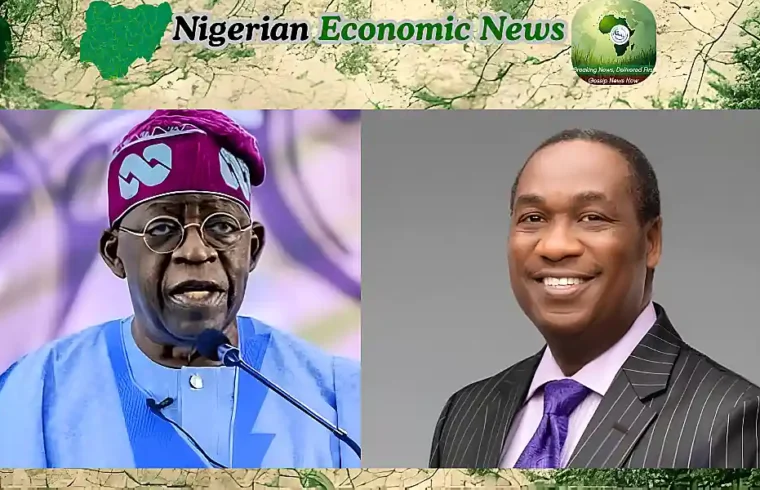
Lagos State Deputy Governor and All Progressives Congress (APC) governorship candidate for the 2027 election, Obafemi Hamzat, has expressed confidence that President Bola Ahmed Tinubu is in a stronger position to seek re-election in 2027 than he was during the 2023 presidential contest.
Hamzat made the assessment during an interview on TVC News’ Journalists’ Hangout on Monday, September 14, arguing that the political circumstances surrounding the next election are different from those that shaped the 2023 race.
According to him, Nigerians now have Tinubu’s record in government to assess, while some of the religious concerns surrounding his candidacy in 2023 have, in his view, become less significant.
Quick Takeaways
- Obafemi Hamzat says Tinubu’s chances of winning re-election in 2027 are “far, far, far better” than they were in 2023.
- Hamzat believes the 2027 election will be judged against Tinubu’s record in office rather than solely on the circumstances surrounding his 2023 candidacy.
- He argued that concerns about religion and ethnicity have reduced because of the President’s appointments and policies.
- Hamzat cited religious cooperation in Lagos, including the work of the Nigeria Inter-Religious Council (NIREC), to support his argument.
- His comments represent Hamzat’s assessment of Tinubu’s electoral prospects, not an established prediction of the 2027 election result.
Hamzat’s Assessment Of Tinubu’s 2027 Chances
Hamzat’s central argument is that Tinubu will approach the 2027 presidential election from a different political position than the one he occupied in 2023.
While discussing the President’s re-election prospects, the Lagos deputy governor said voters would now have the opportunity to judge Tinubu based on his performance and decisions in office.
This, he suggested, could make the political environment surrounding the 2027 election different from the previous presidential contest.
“So I think the chances are far, far, far better,” Hamzat said.
The statement represents Hamzat’s own assessment of the President’s prospects ahead of the next presidential election.
Why Hamzat Says 2027 Is Different From 2023
One of the main differences identified by Hamzat is the amount of information voters now have about Tinubu’s administration.
During the 2023 election, voters were assessing Tinubu as a presidential candidate who had yet to serve as president. By 2027, however, Nigerians will be able to consider his record in office when making their electoral choices.
Hamzat argued that this distinction could change how the President’s candidacy is viewed.
Rather than focusing only on Tinubu’s personal background or identity, he believes voters can now examine his appointments, policies and conduct as president.
That forms the basis of his argument that Tinubu’s electoral position has changed since 2023.
Hamzat’s Argument On Religion And Ethnicity
Religion was another major part of Hamzat’s assessment.
He argued that religious considerations that affected Tinubu’s electoral prospects during the 2023 election cycle have reduced.
Hamzat particularly pointed to concerns that surrounded Tinubu’s identity as a Muslim from southern Nigeria, noting that religion could present an additional challenge for a presidential candidate seeking support across Nigeria’s diverse population.
“So in the South, if you are a Muslim candidate as a president, you are a minority. So the challenge is, can you appeal minorities?” he said.
However, Hamzat maintained that Tinubu’s conduct in office has demonstrated, in his view, that religious and ethnic identity does not determine the way the administration makes appointments or develops policies.
What Hamzat Says About Tinubu’s Appointments
Hamzat argued that the President has demonstrated a willingness to select people based on competence rather than their religious or ethnic background.
“Our president is somebody that looks for credible people, that looks for intelligent people. He’s blinded to your ethnicity. He’s blinded to your religion,” he said.
The argument was presented as part of Hamzat’s explanation for why he believes religious concerns have become less influential in assessing Tinubu’s presidency.
He also recalled that the religious identities of some key officials had previously generated criticism, including discussions surrounding the Minister of Finance and the Governor of the Central Bank.
But Hamzat said the situation has changed as Nigerians have observed the administration in operation.
“It’s the president. He has records that he can defend. And then, of course, the issue of religion, I think, has gone down. People see that we are all together,” he said.
Why Lagos Features In Hamzat’s Argument
Hamzat also used Lagos to illustrate his broader argument about cooperation between people of different faiths.
He noted that although he is a Muslim, he regularly attends Christian gatherings.
For him, the relationship between religious communities in Lagos provides an example of how disagreements involving faith can be addressed through dialogue rather than division.
He pointed to the Lagos State chapter of the Nigeria Inter-Religious Council (NIREC), where Christian and Muslim leaders meet to discuss issues affecting the state.
The NIREC Example Hamzat Cited
Hamzat recalled an earlier disagreement involving an autopsy-related rule, saying members of the Muslim community initially opposed the measure because of the religious requirement for the dead to be buried promptly.
According to him, the disagreement was eventually addressed through discussions between Christian and Muslim representatives under NIREC.
Hamzat presented the episode as an example of how religious communities can work through sensitive issues when there is room for dialogue.
The example forms part of his wider argument that religious differences do not necessarily have to prevent cooperation.
What Hamzat’s Argument Means For The 2027 Contest
Hamzat’s comments point to a broader argument about how the 2027 presidential election could differ from the 2023 contest.
His position is that voters will have a record of Tinubu’s administration available to them and that some of the concerns surrounding the President’s religious identity have diminished.
However, those points remain Hamzat’s assessment of the political environment.
His comments do not by themselves establish that Tinubu will win re-election, nor do they provide an independent measurement of the President’s electoral standing ahead of 2027.
The eventual contest will depend on the political environment closer to the election, the records and campaigns of the candidates, and the choices made by voters.
What To Watch Ahead Of 2027
The evolution of the political environment will provide a clearer indication of how the issues raised by Hamzat develop.
Among the issues to watch will be how voters assess Tinubu’s record in office, whether religious and regional considerations remain significant in the campaign, and how political parties position their candidates ahead of the presidential election.
For now, Hamzat’s position is clear: he believes Tinubu will enter the 2027 contest in a considerably stronger position than he did four years earlier.
Frequently Asked Questions
What did Obafemi Hamzat say about Tinubu’s 2027 re-election chances?
Hamzat said he believes Tinubu’s chances of securing re-election in 2027 are “far, far, far better” than they were in 2023.
Why does Hamzat believe Tinubu is in a stronger position?
He argued that Nigerians can now assess Tinubu based on his record in office and that some of the religious concerns surrounding his 2023 candidacy have reduced.
What role did religion play in Hamzat’s argument?
Hamzat said religious considerations were among the issues that affected Tinubu’s prospects in 2023. He argued that the issue has become less significant based on what he described as the President’s approach to appointments and governance.
What example did Hamzat give from Lagos?
He cited the Lagos chapter of NIREC, where Christian and Muslim representatives discuss issues affecting the state and work toward resolving disagreements.
Did Hamzat’s comments guarantee Tinubu’s victory in 2027?
No. Hamzat expressed confidence in Tinubu’s chances, but his comments are an individual political assessment, not a guarantee or independently established prediction of the 2027 election result.
The 2027 Question
For Hamzat, the key difference between 2023 and 2027 is that Nigerians will be judging an incumbent president with an established record rather than a presidential candidate seeking office for the first time.
His confidence rests on the belief that Tinubu’s record, appointments and approach to religious inclusion will put the President in a stronger electoral position.
Whether that assessment translates into electoral advantage will become clearer as the 2027 political contest develops.
What do you think about Hamzat’s assessment of Tinubu’s 2027 re-election chances? Do you think voters will judge the President differently in 2027 because of his record in office? Share your thoughts in the comments.