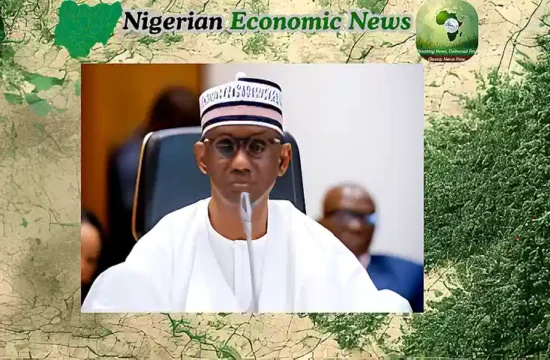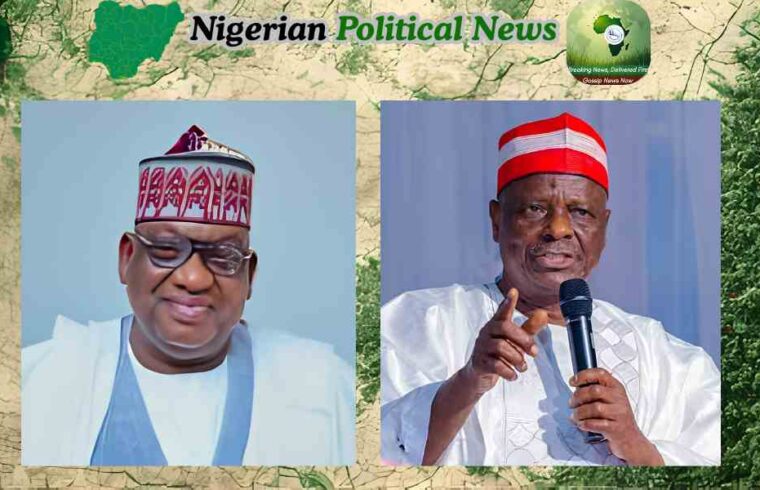
Senator Rufai Sani Hanga has explained why his political relationship with former Kano State Governor Rabiu Kwankwaso deteriorated, pointing to disagreements over his empowerment programmes, political activities and growing public profile.
Hanga, who represents Kano Central Senatorial District, said the relationship became strained after he organised a major empowerment programme for his constituents, an event he said ultimately exposed deeper tensions between him and Kwankwaso.
The Key Players
Hanga and Kwankwaso have previously been linked through the political movement led by the former governor, whom Hanga referred to as the “Jagora”, meaning leader.
According to Hanga, their relationship had been cordial before disagreements emerged over his political activities and the scale of his constituency empowerment initiatives.
The senator made the disclosure during an interview with the online television platform Dan’uwa Rano TV.
What Happened?
Hanga said one of the major turning points came when he organised an empowerment programme at a venue associated with Kwankwaso.
The programme involved the distribution of vehicles, rice, fertiliser, grinding machines and other items to constituents.
According to the senator, Kwankwaso had initially agreed to attend the event and witness the distribution. Hanga recalled, however, that the former governor appeared unhappy when he arrived.
He said Kwankwaso subsequently asked those present to break for prayers before leaving the venue, but did not return.
The empowerment programme nevertheless continued in the presence of several political figures, including former Kano State Deputy Governor Aminu Abdussalam Gwarzo, Wada Sagagi, Batayya, Nasiru Gawuna and members of the National Assembly.
What Hanga Says Kwankwaso Told Him
Hanga said Kwankwaso later confronted him about the event.
According to the senator, the former governor questioned why the items had not been brought to him for distribution and suggested that the programme was attracting public praise for Hanga’s performance as Kano Central senator.
Hanga quoted Kwankwaso as saying:
“You came distributing things because people are praising you, saying Kano Central has never had a senator like you.”
He further quoted the former governor as questioning why Hanga had not brought the items to him, while noting that he had received some of the distributed items previously.
Hanga said he apologised after the confrontation and promised to address whatever misunderstanding had arisen.
The Disagreement Over Empowerment Requests
The senator, however, said the incident was particularly significant because Kwankwaso had previously sent emissaries to request that certain individuals benefit from his empowerment programmes.
Hanga alleged that one such request came through Sunusi Surajo Kwankwaso, who asked him to provide a vehicle for a beneficiary from Shanono, a local government area outside Kano Central Senatorial District.
According to Hanga, he agreed to assist after being told that the intended beneficiary’s vehicle had been damaged in an accident during Kwankwaso’s political campaign.
“I told him that whoever he wanted us to assist, we were ready to do so,” Hanga said.
The senator said the episode changed his perception of the relationship.
He explained that he began to view Kwankwaso’s conduct as a sign that the mutual respect that had previously existed between them was beginning to disappear.
“That was when I realized disrespect had set in,” Hanga said, adding that he believed the development could have wider consequences for their relationship.
Hanga’s Account of the Rift
Hanga maintained that the disagreement was not simply about one empowerment event.
He said Kwankwaso appeared uncomfortable with the scale of his distributions and empowerment schemes, as well as the public attention they were generating.
“He was simply not happy with what I was doing, the distributions and the empowerment schemes,” the senator said.
Hanga’s account presents the dispute as a disagreement that gradually moved beyond a single event and into questions of political influence, visibility and the relationship between a political leader and an increasingly prominent member of his movement.
However, the claims about Kwankwaso’s motives and reaction remain Hanga’s account of the events as presented in the interview.
The Political Consequence
Hanga also linked the deterioration of the relationship to his inability to secure a return ticket.
The senator said Kwankwaso’s dissatisfaction with his performance and political activities was responsible for the outcome.
“The reason I did not get a ticket was because ‘Jagora’ Kwankwaso was unhappy with my performance and activities,” Hanga said.
His claim therefore places the disagreement within a broader political context, where personal relationships, constituency activities and internal political influence can intersect.
Political Implications
Hanga’s account highlights the importance of relationships between political leaders and influential figures within their political movements.
In this case, the disagreement he described appears to have involved more than personal differences. His comments connect the relationship breakdown to constituency empowerment, public recognition and the balance of political influence.
The allegation concerning his return ticket also gives the dispute an electoral dimension, although the supplied account does not provide a separate response from Kwankwaso to Hanga’s claims.
The episode consequently illustrates how disagreements over political activities can affect relationships within a wider political structure, particularly where questions of leadership, loyalty and individual political visibility are involved.
Editorial Wrap-Up
Hanga’s explanation places the breakdown of his relationship with Kwankwaso around a series of disagreements that he says began with his empowerment activities and eventually extended to questions of respect, political influence and his return to the Senate.
At the centre of his account is the empowerment programme that he said drew Kwankwaso’s displeasure, followed by disagreements over requests for beneficiaries and what Hanga interpreted as a change in the way the former governor treated him.
Hanga ultimately connected the deteriorating relationship to his failure to secure a return ticket, portraying the episode as a consequence of broader tensions over his political activities and growing profile.
The account remains Hanga’s version of the dispute, and the supplied report does not contain a response from Kwankwaso addressing the allegations.