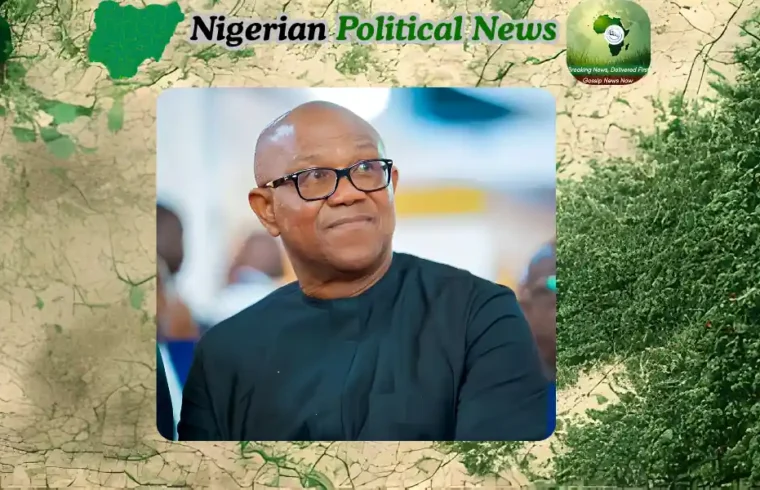
Lawyer and human-rights activist Ifeanyi Ejiofor has called on President Bola Tinubu, security agencies and other relevant institutions to take steps to protect the safety of presidential candidate Peter Obi ahead of the 2027 election.
Ejiofor said every Nigerian, regardless of political affiliation, should be concerned after Obi publicly expressed apprehension about his personal safety and whether he would remain alive until the next presidential election.
In Brief
- Ifeanyi Ejiofor has raised concerns about Peter Obi’s safety ahead of the 2027 presidential election.
- Ejiofor urged President Bola Tinubu and security agencies to take preventive action.
- He said Obi’s concerns should not be dismissed as ordinary campaign rhetoric.
- He referenced reported difficulties involving opposition political activities and the Benue incident involving Obi’s convoy.
- Ejiofor called on the Federal Government, security agencies, INEC, political parties and state authorities to help ensure a peaceful democratic contest.
What We Know So Far
The immediate development is Ejiofor’s warning about Obi’s safety.
Speaking in a statement in Abuja, Ejiofor said Obi’s public expression of concern about his safety should trouble Nigerians across political, ethnic and religious lines.
The lawyer said such concerns should prompt vigilance, inquiry and preventive action rather than political mockery or partisan dismissal.
However, the supplied report does not establish that Obi is facing a confirmed or imminent attack.
The concern about his safety is being raised by Ejiofor based on Obi’s own reported remarks and developments he referenced in his statement.
Ejiofor Raises Alarm Over Obi’s Safety
Ejiofor said he was concerned after listening to Obi speak during a prime-time interview on Arise TV, where the presidential candidate reportedly expressed uncertainty about his personal safety and whether he would remain alive until the 2027 election.
According to Ejiofor, the statement should not simply be treated as campaign rhetoric.
He argued that when a presidential candidate publicly expresses concern about his safety during the period leading to a national election, responsible institutions should respond with vigilance and preventive measures.
Ejiofor said the issue should concern Nigerians irrespective of their political party, ethnic affiliation, religious persuasion or preferred candidate.
Key Players
Ifeanyi Ejiofor is the lawyer and human-rights activist who raised the concern about Obi’s safety.
Peter Obi is the presidential candidate whose reported remarks about his safety prompted Ejiofor’s statement.
President Bola Tinubu was urged by Ejiofor to act in his capacity as President and Commander-in-Chief.
The Federal Government, security agencies, INEC, political parties and state authorities were also identified by Ejiofor as institutions with responsibilities in maintaining conditions for a peaceful democratic contest.
Ejiofor Points To Recent Political Developments
Ejiofor referred to what he described as a troubling atmosphere surrounding the 2027 political season.
He said Obi had publicly complained about difficulties faced by opposition politicians attempting to campaign in some states.
Ejiofor also referenced the Benue incident involving Obi’s convoy, saying the episode had generated competing accounts from Obi and the state government.
According to the statement, the police confirmed that Obi’s visit was known and that security personnel were providing protection, while responsibility for the obstruction remained disputed.
Ejiofor said these developments should be considered carefully rather than dismissed as ordinary political disagreements.
What Ejiofor Said About The Electoral Environment
Ejiofor argued that the current political circumstances require greater caution and sobriety as the country approaches the 2027 election.
He referred to reports of inflammatory political rhetoric, threats and obstruction of opposition activities, saying such developments had generated concern among civil-society organisations and electoral observers.
These concerns are Ejiofor’s characterisation of the political environment as presented in his statement. The supplied article does not independently establish that all of the alleged threats or obstruction form part of a coordinated pattern.
Ejiofor Calls On Tinubu And Security Agencies To Act
Ejiofor urged the Federal Government, security agencies and Independent National Electoral Commission (INEC) to ensure that every presidential candidate can participate safely in the electoral process.
He also included political parties and state authorities in the appeal.
According to Ejiofor, candidates should have the minimum conditions necessary to campaign peacefully, while citizens should be able to listen to, support or question candidates without intimidation, violence or unlawful obstruction.
The Appeal To President Tinubu
Ejiofor said Tinubu occupies a constitutionally significant position as President and Commander-in-Chief and argued that the issue should go beyond party politics.
He said the central question should be whether the Nigerian state can guarantee an environment where presidential candidates can reach voters safely and voters can freely hear the political alternatives available to them.
The statement therefore calls on Tinubu to take preventive action; it does not accuse the President of causing or directing any threat against Obi.
Why The Benue Incident Matters To The Warning
The Benue episode is one of the specific developments Ejiofor cited when explaining his concerns.
The supplied account says the incident generated different accounts from Obi and the state government.
It also states that police confirmed the visit was known and that security personnel were providing protection, while the precise responsibility for the obstruction remained disputed.
That distinction is important because the incident, as presented in the source material, does not by itself establish who was responsible for the obstruction.
Risk To The Democratic Process
The broader issue raised by Ejiofor concerns the conditions under which presidential candidates and voters participate in an election.
A peaceful electoral environment requires candidates to be able to campaign and communicate with voters, while citizens need the opportunity to hear competing political positions.
Ejiofor’s warning places candidate safety, political access and institutional responsibility within that wider context.
His statement also warns that if anything were to happen to Obi, the consequences could extend beyond the individual and affect an already sensitive electoral environment.
That is Ejiofor’s assessment of the potential consequences, rather than an independently established prediction.
What Remains Unconfirmed
The supplied report does not establish:
- that Peter Obi is facing a confirmed specific threat;
- who, if anyone, may be responsible for such a threat;
- that the Benue incident was part of a coordinated effort against Obi;
- or that an attack against Obi is imminent.
What the report establishes is that Ejiofor has raised concerns about Obi’s safety and called for preventive institutional action.
Institutional Follow-Up
Ejiofor called on the Federal Government, security agencies, INEC, political parties and state authorities to ensure that presidential candidates can participate in a peaceful democratic contest.
He specifically appealed to President Tinubu to recognise the broader institutional responsibility involved in protecting the democratic process.
The supplied report does not include a response from the Presidency, INEC, the police or other institutions to Ejiofor’s wider appeal.
For now, the central development remains Ejiofor’s warning that nothing should happen to Peter Obi and his call for Nigerian institutions to take preventive steps to protect candidates and preserve a peaceful electoral environment.