Political Voices
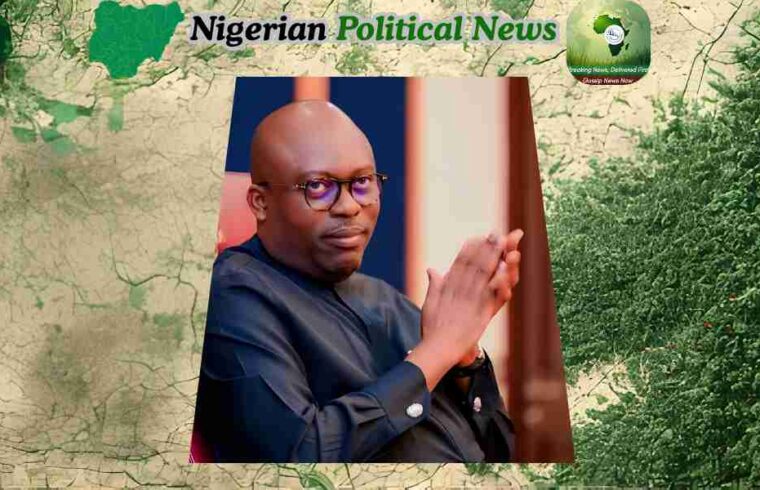
Fresh criticism has emerged over the Federal Government’s handling of the prolonged political crisis in Rivers State, with Jake Epelle, the Chief Executive Officer of TAF Africa, accusing the Presidency of allowing a situation that has weakened Governor Siminalayi Fubara’s ability to govern.
Speaking during an interview on Channels Television, Epelle argued that the continuing political tension has extended beyond party disagreements and now raises broader concerns about democratic governance and the independence of elected leaders.
How the Rivers Dispute Shaped the Conversation
The latest remarks come against the backdrop of the long-running political standoff involving Governor Siminalayi Fubara and the Minister of the Federal Capital Territory, Nyesom Wike.
Recent developments have kept the crisis in the spotlight, including Fubara’s decision to support O.K. Chinda, a politician widely regarded as being politically aligned with Wike.
The governor also recently announced that he would not seek a second term in office, a decision that has intensified discussions about the future of Rivers politics.
Epelle’s Central Argument
During the interview, Epelle maintained that democratic governance can only thrive when elected officials are allowed to exercise the authority entrusted to them by voters.
He argued that the political environment surrounding Governor Fubara has made effective leadership increasingly difficult, claiming that major decisions affecting Rivers State were being shaped outside the state itself.
According to him, this has limited the governor’s capacity to govern independently despite holding an electoral mandate.
“Minister Wike is the president’s son, and he is very particular about his mission. The decisions that they are making in Abuja make it practically impossible and uncomfortable for Fubara to truly and really govern the state.”
Concerns Raised About Democratic Governance
Beyond criticising individuals, Epelle framed his comments around what he described as wider democratic principles.
He argued that governments function best when elected leaders are permitted to carry out their constitutional responsibilities without unnecessary political constraints.
In his view, the Rivers situation illustrates how prolonged political interference can affect governance and reduce public confidence in democratic institutions.
He also suggested that Governor Fubara might have remained a stronger political figure had he participated in his party’s governorship primary election.
The Presidency’s Role in the Debate
A significant part of Epelle’s criticism was directed at President Bola Tinubu, whom he accused of failing to adopt a sufficiently balanced approach in addressing the Rivers political crisis.
According to him, the Federal Government’s actions have contributed to an environment that makes governance more challenging for the state administration.
His remarks add to the growing public debate over how federal intervention should be managed when internal political disputes threaten stability within a state.
Beyond Rivers Politics
Although the immediate focus remains on the disagreement between Fubara and Wike, the issues raised extend beyond Rivers State.
The discussion touches on broader questions about political influence, executive independence and the balance of power between elected governors and influential political actors.
As political alignments continue to evolve ahead of future elections, debates over leadership autonomy and constitutional governance are expected to remain central to Nigeria’s political discourse.
The Bigger Picture
The Rivers political crisis has become one of Nigeria’s most closely watched political disputes, attracting attention from political stakeholders, civil society groups and governance advocates.
While opinions remain divided on the roles played by the key actors, Epelle’s intervention highlights the continuing debate over how democratic institutions should operate when political conflicts begin to affect governance.
Whether these concerns influence future political decisions remains to be seen, but the controversy continues to shape conversations about leadership, accountability and democratic practice in Nigeria.
Political Snapshot
- Jake Epelle criticised President Bola Tinubu’s handling of the Rivers political crisis.
- He argued that Governor Siminalayi Fubara has faced significant obstacles in exercising his constitutional responsibilities.
- Epelle alleged that decisions made outside Rivers State have affected governance within the state.
- The remarks followed recent political developments, including Fubara’s support for O.K. Chinda and his announcement that he will not seek a second term.
- The comments have renewed debate about democratic governance, political influence and leadership independence in Nigeria.
© 2025 Gossip News Now, a division of CHIEJOS HARBIAN DIGITAL MEDIA LTD.
Contact us via admin@gossipnewsnow.online.