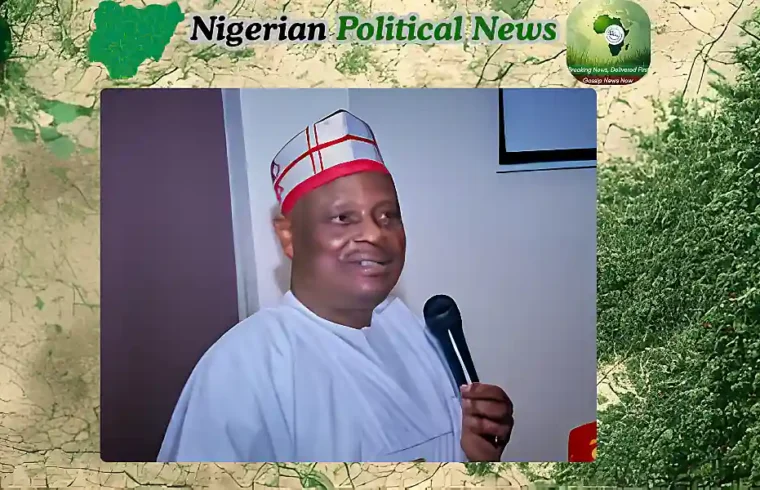
Vice-presidential candidate of the Nigeria Democratic Congress (NDC), Rabiu Kwankwaso, has criticised President Bola Ahmed Tinubu’s decision to remove the fuel subsidy, arguing that the policy was implemented without sufficient consideration of its possible consequences.
Kwankwaso also questioned the economic impact of the decision, while insisting that Nigerians deserve access to fuel at a cheaper price.
Key Facts
- Rabiu Kwankwaso criticised the removal of the fuel subsidy under President Bola Tinubu.
- He said the subsidy was removed without considering the possible consequences.
- Kwankwaso attributed Nigeria’s current economic difficulties, in his assessment, to the consequences of the decision.
- He said Nigerians deserve to buy fuel at a cheaper price.
- In a separate discussion, Kwankwaso reiterated his opposition to state police.
- He said the renewed debate over state police was linked to shortcomings he perceives in the existing federal policing system.
Background
President Bola Tinubu removed the fuel subsidy during his inauguration, a decision that has remained a major subject of political and economic debate.
Kwankwaso’s latest comments focused on what he described as the consequences of the policy and the need to consider the wider effects of such decisions.
The former Kano State governor made the remarks during an appearance on Arise Television on Wednesday.
What Happened?
Kwankwaso said the decision to remove the fuel subsidy was made without sufficient consideration of the issues that could follow.
According to him, the consequences that had been anticipated eventually occurred, contributing to what he described as a severe economic situation in Nigeria.
He said:
“Bola Tinubu decided to remove the subsidy, and the consequences we thought would happen certainly happened.”
Kwankwaso further argued that the decision was implemented without adequately examining the possible issues that could arise.
“He removed it immediately without looking at all the possible issues. That is how we found ourselves in this total mess economically.”
The former Kano governor also maintained that Nigerians should be able to purchase fuel at a cheaper price.
Kwankwaso’s Economic Argument
Kwankwaso’s criticism centres on the manner in which the subsidy was removed and the consequences he believes followed.
His position is that the decision was taken immediately without sufficient attention to the possible effects on the country.
He therefore linked the subsequent economic difficulties to the consequences of the subsidy removal and argued for cheaper fuel prices for Nigerians.
These assessments are Kwankwaso’s own political and economic views as reported in the source material.
Key Players
Rabiu Kwankwaso is the NDC vice-presidential candidate and former governor of Kano State who made the comments about fuel subsidy removal and state police.
Bola Ahmed Tinubu is the President whose administration removed the fuel subsidy at the beginning of his tenure.
The federal police system also features in Kwankwaso’s separate argument over whether Nigeria should establish state police.
Stakeholder Positions
Kwankwaso’s position is that the fuel subsidy was removed without adequate consideration of the possible consequences and that Nigerians should have access to cheaper fuel.
On policing, he said he has consistently opposed state police but acknowledged why the proposal has gained renewed attention amid Nigeria’s security challenges.
The supplied material does not contain a direct response from President Tinubu or the Federal Government to Kwankwaso’s latest criticism.
Kwankwaso Restates Opposition To State Police
In a separate appearance on the Untold Stories podcast, Kwankwaso reiterated his opposition to the creation of state police in Nigeria.
He argued that the renewed demand for state police had emerged largely because of what he described as the inability of the existing federal or national police system to adequately address insecurity.
According to Kwankwaso, governments at different levels had been forced to consider additional approaches to protecting citizens because of the worsening security situation.
He said:
“I have always been against state police, and I can tell you the issue of state police came because of the failure of the federal or national police.”
Kwankwaso described state police as a response to problems within the existing system, while maintaining that he considered the idea a mistake.
Kwankwaso’s Security Argument
Kwankwaso also raised concerns about the increasing availability of firearms among members of the public.
He argued that the worsening security situation had reached a point where leaders were encouraging citizens to acquire arms for self-protection.
In his view, widespread possession of firearms could create additional risks, particularly when ordinary disputes escalate.
He said:
“And as long as people have too many arms in their hands, I can tell you there will hardly be any peace.”
Kwankwaso further argued that disputes between neighbours or even couples could potentially become more dangerous where firearms were readily available.
His comments were presented as part of his argument against state police and his broader concerns about Nigeria’s security situation.
Claim Clarification
Kwankwaso’s description of Nigeria’s economy as being in a “total mess” is his assessment of the consequences of the subsidy removal.
Likewise, his description of the federal or national police as having failed to adequately address insecurity is his stated position.
The supplied material does not provide independent economic data establishing that the subsidy removal alone caused all of the country’s economic difficulties, nor does it provide an independent assessment of the effectiveness or failure of the federal police system.
Political Analysis
Kwankwaso’s comments address two major policy debates in Nigeria: fuel subsidy removal and policing.
On the economic side, he is questioning the way the subsidy policy was implemented and its consequences for Nigerians.
On security, he is maintaining his opposition to state police while explaining why he believes the proposal has gained renewed support.
The two positions therefore place economic management and national security among the issues Kwankwaso is using to criticise aspects of the current policy direction.
However, the supplied material does not establish what effect his comments will have on government policy or the wider political debate.
Frequently Asked Questions
What did Kwankwaso say about Tinubu’s fuel subsidy removal?
Kwankwaso said Tinubu removed the fuel subsidy without adequately considering the possible issues and consequences that could follow.
What did Kwankwaso say happened after the subsidy was removed?
He argued that the consequences that had been anticipated eventually occurred and described Nigeria’s economic situation as a “total mess.”
Does Kwankwaso want cheaper fuel?
Yes. The former Kano governor said Nigerians deserve to buy fuel at a cheaper price.
Does Kwankwaso support state police?
No. He said he has always been opposed to state police.
Why does Kwankwaso say the state-police debate emerged?
He argued that the debate arose because of what he described as the failure of the federal or national police to adequately address insecurity.
What did Kwankwaso say about firearms?
He warned that widespread possession of firearms could make it more difficult to maintain peace because ordinary disputes could potentially escalate into violence.
Did Tinubu respond to Kwankwaso’s criticism in the supplied report?
No direct response from President Tinubu is included in the supplied material.
Political Implication
Kwankwaso’s comments place two major policy issues at the centre of his criticism: the economic consequences he associates with fuel-subsidy removal and his opposition to state police.
While his comments present his assessment of both issues, the supplied report does not include a response from the Tinubu administration or independent evidence resolving the claims he raised.