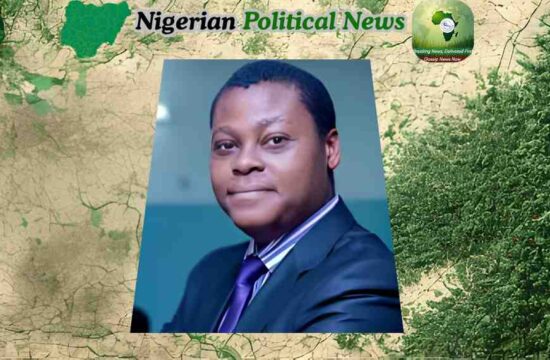
Human Rights Advocate Predicts Trouble for Ruling Party if Current Trends Continue
Prominent human rights campaigner and political commentator Mahdi Shehu has issued a strong warning to the ruling All Progressives Congress (APC), suggesting that the party could eventually face the same political fate that befell the Peoples Democratic Party (PDP) if it fails to address concerns surrounding governance and accountability.
According to political developments today , his remarks have sparked discussion within political circles, particularly as debates continue over leadership, democratic values, and the future direction of Nigeria’s political landscape.
Lessons From Nigeria’s Political History
Drawing from past events, Mahdi Shehu argued that no political organization should assume its dominance is permanent.
He pointed to a notable moment in Nigerian politics when former PDP National Chairman Vincent Ogbulafor confidently predicted decades of uninterrupted rule for his party. The eventual loss of power by the PDP, according to Shehu, serves as a reminder that public support can change dramatically when leaders become disconnected from the realities facing citizens.
The commentator maintained that history offers important lessons for those currently occupying positions of influence.
PDP’s Decline Used as a Political Example
Gossip News Now reports that Mahdi Shehu referenced the PDP’s current struggles as evidence of how quickly fortunes can change in politics.
He argued that a party once viewed as politically unbeatable has since faced internal challenges and declining influence. In his view, the PDP’s experience demonstrates that political relevance cannot be sustained through power alone.
The warning, however, was not focused solely on the opposition party but was intended as a broader message about the dangers of complacency.
Concerns Raised Over APC’s Direction
Turning his attention to the governing party, Shehu claimed that certain developments within the political environment resemble patterns previously associated with the PDP during its years in power.
Among the issues he highlighted were concerns relating to institutional independence, treatment of critics, growing political tensions, and the widening disconnect between government officials and ordinary Nigerians.
According to his assessment, these trends could weaken public confidence if left unaddressed.
Power Without Accountability Carries Risks
For Mahdi Shehu, the central issue is not political strength but how that strength is exercised.
He argued that governments which rely heavily on authority while neglecting public trust, fairness, and transparency often create conditions that eventually undermine their own stability. The activist suggested that long-term political survival depends more on accountability than on temporary control of power structures.
His message emphasized caution rather than inevitability.
Moral and Spiritual Dimensions Added to Criticism
In presenting his views, Mahdi Shehu also incorporated moral and religious references to reinforce his argument.
By drawing from biblical teachings, he framed the conversation beyond politics alone, suggesting that leadership should be guided by humility, justice, and responsibility. He maintained that history repeatedly shows the consequences of leadership that becomes disconnected from ethical principles.
The inclusion of these references gave his remarks a broader moral perspective.
Warning of a Future Political Reckoning
As his statement concluded, Shehu stressed that every political era eventually faces judgment from the public.
He suggested that the APC should carefully study the experiences of parties that once appeared politically invincible but later encountered significant setbacks. In his view, political influence is temporary, and success often depends on a willingness to learn from past mistakes.
The overall message was clear: ignoring warning signs can be costly.
Analysis: Why Shehu’s Remarks Are Generating Attention
The comments by Mahdi Shehu resonate because they touch on a recurring theme within Nigerian politics—the tendency of ruling parties to become vulnerable when confidence turns into overconfidence.
His comparison between the APC and the PDP is not merely a partisan critique; it is also a reflection of broader concerns regarding governance, accountability, and institutional integrity. Many political observers view such debates as important indicators of public sentiment.
What This Means for Nigeria’s Political Future
Whether one agrees with Shehu’s position or not, his intervention adds another voice to the ongoing conversation about leadership and democratic accountability in Nigeria.
As economic challenges, governance debates, and political competition continue to shape public discourse, the ability of political parties to maintain public trust may prove just as important as their electoral strength.
The coming years will likely determine whether the warnings being raised today are remembered as political commentary or as an accurate forecast of future developments.