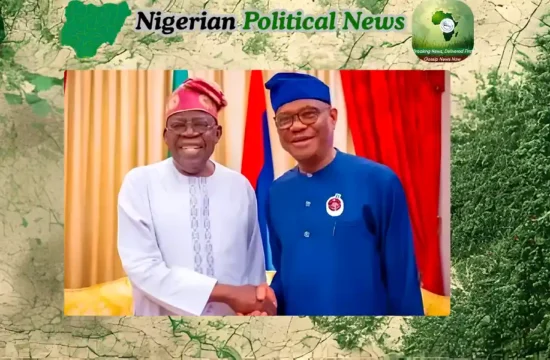
The New Nigeria Peoples Party has reacted to the increasing wave of defections by governors and political heavyweights into the ruling All Progressives Congress, arguing that the trend may have little to do with governance or national development.
Speaking on the growing political realignments across the country, NNPP National Publicity Secretary Ladipo Johnson questioned the real intentions behind the movement of several governors from opposition parties into the APC camp.
Opposition Parties Continue To Lose Key Figures
Nigeria’s political atmosphere has witnessed notable changes in recent months, with several governors elected under different political platforms switching allegiance ahead of the 2027 elections.
Among those mentioned in the recent wave of defections are Peter Mbah, Douye Diri, Umo Eno, and Sheriff Oborevwori.
Others reportedly involved in the shifting political landscape include Caleb Mutfwang and Ademola Adeleke, whose political decisions have continued to generate reactions nationwide.
There have also been discussions surrounding the possible movement of Abba Yusuf, although no official confirmation has emerged.
NNPP Raises Questions Over Defections
Reacting to the trend during a television interview, Johnson suggested that many of the defections appear politically motivated rather than being connected to the welfare of ordinary Nigerians.
In a differently worded remark, the NNPP spokesman argued that only the governors themselves truly understand the reasons behind their decisions to align with the APC.
According to Gossip News Now, Johnson expressed disappointment over the development, maintaining that the political movements raise serious concerns about the direction of opposition politics in the country.
2027 Elections Still Wide Open
Despite the growing number of defections, the NNPP insisted that political outcomes ahead of 2027 remain uncertain.
Johnson stressed that voters would ultimately determine the country’s political direction during the next general election cycle.
He also pointed out that Nigeria’s political environment remains fluid, warning against assumptions that present alignments automatically guarantee future electoral success.
Political Realignments Intensify Nationwide
The latest wave of defections has further intensified discussions about coalition-building, party survival, and power calculations ahead of the presidential election season.
Political analysts believe many politicians are already positioning themselves strategically in anticipation of future alliances and campaign negotiations.
Observers also note that defections have become increasingly common in Nigeria’s political system, especially when elections begin to draw closer.
Commentary and Analysis
The NNPP’s reaction reflects growing concerns among opposition parties over the shrinking influence of alternative political platforms as more governors and political leaders move toward the ruling party.
While some politicians defend defections as strategic decisions aimed at attracting federal support or political stability, critics argue that such movements weaken ideological politics and reduce accountability to voters.
The conversation also highlights a broader issue in Nigerian politics where party loyalty often shifts rapidly depending on changing political interests rather than policy differences.
As the 2027 elections approach, defections, alliances, and internal party negotiations are expected to intensify further, potentially reshaping the country’s political landscape in significant ways.
© 2025 Gossip News Now , a division of CHIEJOS HARBIAN DIGITAL MEDIA LTD. Contact us via admin@gossipnewsnow.online